

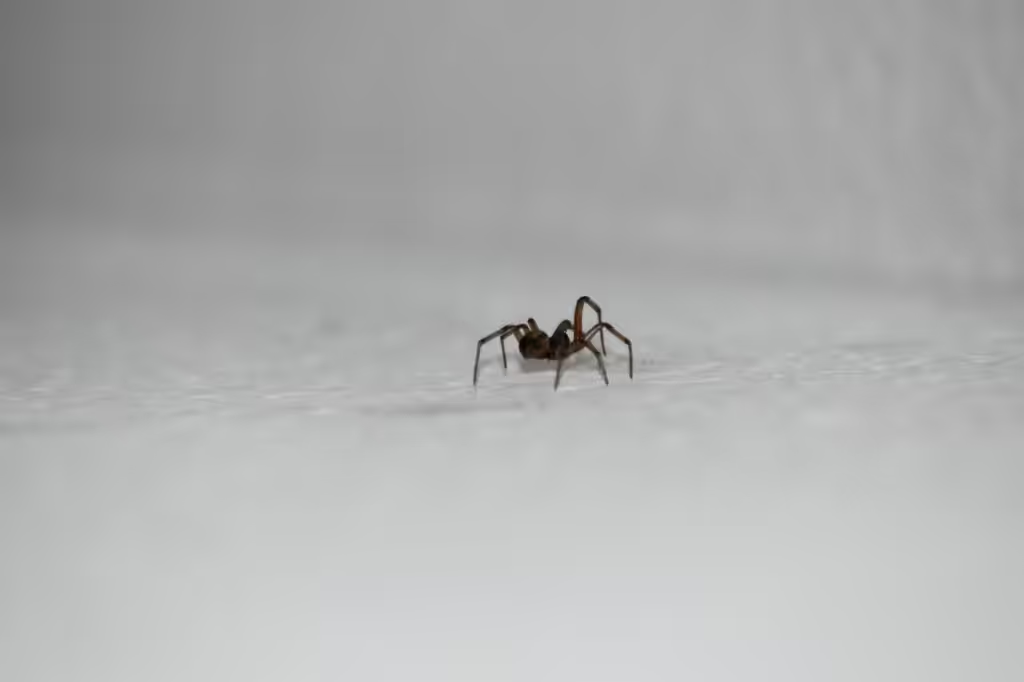
When October rolls around Hillsboro and the fog settles over the Tualatin Valley, something else starts settling into your home: spiders.
While your neighbors in Cedar Hills are busy hanging Halloween decorations, these eight-legged visitors are busy spinning their own spooky displays in your basement corners and garage door frames.
The average American home contains over 60 different spider species at any given time, with most homeowners completely unaware of their presence.
Fortunately, you don’t need toxic chemicals to keep these uninvited guests at bay. Smart spider repellent indoor strategies can protect your family while respecting the environment that makes the Pacific Northwest so special.
Why Spiders Enter Homes (and How That Informs Repellent Strategy)
Understanding spider behavior is your first step toward effective repellent strategies. These creatures aren’t randomly wandering into your Orenco Station townhome, after all. Instead, they’re following very specific survival instincts:
Looking for Food
Food sources top the list of spider magnets. Where you find flies, gnats, mosquitoes, and other small insects, spiders will follow. That’s why kitchens, bathrooms, and basements become spider highways. They’re not after your leftovers; they want the fruit flies hovering around your compost bin.
Seeking Shelter
An instinctual need for shelter drives spiders indoors as the temperatures drop. Spider infestations tend to increase in the fall, when outdoor temperatures become less hospitable. Your warm, protected spaces offer perfect winter hideouts.
Getting Thirsty
Leaky faucets, damp basements, and even morning condensation on windows all come together to create the moisture spiders need to survive our relatively dry indoor environments.
Easy to Enter
Entry points for spiders are surprisingly small. Spiders can squeeze through gaps smaller than a credit card thickness. Some of the most common entry routes include:
- Door and window frame gaps
- Utility line openings
- Basement foundation cracks
- Attic vents and soffits
- Garage door seals
Favorite Natural Spider Repellents (DIY and Safe Options)
Nature provides some remarkably effective spider repellent indoor solutions that work without putting your family or pets at risk.
Essential Oils
Essential oil blends create invisible barriers that spiders actively avoid. Peppermint oil leads the pack; its menthol content disrupts spider sensory organs. Mix 10 drops of peppermint oil with water in a spray bottle and apply around baseboards, window sills, and door frames. Eucalyptus, tea tree, and lavender oils work similarly well.
Cedar elements work exceptionally well in storage areas. Cedar blocks, hangers, or sachets repel spiders while protecting clothing and linens from other pests.
Vinegar
Vinegar solutions offer another chemical-free approach. White vinegar’s acetic acid content repels spiders while being completely safe for your family. You can create a 50/50 vinegar-water mixture and spray problem areas weekly. The smell dissipates quickly for humans, but lingers just long enough to deter spiders.
Citrus
Citrus peels provide a pleasant-smelling deterrent. Save your orange, lemon, and lime peels, then place them in spider-prone areas. The citrus oils naturally repel spiders while adding a fresh scent to closets, basements, and storage areas.
Diatomaceous Earth
Diatomaceous earth (food-grade only) creates a physical barrier that spiders won’t cross. This natural powder damages spider exoskeletons on contact, making it an effective perimeter treatment around your home’s foundation.
Why DIY Repellents Often Fall Short
While natural repellents help reduce spider populations, they face significant limitations in real-world applications.
- Coverage gaps represent the biggest challenge. Most homeowners miss critical application areas or fail to maintain consistent treatment schedules. Remember, spiders only need one unprotected entry point to establish indoor colonies.
- Reapplication requirements make DIY solutions labor-intensive. Essential oils and vinegar solutions lose their effectiveness within days, requiring weekly or bi-weekly reapplication to remain effective.
- Species variations mean different spiders respond to different repellents. Your spider repellent indoor strategy might work perfectly against common house spiders but fail against hobo spiders or wolf spiders, which have different sensitivities and behaviors.
- Seasonal effectiveness changes as weather patterns shift. What works during Hillsboro’s mild summers may prove inadequate during our wet winters when spiders become more aggressive in seeking shelter.
Did You Know?
Oregon’s climate creates unique spider challenges that many homeowners don’t anticipate. Giant house spiders, native to our region, can live for several years and grow leg spans exceeding four inches. Unlike many spider species that die off in winter, these impressive arachnids remain active year-round, making consistent repellent strategies essential for long-term spider control in Pacific Northwest homes.
Choose Natura as Your First Line of Defense Against Spiders
Professional spider control combines the best natural repellent strategies with targeted treatments that DIY methods can’t match. We understand Hillsboro’s unique spider challenges, from the hobo spiders common in Rock Creek neighborhoods to the giant house spiders that thrive in Tanasbourne’s newer developments.
Our integrated approach addresses both current spider populations and prevention strategies. We identify and seal entry points, eliminate food sources, and apply safe, effective treatments that provide months of protection, rather than days.
Contact Natura Pest Control today for a comprehensive spider assessment and customized treatment plan that protects your family while respecting the environment we all call home.
FAQ
What is the most effective natural spider repellent for indoor use?
Peppermint essential oil mixed with water creates the most effective natural spider repellent for indoor applications. Its menthol content disrupts spider sensory systems while remaining completely safe for humans and pets.
How often should I apply natural spider repellents indoors?
Most natural spider repellents require reapplication every 7-10 days to maintain effectiveness. Essential oil solutions lose potency fastest, while diatomaceous earth provides longer-lasting protection but requires reapplication after cleaning.
Do natural spider repellents work on all spider species?
While most spiders avoid peppermint and citrus scents, some species like wolf spiders and hobo spiders may require professional treatment for complete control.
Can I use natural spider repellents indoors around children and pets?
Yes, properly diluted essential oil solutions and food-grade diatomaceous earth are safe around children and pets. Always use food-grade diatomaceous earth and avoid applying essential oil solutions directly to areas where pets might lick or ingest them.
When is the best time to start using spider repellents in Oregon?
Begin applying spider repellents in late August or early September, before peak spider season starts.