

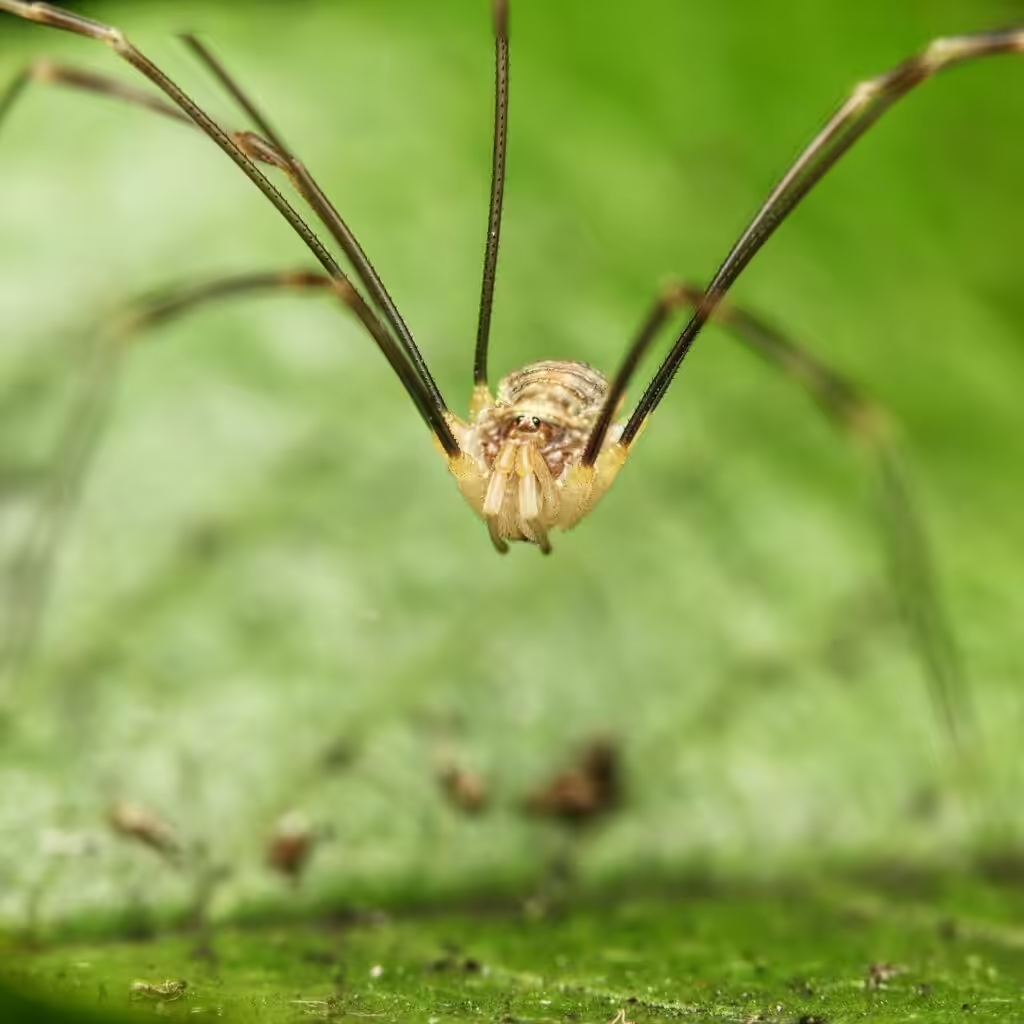
Walk through Portland’s Forest Park in October, and there’s a good chance you’ll spot long-legged creatures tucked into the damp corners near the Wildwood Trail.
With their spindly limbs and small bodies, they look unmistakably spider-like. But here’s a question you may find yourself asking: are daddy longlegs spiders at all?
The answer depends entirely on which “daddy longlegs” you’re actually seeing.
In the Pacific Northwest, we use this nickname for three completely different creatures, and only one of them is a true spider. The difference matters more than you’d think, especially when these creatures start gathering in your basement or garage as Portland’s rainy season begins.
Meet the “Daddy Longlegs” of Portland: Three Different Critters
Portland homeowners might encounter three distinct animals that share the daddy longlegs moniker, each of which has unique characteristics that set them apart from true spiders.
Harvestmen (Order Opiliones)
These are the most common daddy longlegs you’ll find around your home. These arachnids have oval-shaped bodies that look like a single unit rather than the distinct head-and-abdomen shape of spiders.
Their eight legs can span several inches, making them appear much larger than their tiny bodies suggest. You’ll often spot them in basements, crawl spaces, and garden sheds throughout the Pearl District and Southeast Portland neighborhoods.
Cellar Spiders (Family Pholcidae)
Cellar spiders represent the true spiders in this group. Unlike harvestmen, they have clearly defined head and abdomen sections connected by a narrow waist.
These web-spinning spiders create messy, irregular webs in corners and undisturbed areas. They’re particularly common in older homes throughout neighborhoods like Irvington and Sellwood-Moreland.
Crane Flies (Family Tipulidae)
These spider impersonators round out the trio as the only insects in this group. With their long, fragile legs and wings, they’re easily distinguished from their eight-legged cousins. These flying insects often bump into porch lights during Portland’s mild summer evenings, especially near the Columbia River and in areas like St. Johns.
The Key Differences: True Spiders vs. Harvestmen
Understanding the nuances in the answer to the question, “are daddy longlegs spiders?” becomes even clearer when you take the time to examine their body structure and behavior patterns:
Body Structure
Body segmentation provides the most reliable identification method for daddy longlegs. True spiders, including cellar spiders, display two distinct body segments: the cephalothorax (fused head and thorax) and the abdomen, connected by a narrow pedicel.
Harvestmen sport a single, oval-shaped body without visible segmentation, making them look like they’re wearing a backpack with legs attached.
Web Production and Behavior
Cellar spiders create sticky webs to catch prey, often building them in basement corners or under staircases. Harvestmen don’t produce webs at all. Instead, they actively hunt for small insects, dead plant matter, and other organic debris.
Research shows that harvestmen play crucial roles as decomposers in Pacific Northwest ecosystems, helping break down fallen leaves and organic matter in areas like Mount Tabor Park.
Defensive behaviors also differ significantly. When threatened, cellar spiders often vibrate rapidly in their webs, creating a blur that confuses predators. Harvestmen employ different tactics: they release their legs when grabbed (the legs continue twitching to distract predators) and emit strong-smelling secretions from their bodies.
When Harmless Pests Become a Nuisance: Professional Removal
While all three daddy longlegs types are harmless to humans, they can become nuisances when they appear in large numbers. Portland’s wet winters create the ideal conditions for these creatures to seek shelter indoors, particularly in neighborhoods near water sources like the Willamette River.
Seasonal migration patterns bring harvestmen and cellar spiders into homes as the temperatures drop and moisture levels rise. Basements, crawl spaces, and storage areas in areas like Hawthorne and Division are the perfect refuges. While they don’t bite humans or cause structural damage, large populations can indicate underlying moisture issues that might attract more problematic pests.
When populations grow beyond manageable levels, or when the presence of daddy longlegs signals bigger problems, it’s time to call for professional pest control. We identify entry points, address moisture concerns, and implement targeted removal strategies that prevent future infestations without harmful chemicals.
Did You Know?
Harvestmen have been roaming Earth for over 400 million years, making them some of the planet’s oldest terrestrial arthropods. Unlike spiders, they don’t inject venom because they lack fangs entirely. Instead, they use small pincer-like mouthparts to tear apart their food, functioning more like tiny cleanup crews than predators in Portland’s urban ecosystem.
When to Call Natura for Daddy Longlegs in Portland
Large populations of any daddy longlegs type often indicate underlying moisture problems that could attract more serious pests. If you’re seeing dozens of these creatures in your basement or crawl space, especially in moisture-prone areas like Southeast Portland or near the Columbia River, it’s worth having professionals assess the situation.
We help Portland homeowners identify which type of daddy longlegs they’re dealing with and address root causes that attract them. Our comprehensive approach looks at moisture control, entry point sealing, and long-term prevention strategies tailored to Pacific Northwest conditions.
Ready to reclaim your space from unwanted eight-legged visitors? Contact Natura Pest Control today for expert identification and removal services throughout the Portland metro area.
FAQ
Are daddy longlegs spiders that are venomous?
No, harvestmen (the most common daddy longlegs) have no venom glands at all. Cellar spiders do have venom, but their fangs are too small to penetrate human skin effectively.
Why do I see more daddy longlegs in fall and winter?
Portland’s rainy season drives these moisture-loving creatures indoors seeking dry shelter. They’re naturally drawn to basements, crawl spaces, and other undisturbed areas.
Do daddy longlegs actually eat other spiders?
Cellar spiders (true spiders) do occasionally catch other spiders in their webs. Harvestmen primarily eat decomposing organic matter, small insects, and plant material.
How can I prevent daddy longlegs from entering my home?
Focus on moisture control, seal cracks around foundations, and reduce outdoor lighting that attracts the insects they feed on. Professional assessment can identify specific entry points and moisture issues as well as provide you with some information about repellents.