

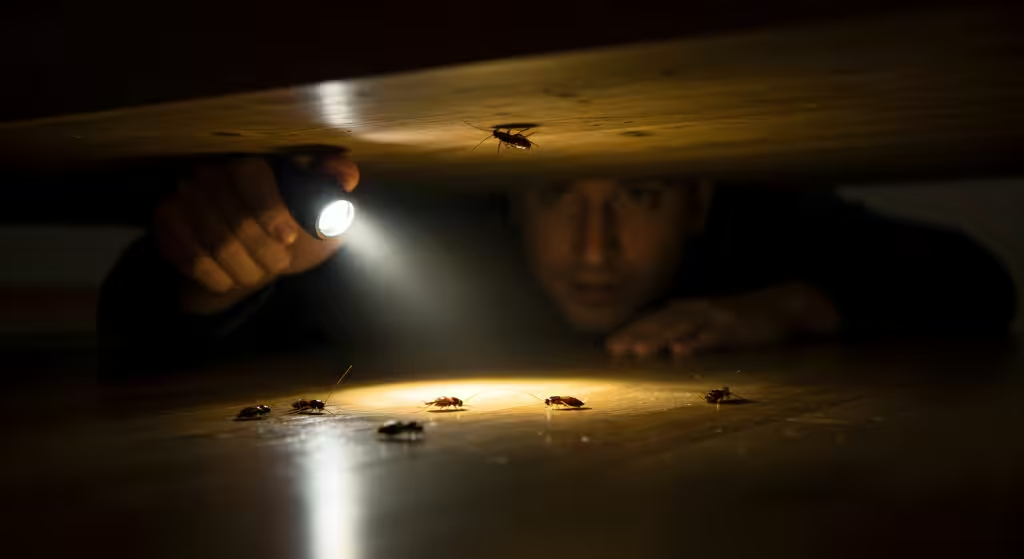
Picture this: You walk into your kitchen at 2 a.m. for a glass of water, flip on the light, and watch a dozen roaches scatter across your countertop. You’ve sprayed. You’ve set traps. You’ve cleaned until your hands cracked. Yet every night, they seem to return in greater number. Now, you’re wondering if roaches are impossible to get rid of. Well, you’re not alone.
Homeowners across Vancouver and Portland ask this question after months of failed DIY attempts. Roaches may have survived for 300 million years by adapting to threats, but they’re not impossible to manage with the right approach.
Why Are Roaches So Hard to Kill
Cockroaches didn’t survive the extinction event that killed the dinosaurs by accident. It comes down to biology, behavior, and breeding speed that outpace most control methods.
German roaches—the most common indoor species in our region—reproduce at staggering rates. A single female produces 30-40 eggs every six weeks, and those babies reach breeding age in just 36 days. If we do the math, that means one pregnant female entering your home in January can create a population of 10,000 roaches by December. Once populations explode beyond a few dozen individuals, control becomes much harder.
Roaches also develop resistance to insecticides faster than almost any other pest. German roaches are so difficult to get rid of partly because they pass resistance genes to offspring, creating populations immune to products that killed their ancestors. Professional pest control companies constantly rotate chemical classes to stay ahead of this resistance, but DIY solutions using the same spray month after month will just hasten the resistance development.
Beyond reproduction and resistance, roaches hide exceptionally well. During daylight, they squeeze into cracks and stay behind wall outlets, inside appliance motors, beneath baseboards, and inside hollow furniture legs.
Survival Traits That Make Roaches Difficult to Eliminate
Roaches possess survival traits that make them nearly indestructible without professional intervention. German roaches can survive a week without water and up to a month without food. If you eliminate their food sources, they simply eat things you wouldn’t consider edible: glue, soap, leather, hair, and even each other.
They breathe through tiny holes called spiracles located along their bodies, not through mouths or noses. Submerging a roach underwater won’t kill it immediately, as it can hold its breath for 40 minutes. Decapitation doesn’t kill them quickly either; a headless roach can survive for weeks, eventually dying from dehydration rather than the injury itself.
Roaches sense danger through sensitive antennae that detect vibrations, air movement, and chemical signals. Their flat bodies and jointed legs allow them to run nearly three miles per hour, and they change direction instantly to avoid threats.
Chemical communication adds another layer of difficulty. Roaches leave pheromone trails that guide others to food and harborage. When you kill a few, you might think you’re making progress, but the remaining population simply relocates to untreated areas, following the scent trails left by their dead nestmates to find new hiding spots.
Can Roaches Come Back After Treatment?
Yes, they can. If roaches keep coming back after you’ve treated your home, there may be a few reasons.
First, egg cases (oothecae) resist most insecticides. When you spray or set out bait, you kill adults and nymphs that consume the poison. But eggs protected inside their cases survive. Two to four weeks later, those eggs hatch, releasing a new generation that quickly rebuilds the population.
Second, roaches travel between apartments and neighboring homes through shared walls, plumbing, and electrical conduits. You can achieve perfect control in your unit, but if your neighbor has a German roach infestation, their overflow population migrates into your space, creating a ping-pong effect.
External sources also reintroduce roaches. Grocery bags, used furniture, appliances, and even Amazon boxes can carry roaches or egg cases into your home. German roaches hitchhike between locations, establishing new colonies wherever they land. One pregnant female brought home in a purse or backpack can restart an infestation you spent months eliminating.
DIY vs. Expert Cockroach Control
Store-bought roach products create a false sense of progress. You see dead roaches and assume you’re winning. But DIY will not win against roach infestations as populations tend to rebound stronger than before.
Over-the-counter sprays kill roaches on contact but provide little residual protection. Roaches avoid treated areas using their chemical sensors, simply traveling around sprayed surfaces to reach food and water. Foggers and bombs push roaches deeper into walls rather than killing them, and the mist can’t penetrate the cracks where roaches actually live.
Bait stations work better than sprays, but you must use them correctly. Placing one bait station under the sink won’t affect a kitchen-wide infestation. Professional treatments use dozens of bait placements targeting every harborage, creating a comprehensive network that hunts roaches wherever they travel.
Concerns about roach poison safety for pets also limit DIY effectiveness. Homeowners often underapply products to avoid harming cats and dogs. Professional pest control uses targeted application methods that keep products away from pets while maximizing roach exposure.
That precision makes the difference between temporary knockdown and complete elimination.
Can You Ever Fully Get Rid of Roaches
Yes, but success requires comprehensive treatment, consistent follow-up, and environmental modifications that remove what attracts them.
Complete elimination starts with identifying the species and extent of infestation. German roaches require different treatment than American or Oriental roaches. Population size dictates treatment intensity—light infestations might resolve with two treatments, while heavy infestations need monthly service for three to six months.
Professional roach control combines multiple tools: gel baits in cracks and crevices where roaches hide, insect growth regulators that prevent nymphs from reaching adulthood, residual sprays along baseboards and entry points, and dust applications in wall voids and attics. Each product targets different life stages and behaviors, creating layers of protection that roaches can’t avoid.
Exclusion work prevents reinfestations. Sealing gaps around pipes, installing door sweeps, repairing window screens, and filling cracks in walls block entry points that roaches exploit. In multi-unit buildings, sealing shared wall penetrations stops roaches from migrating between units.
Sanitation improvements, such as deep-cleaning kitchens, fixing leaky faucets, and taking garbage out daily, create conditions where surviving roaches can’t sustain populations even if a few individuals remain.
How Long Does It Take to Eliminate Roaches Completely
The length of time it takes depends on infestation severity, building type, and cooperation from all occupants.
Light infestations (seeing one or two roaches per week) typically resolve within 30-60 days with proper treatment. Moderate infestations (seeing roaches daily) require 60-90 days and three to four treatments.
Heavy infestations (seeing roaches during daytime, finding them in multiple rooms) need 90-180 days of monthly treatments. Daytime sightings indicate overcrowding, meaning populations reached thousands or tens of thousands. Even aggressive treatment can’t eliminate this many roaches instantly; sustained pressure over months gradually collapses the population.
Get Professional Roach Control in Vancouver and Portland
Are roaches impossible to get rid of? No, but attempting elimination without professional help wastes time, money, and sanity. Roaches exploit every mistake, survive most DIY products, and reproduce faster than you can kill them.
At Natura Pest Control, we understand roach biology, behavior, and the specific challenges Pacific Northwest homes face. Our comprehensive treatment programs combine targeted applications, scheduled follow-ups, and sanitation guidance that delivers complete elimination, not temporary relief.
Contact Natura Pest Control today for expert roach control throughout Vancouver, Portland, and the surrounding areas.