

Fleas don’t announce their arrival with a formal invitation. One day, your home feels normal, and the next, you’re scratching mysterious bites on your ankles. Your dog won’t stop gnawing at his fur. Your cat suddenly becomes obsessed with grooming specific spots. Meanwhile, tiny dark specks appear on your pet’s bedding, and you’re left wondering if you’re dealing with dirt or something far worse.
If you’re asking yourself how to know if your house is infested with fleas, you’re already halfway to identifying a problem that affects thousands of Pacific Northwest homes every year.
Common Signs You May Have a Flea Infestation
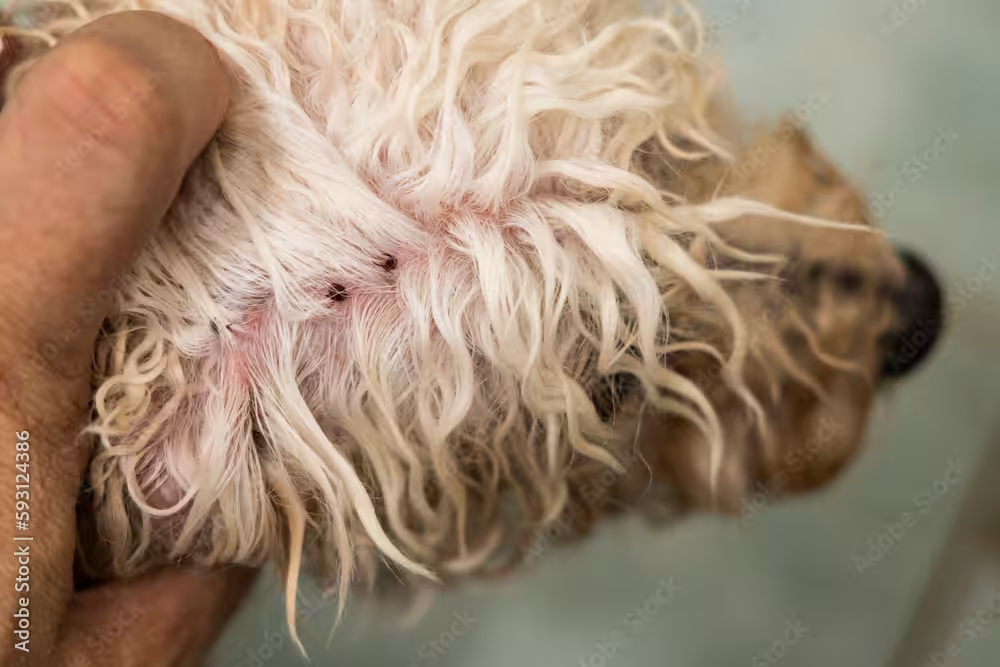
Flea infestations rarely stay hidden for long once they establish themselves in your home. Your pets will usually show the first warning signs, such as excessive scratching, biting at their skin, or developing small scabs and red patches. When you part their fur, you might spot obvious signs of fleas in the home, like adult fleas darting through the hair or clusters of dark debris clinging to the skin.
That dark debris, called “flea dirt,” is actually flea feces composed of digested blood. Adult fleas feed on your pets multiple times daily, leaving behind this telltale evidence wherever they go.
Beyond your pets, carpets and upholstered furniture become hotspots for flea activity. You might notice your ankles and lower legs getting bitten when you walk across certain rooms. Fleas jump. They prefer to ambush hosts from ground level. If bites cluster around your feet and ankles, fleas are likely breeding in your carpet fibers or beneath furniture where they wait for passing hosts.
Hard floors don’t provide immunity either. Fleas hide in cracks between floorboards, under area rugs, and along baseboards. Any space that stays undisturbed becomes a potential flea habitat.
Can You See Fleas With the Naked Eye?
Yes, you can, but they don’t make it easy. Adult fleas measure about 1/16 to 1/8 inch long, which is roughly the size of a pinhead. What makes fleas challenging to spot isn’t just their size alone, but their incredible speed and agility. Fleas jump up to 150 times their body length horizontally and 80 times their height vertically. When you try to catch one, it vanishes before your fingers close, helping them evade detection.
Your best chance to see adult fleas comes during grooming sessions with your pets. Use a flea comb—a fine-toothed metal comb designed to trap fleas—and work through your pet’s fur slowly. Focus on warm areas fleas prefer, like the base of the tail, behind the ears, and along the belly.
Even if you don’t spot adult fleas immediately, their eggs and larvae remain invisible to casual observation. Flea eggs are tiny, white, and oval, about the size of a grain of salt. They fall off pets and scatter across floors, bedding, and furniture.
Larvae, which hatch from these eggs, look like translucent white worms and hide deep in carpet padding or between couch cushions where light can’t reach them.
How to Know if You Have Fleas in Your Bed
Your bed should be a sanctuary, not a feeding ground for parasites. Unfortunately, fleas in your bed are more common than most homeowners realize, especially in homes where pets sleep on furniture or in bedrooms.
To know if you have fleas in your bed, pull back your bedding and look for small dark specks scattered across the sheets. Inspect your mattress seams and the area where your sheets tuck under. Flea eggs accumulate in these hidden spaces. If you find these deposits along with flea dirt, you’ve confirmed flea activity in your sleeping space.
Your pillows and comforter also harbor fleas. Shake these items outdoors and watch for adult fleas jumping off. Better yet, wash all bedding in hot water (at least 140°F) and dry on high heat for at least 30 minutes. Heat kills fleas at every life stage, making your washer and dryer powerful weapons in the battle against fleas, ticks, and bed bugs.
Bite Patterns, Sheets, and Hidden Flea Activity
Flea bites tell their own story. These bites typically concentrate on ankles, feet, and lower legs because fleas jump from the floor to reach hosts.
Bites appear as small red bumps with a darker red spot in the center where the flea punctured the skin. They itch intensely and can develop into painful welts, especially for people with flea bite allergies.
Check your sheets for blood spots, which may appear when you scratch bites during sleep or accidentally crush a flea. Unlike bed bug stains (which are darker and more smeared), flea blood spots appear as distinct dots scattered across fabric.
Hidden flea activity extends beyond obvious spaces. Fleas breed under furniture, inside closets, and along the perimeter of rooms where vacuums rarely reach. Larvae avoid light and burrow deep into carpet padding, emerging only after pupating into adults. This hidden lifecycle means you might not see evidence of infestation until populations reach overwhelming levels.
Why DIY Can’t Get Rid of Fleas Once They’re Inside
Store-bought flea products promise quick fixes, but they rarely deliver lasting results. Understanding flea biology reveals why DIY efforts fail to get rid of fleas.
Adult fleas represent only 5% of a flea infestation. The other 95% exists as eggs (50%), larvae (35%), and pupae (10%) hiding throughout your home. When you spray or fog your house, you kill adult fleas and maybe some larvae. But flea pupae, cocooned in silk-like casings, resist virtually all insecticides. These pupae can remain dormant for months, waiting for vibrations, warmth, or carbon dioxide that signals a host is nearby.
Even the best home remedy for fleas on dogs only addresses part of the problem. You can bathe your pet with dish soap, apply essential oils, or use diatomaceous earth on carpets, but without treating all life stages simultaneously, reinfestations occur within weeks.
Professional flea and tick control targets the entire flea lifecycle. Treatments combine killing adult fleas, regulators to prevent the larvae from developing, and residual products that remain active for weeks. Multiple treatments spaced 2-3 weeks apart catch emerging adults from those protected pupae, breaking the reproduction cycle completely.
Why Fleas Are So Hard to Crush and Eliminate
Ever tried to crush a flea between your fingers? It’s nearly impossible. Fleas have hard, flat exoskeletons that compress rather than break under pressure. When you try to squeeze one, it simply slips away or survives intact.
In fact, their bodies have evolved specifically to withstand crushing from scratching hosts, like pets, because their exoskeleton distributes force across their entire body rather than concentrating it at pressure points.
If you catch a flea, the most effective way to kill it involves drowning or using your fingernails to cut through the exoskeleton. Drop caught fleas into soapy water or rubbing alcohol; they can’t swim, and the liquid prevents jumping.
Beyond physical resistance, fleas reproduce at staggering rates. A single female lays 40-50 eggs daily, and those eggs hatch into larvae within 2-12 days, depending on temperature and humidity.
Pupae add another layer of difficulty. Once larvae spin their protective cocoons, they become nearly indestructible. Insecticides can’t penetrate the silk casing, and pupae can survive up to a year waiting for the right conditions to emerge. Only mechanical removal through aggressive, repeated vacuuming or professional heat treatments eliminates pupae reliably.
Get Professional Flea Control in Vancouver and Portland
Identifying a flea infestation is only the first step. Eliminating these persistent parasites requires professional expertise, comprehensive treatment strategies, and follow-up care that DIY methods simply can’t provide.
At Natura Pest Control, our comprehensive flea control program treats your home’s interior and exterior, targets all life stages, and includes follow-up visits to ensure complete elimination.
Don’t let fleas turn your home into an uncomfortable, itchy nightmare. Contact Natura Pest Control today for effective, lasting flea control throughout the Vancouver and Portland metro areas.