


A dog scratches at the same spot for the third time in an hour, and the search begins, parting fur and squinting at the skin for something that moves. Can you see fleas with the naked eye, or are they small enough to hide in plain sight? The honest answer is that you usually can if you know what you’re looking for and where to look.
How Small a Flea Actually Is
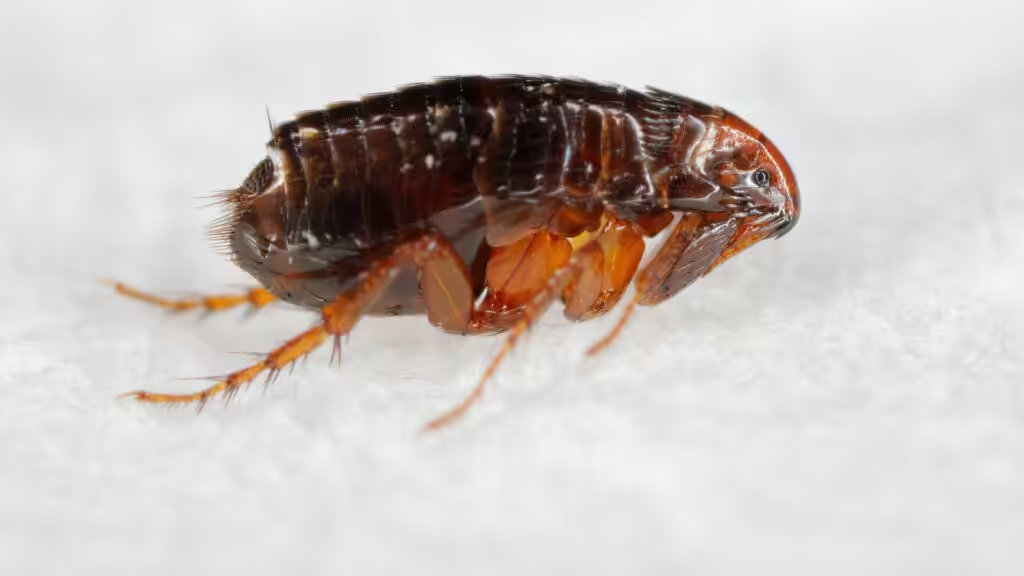
An adult flea runs about an eighth of an inch long, roughly the size of a sesame seed. That size comparison is the fastest way to picture how small fleas are: small, but not microscopic. Under decent light, especially against pale skin or a pet’s belly, a flea is visible as a fast-moving dark speck rather than something you need a magnifying glass to confirm.
Color and shape matter just as much as size when it comes to what fleas look like. Fleas are reddish brown and flattened from side to side rather than top to bottom. That build is exactly what lets them slip between hairs so easily, and it’s part of why they’re so hard to pin down once you spot one.
Most people notice the movement before they notice the insect itself. A flea’s jump is sudden and erratic, and that quick disappearing act is often the first real clue something is there.
A quick mental checklist helps when you’re not sure what you’re looking at:
- Roughly sesame-seed sized, not pinhead sized
- Reddish brown to dark brown in color
- Flattened side to side, narrow enough to vanish between hairs
- Moves in sudden jumps rather than crawling steadily
Fleas vs. Flea Eggs: Telling Them Apart
Confusing the two is easy, and it happens often. Flea eggs are tiny and oval, a pale, almost pearly white, closer to a grain of salt than a sesame seed. Where an adult flea is visible if you catch it moving, an egg is easy to miss even when you’re looking straight at it.
There’s another detail that surprises people: flea eggs aren’t sticky. Unlike lice eggs, which glue themselves to hair, flea eggs are smooth and simply roll off a pet’s fur into the surrounding environment. That’s why the honest answer to whether you can see flea eggs at all is usually no, not without getting down close and knowing exactly where to look.
An infestation often shows up in carpet fibers and pet bedding before it shows up as something crawling on the animal itself. Our fleas, ticks, and bed bugs guide covers how these pests compare if you’re not entirely sure which one you’re dealing with.
Where to Check First on Pets or Carpet
On a pet, the base of the tail and the belly are the two spots worth checking first. Both stay warm and are harder for the animal to reach when scratching, and that’s exactly why fleas cluster there instead of spreading evenly across the coat.
On carpet or bedding, check along baseboards and in the seams of pet beds, since that’s where eggs tend to settle after falling off, especially in rooms where a pet spends most of its time.
A few specific signs are worth looking for in each location:
- Small, fast-moving dark specks on the skin near the tail base
- Tiny white specks caught in carpet fibers near where a pet sleeps
- Reddish-brown residue in pet bedding seams
- Restless scratching concentrated in one or two spots rather than all over
None of these alone confirms an infestation, but finding more than one is a strong signal it’s time to look closer rather than wait and see how things develop.
Not Seeing One Doesn’t Rule It Out
Here’s the part that trips people up: a flea infestation can be very real even when nobody has actually seen a flea. Adult fleas spend most of their time on the host, buried in fur, not out in the open where a casual glance would catch them.
A light or early infestation might involve only a handful of visible adults at any given moment, even while eggs and larvae are accumulating out of sight in carpet and bedding. Our fleas and tick control page covers the full life cycle, including the larval stage, which develops largely out of view.
Fleas also reproduce fast enough that a population can be building for weeks before anyone notices consistent, visible activity. A single female can lay dozens of eggs a day, and those eggs are already scattered through the carpet before a single visible adult ever crosses your path.
By the time an adult flea is easy to spot every time you look, the population behind it is usually well past the early stage and harder to knock out with a single round of treatment. Our signs of fleas guide covers other indicators worth checking if a visual search alone isn’t turning up anything conclusive.
The safest assumption is that visual confirmation is a yes, not a no. Seeing a flea means you have fleas. Not seeing one means only that you haven’t seen one yet, not that the house is clear. Treating an early, hard-to-spot infestation the same way you’d treat a confirmed one is usually the difference between a quick fix and a much bigger problem a few weeks later.
Schedule a Flea Inspection with Natura
If scratching, biting, or a general sense that something’s off has you checking pets and carpet without a clear answer, an inspection settles it faster than another round of squinting at fur.
We handle flea infestations throughout the Vancouver and Portland metro area, and we can confirm what’s actually going on before it spreads further. A trained eye catches early-stage activity that’s easy to miss from the couch.
Call us at 360-215-2876 or reach out through our contact page, and we’ll schedule an inspection at a time that works for you.
We serve homeowners throughout these Washington communities: