


To get rid of German cockroaches, apply gel bait in small dots inside cabinets, under appliances, and along the back of drawers where roaches travel. Pair it with a reproduction-blocking treatment to stop new roaches from maturing. Visible results appear within 24 hours, but full elimination takes two to three weeks. A single treatment rarely finishes the job.
German Roach Behavior, Spread, and Treatment
Spotting one German cockroach during the day usually means dozens more are hiding nearby. They reproduce faster than any other common household roach and develop resistance to treatments more quickly.
What you see on the counter at midnight is a fraction of what’s tucked behind the appliances and inside the walls. If you’ve spotted one in your kitchen, there are almost certainly more behind your appliances.
Here’s what works, what doesn’t, and what overnight really means when it comes to German roach elimination.
What Are German Cockroaches?
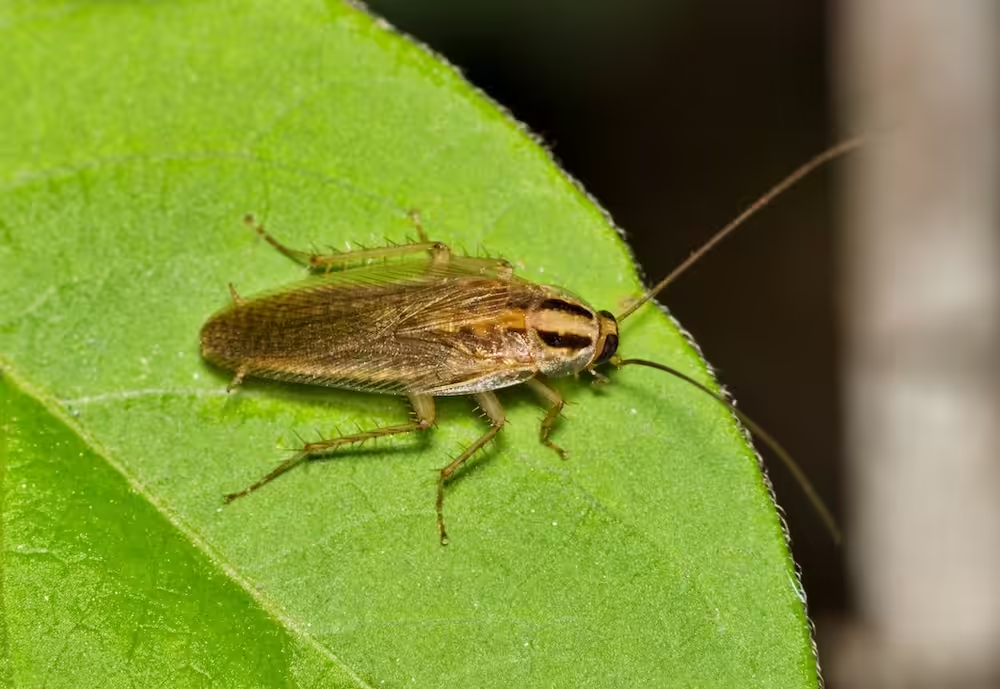
German cockroaches (Blattella germanica) are small and light brown, typically half an inch to five-eighths of an inch long. Two dark parallel stripes run from the back of their head down to their wings. That stripe pattern is the fastest way to confirm a German roach rather than another species. Despite having wings, they almost never fly. They move by running, and they’re fast.
Unlike American cockroaches, which spend time outdoors and occasionally wander in, German roaches live almost entirely inside homes and buildings. Kitchens and bathrooms are their preferred zones because both offer warmth, moisture, and food residue in close proximity. Once established, they don’t leave on their own. The conditions that brought them in keep them there.
What Do German Roach Eggs Look Like?
Each egg case, called an ootheca, is light brown, about a quarter inch long, slightly ridged, and easy to miss if you don’t know what you’re looking for. A single case holds 30 to 40 eggs, and females carry them until just before hatching.
One pregnant roach introduced into a building can produce four to six cases in her lifetime. An ootheca tucked into a cabinet hinge or the back or underside of the refrigerator is a reliable sign the colony is actively growing.
How Do German Cockroaches Spread So Fast?
A female reaches breeding age in about 60 days and can produce a new egg case every few weeks after that. Under warm indoor conditions, a single pair can generate thousands of offspring within a year. That’s not an exaggeration. It’s why a small German roach problem rarely stays small without some form of intervention.
Apartment buildings are particularly vulnerable. Infestations travel through shared plumbing walls and electrical conduits — the channels that carry wiring through walls from one unit to the next without anyone opening a door. In single-family homes, they often arrive in grocery bags, used appliances, or cardboard boxes.
A single roach hitchhiking in a delivery can start a new infestation from scratch. This is why German roach problems can appear out of nowhere, even in a well-maintained home.
Why Are German Roaches So Hard to Eliminate?
Their nesting behavior is the first obstacle. Roaches pack into tight, warm voids close to food and water: inside appliance motors, behind outlet plates, under sink cabinets. Most of the population is never visible. Surface sprays miss the bulk of it entirely.
Insecticide resistance is the second obstacle. Many spray products that worked well a decade ago have little effect on current populations. Surviving roaches pass that resistance to their offspring. The colony gets harder to treat with each generation that makes it through.
Gel bait sidesteps this problem. Resistance to baits develops more slowly, and the toxicant gets carried back to the nest rather than just killing exposed individuals.
What Actually Kills German Cockroaches?
Applied in small dots into hiding spots, gel bait lets roaches carry the toxicant back to the nest. It spreads through the colony via contact and feeding. A well-placed application produces visible die-off within 24 hours and continues to work for days afterward.
Placement matters more than quantity. A few small dots in the right spots outperform a heavy application spread across the wrong surfaces.
Boric acid powder works well alongside bait. Apply it in thin layers behind appliances, along baseboards, and in wall voids. Roaches pick it up while walking through and ingest it afterward during grooming. Apply too much and they simply walk right around it.
Insect growth regulators disrupt roach reproduction and development. They don’t kill adults, but pair well with bait as a second layer. Used together, bait and an IGR hit the infestation from two directions at once. Removing food residue and fixing moisture sources in the treatment area reduce competition for the bait and speed up results.
How Long Does Treatment Actually Take?
Overnight results are possible with gel bait. You’ll often see dead roaches within the first 24 hours. Complete elimination typically takes two to three weeks. A follow-up at week two catches any newly hatched nymphs — juvenile roaches that weren’t present during the first treatment. Egg cases take about 28 days to hatch, so one treatment rarely finishes the job on its own.
With a moderate or severe infestation, professional treatment gets it done faster. We use gel baits and IGRs in concentrations not available in consumer products. We also know where German roaches hide in Pacific Northwest homes.
The patterns are consistent, and targeting hiding spots directly is more effective than spraying surfaces and hoping for contact. Most homeowners are surprised by just how many hiding spots a thorough inspection turns up.
Ready to Get Rid of German Roaches?
If you’re seeing German cockroaches during the day, the infestation has already grown past the early stage. Daytime sightings happen when nighttime hiding spots are overcrowded. The colony is large enough to push individuals out into the open. Don’t wait for it to get worse. Call us at 360-215-2876 to schedule a treatment.
We proudly serve homeowners across: