


The dog won’t settle. The cat’s grooming herself raw along one hip. Nobody’s spotted an actual bug yet, but something’s clearly bothering the animals in the house. The question becomes how to tell if you have fleas without waiting for a clear visual on one. Behavior usually tips you off before a sighting does.
Knowing how to check for fleas without relying on a lucky glimpse comes down to reading the signs of fleas in the home that most people overlook: what pets are doing, where bites show up on people, and one simple test that settles the question either way.
How Your Pets Act Differently
A pet with fleas usually shows it in ways that go beyond a passing itch. Overgrooming can wear fur thin or leave small bald patches. The lower back and tail base take the worst of it, though the belly isn’t spared either. By the time anyone spots an actual bug, the skin underneath is often already raw or irritated.
Restlessness is part of the pattern too. A pet that keeps shifting position, can’t seem to settle, or suddenly seems irritable when touched near the hindquarters is showing more than a passing itch. Vets sometimes describe a visible skin twitch or ripple along a cat or dog’s back when a flea moves across it, a reflex that’s easy to miss unless you’re watching closely.
These flea symptoms in pets can look similar to those of other biting insects. Knowing if bed bugs travel on dogs is worth a look if fleas aren’t confirmed yet and something else seems possible.
The Scratching Pattern That Stands Out
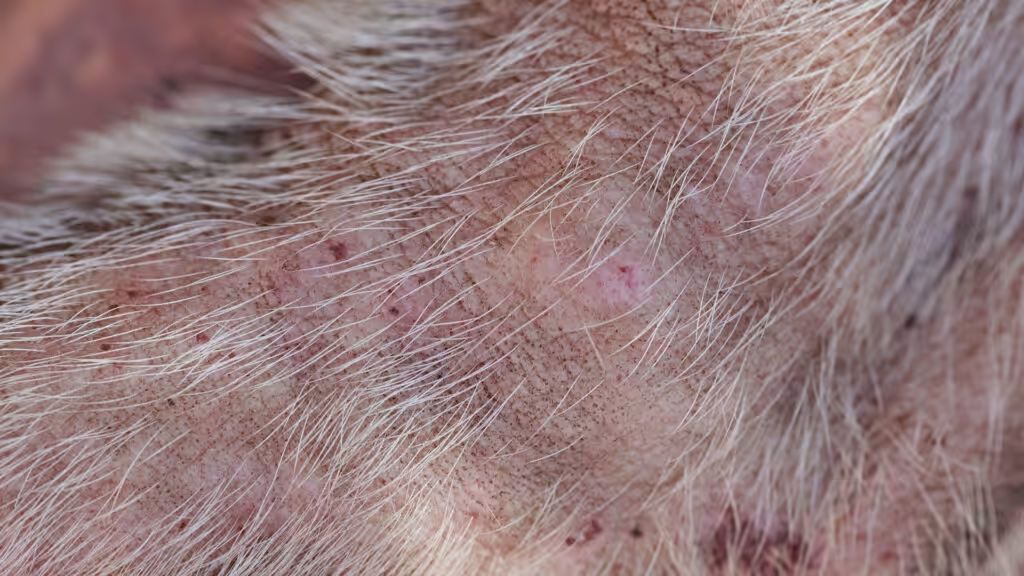
Normal scratching is brief and scattered. Flea-driven scratching focuses on the same location over and over, most often the base of the tail, sometimes the belly or the neck and ears. It’s also more intense: biting and chewing at the skin rather than a quick scratch with a paw, sometimes hard enough to break skin or trigger a hot spot that gets worse the more it’s bothered.
The timing looks different too. A pet with fleas has flare-ups that come and go throughout the day rather than one brief itch and done. Watching for that rhythm, rather than a single scratch, is usually more telling than any one moment on its own.
Where Bites Show Up on People
Fleas bite people too, and the pattern on human skin is its own clue. Bites tend to appear in small clusters of three or four, close together, rather than scattered randomly, as mosquito bites usually are. Our fleas, ticks, and bed bugs guide breaks down how to tell flea bites apart from other common culprits if the pattern still isn’t obvious.
The location matters as much as the pattern. Flea bites tend to concentrate low on the body, especially on the ankles and feet, and are most pronounced after walking across carpet where fleas are active. That’s a meaningfully different distribution than bites that show up anywhere skin was exposed overnight.
Why Ankles Get Hit First
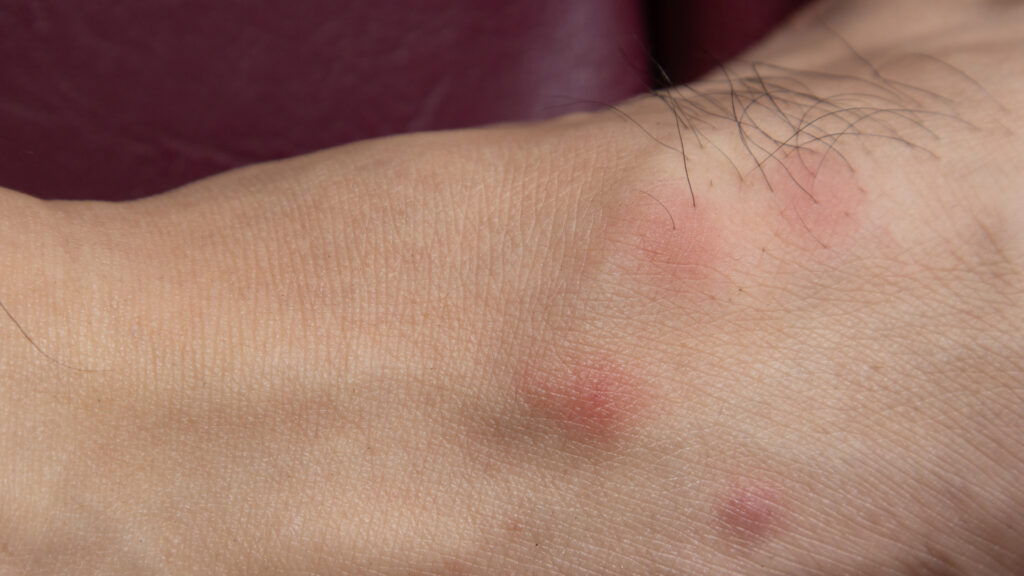
Fleas jump from ground level, and their jump doesn’t carry them far up a standing adult. Ankles and lower legs are simply what’s in range. Sitting or lying down changes that math, since more skin becomes reachable, but for anyone walking through an infested room, the ankles take the brunt of it almost every time.
Loose socks and pant cuffs don’t offer much protection either, since fleas can easily crawl underneath to reach skin directly rather than staying on top of the fabric.
The Flea Dirt Test You Can Run Today
There’s one test that settles the question faster than watching behavior alone, and it takes about five minutes with things you already have at home. Comb a pet over a white paper towel or plain white paper, focusing on the back and tail base, and see what falls out. Small dark specks are worth a closer look.
Wet the specks with a drop or two of water. If they turn reddish brown, that’s flea dirt, which is really just digested blood, not regular debris. Plain dirt stays put. Flea dirt bleeds outward into the wet paper, spreading a faint rust-colored ring that’s hard to mistake for anything else once you’ve seen it.
What a Positive Test Actually Confirms
A positive test confirms fleas are actively feeding on that particular pet right now. It doesn’t tell you how far the problem has spread into carpet, bedding, or furniture, since eggs and larvae living in the environment won’t show up in a comb-through no matter how thorough it is.
Our home remedies for fleas on dogs page covers what actually helps in the interim and what’s more likely to just waste time.
If pet behavior, bite patterns, and a positive dirt test all point the same direction, the next question isn’t whether it’s fleas; it’s how far it’s spread. A few signs suggest this has moved past a single pet or a single room:
- More than one pet in the house showing symptoms
- Bites showing up on more than one person in the household
- Flea dirt turning up in carpet or furniture, not just on the pet itself
- Symptoms that have been building for more than a week or two
Ask Natura About Flea Treatment
Once it’s spread beyond one pet or one room, DIY treatment usually can’t keep pace with it. We handle fleas and ticks throughout the Vancouver and Portland metro area, targeting both the pet and the environment they live in, since treating one without the other rarely solves the problem.
Call us at 360-215-2876 or reach out through our contact page and we’ll get a treatment plan started.
We serve homeowners throughout these Washington communities: