

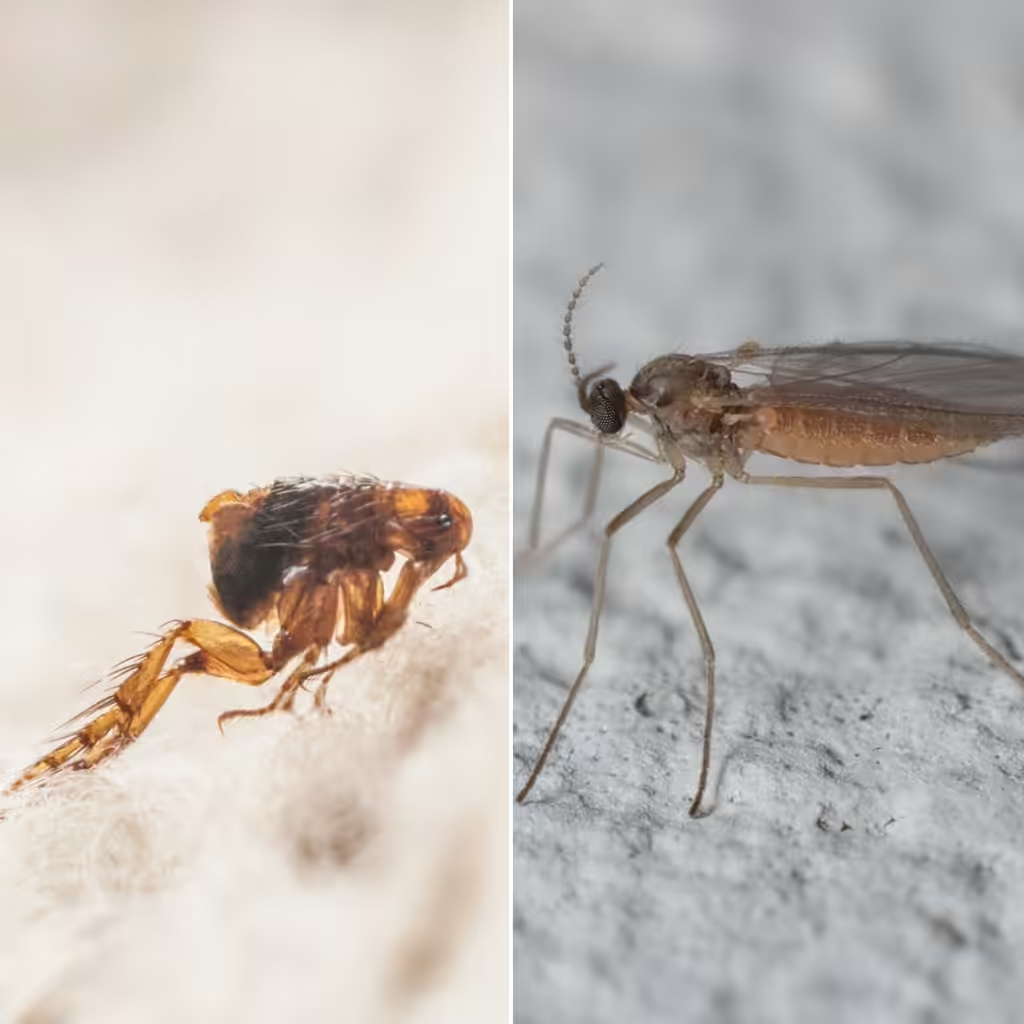
Fleas are wingless, reddish-brown insects that jump and feed on blood from pets and people. Gnats are small flying insects with wings that mostly feed on fungi and decaying material, though a few biting species also feed on blood. The fastest way to tell them apart: fleas jump, gnats fly.
That distinction matters more than it sounds like it should, since a flea problem and a gnat problem call for completely different fixes. If you’re searching flea vs gnat pictures side by side trying to settle the question, or just staring at a bug wondering whether it’s a flea or gnat, behavior gives a faster answer.
What Makes a Flea a Flea
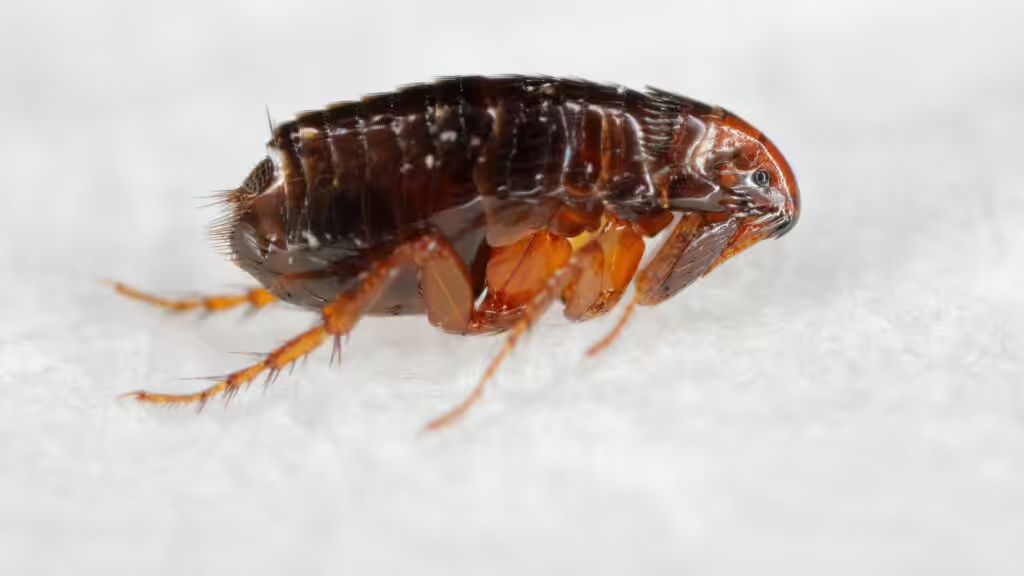
A flea is small, somewhere between 1.5 and 3.3 millimeters, dark brown to reddish-brown. It’s built low and flat so it can move through fur without getting stuck, and it has no wings at all. What it has instead are powerful hind legs built for jumping and piercing mouthparts built for one purpose: pulling blood from a host.
Fleas need that blood to survive and reproduce, and pets are their preferred hosts. Once a flea finds a dog or cat, it stays put, feeding and laying eggs directly in the fur. Those eggs don’t stay there long. They fall loose into carpet and bedding almost as soon as they’re laid.
How Fleas Feed, Live, and Spread
A flea’s life runs through four stages: egg, larva, pupa, and adult. Eggs are tiny, white, and not sticky. That’s exactly why they end up scattered through carpet fibers instead of staying on the pet. Larvae avoid light and feed on organic debris, including the dried blood adult fleas leave behind.
The pupal stage can last anywhere from a few days to several months depending on conditions. That variability is a big part of why a flea problem can seem to disappear and then come roaring back.
Itching isn’t the only concern. Fleas are the historical vector behind the bubonic plague, and while that’s rare today, they still transmit flea-borne typhus and tapeworms. They’re linked to cat scratch disease too, since cats can pick up the bacteria grooming themselves after a bite.
Many pets also develop flea allergy dermatitis, a reaction to flea saliva severe enough to cause hair loss and skin infections from a single bite. Knowing the signs of fleas in the home will help you identify what an active infestation looks like before it reaches this point.
What Makes a Gnat a Gnat
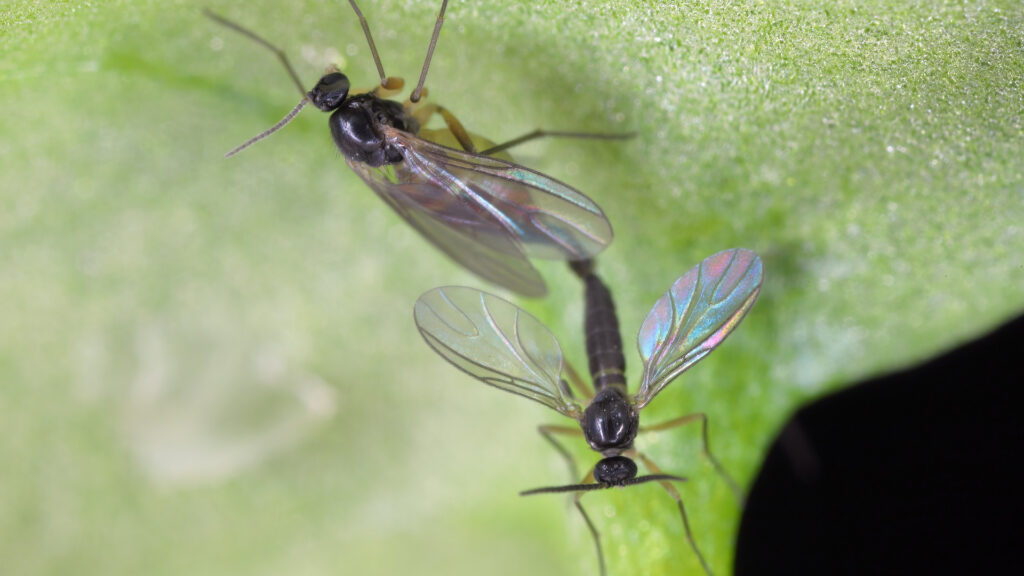
A gnat looks nothing like a flea up close. It has wings and a slender body. Depending on the species, the color runs anywhere from black to brown to gray. Most gnats measure a similar size to a flea, usually one to four millimeters. That overlap in size is a big part of why the two get confused despite looking completely different once you actually see one.
Gnats also don’t need a host the way fleas do. Most species feed on fungi and decaying plant matter, with a few going after overripe fruit instead, and they’re drawn to moisture rather than to a warm-blooded animal.
Where Gnats Come From and Why
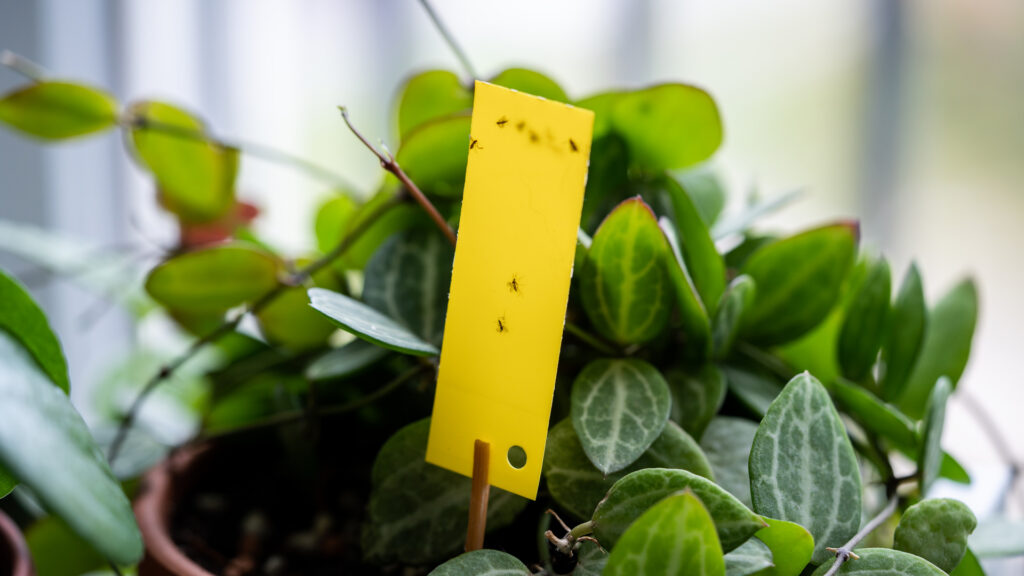
Overwatered houseplants are a classic source, since damp soil is exactly what fungus gnat larvae need to develop.
Outdoors, gnats breed anywhere organic matter is breaking down, whether that’s standing water, compost, or a forgotten pile of yard debris. That preference for moisture, not fur or feathers, is the biggest reason gnat problems and flea problems almost never share the same underlying cause.
A subset of gnats bite. Biting midges, often called no-see-ums, are technically gnats too, and they leave small, itchy welts behind. They’re a nuisance rather than a health risk in most cases, but they’re proof that “it’s just a gnat” isn’t always the reassurance people assume it is.
Our fleas versus bed bugs guide covers another commonly confused pair, if biting insects in general are the concern rather than gnats specifically.
Telling Them Apart at a Glance
Side by side, the differences show up fast:
- Fleas jump and have no wings; gnats fly and have visible wings
- Most gnats feed on fungi or plant matter; fleas feed exclusively on blood
- Moist soil and standing water breed gnats; fur, carpet, and bedding harbor fleas
- Flea bites cluster on legs and ankles; gnat bites scatter wherever skin was exposed
The One Clue That Settles It Fast
If you’re staring at one and need a fast answer, watch what it does next. A flea will jump, often disappearing instantly into fur or carpet. A gnat will fly, however clumsily, and stay visible in the air for a moment. That single behavior settles more identification questions than color or size ever will, whether the bites in question turned out to be gnats or fleas in the end.
Our comparison of flea bites versus mosquito bites covers a third commonly confused option when the bite itself is in question.
Keeping Fleas and Gnats Out of Your Home
Flea prevention centers on pets, and a few habits make the biggest difference:
- Regular grooming and a vet-approved flea preventative
- Frequent vacuuming of carpet, rugs, and pet bedding
- Mowing the lawn and clearing leaf litter where fleas wait for a host
- Washing pet bedding on a hot cycle every week or two
Gnat prevention works differently because the target is moisture, not an animal. Letting houseplant soil dry out between waterings specifically discourages fungus gnats, and sealing food waste keeps gnats from breeding in kitchen trash or compost. Outdoors, removing standing water removes most of what draws them in.
When It’s Time to Call for Help
Prevention only goes so far once eggs are already established in carpet, or when a gnat population is breeding faster than it can be dried out. At that point, the pests keep reappearing no matter how many visible ones are cleaned up, since the source remains active.
Get Rid of Fleas with Natura
If pets are scratching, bites keep appearing, or a flea problem has gotten beyond what grooming and vacuuming can handle, we treat both the pet’s environment and the home itself. We handle fleas and ticks throughout the Vancouver and Portland metro area, and if it turns out gnats are the actual culprit instead, we’ll guide you on that too.
Call us at 360-215-2876 or reach out through our contact page and we’ll get a treatment plan started.
We serve homeowners throughout these Washington communities: