

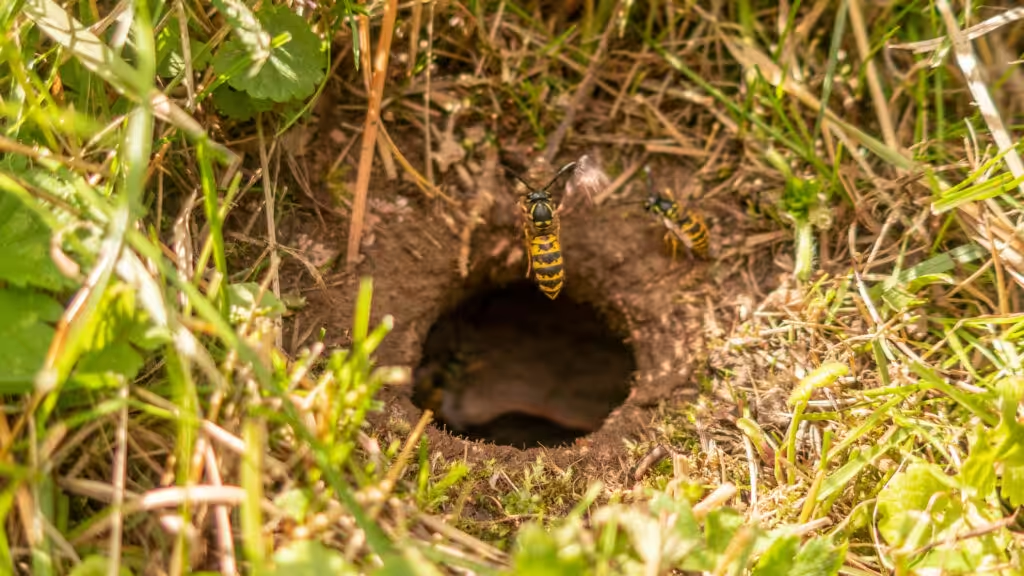
The first sign is usually traffic. A steady stream of yellow and black insects coming and going from a single point in the lawn, often a small hole no bigger than a quarter. If you’ve spotted that pattern in your yard, you’ve found a ground nest, and yellow jacket pest control just became something you need to think about carefully.
Ground nests are the most common kind of yellow jacket colony in the PNW, and they’re also the most dangerous to deal with. The colony you can see at the entrance is a tiny fraction of what’s underground.
By midsummer, an established nest can hold several thousand wasps, and the workers defend it aggressively. Here’s how to spot a nest, why disturbing one tends to go badly, and what works to get rid of yellow jackets without putting yourself in the hospital.
How to Spot a Yellow Jacket Ground Nest
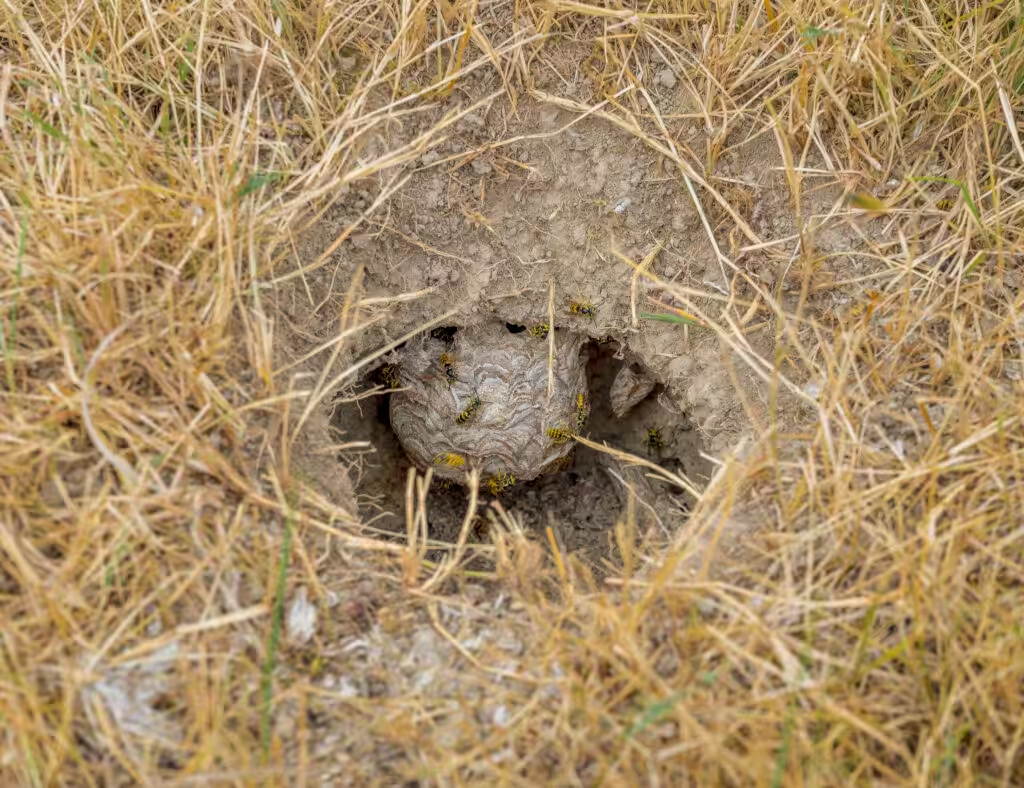
Yellow jackets often nest in abandoned rodent burrows or under landscaping timbers. Retaining wall voids and the base of a shrub with loose soil are common, too. The entrance itself is small. Sometimes it’s a single hole. Sometimes it’s a slightly worn patch of dirt with wasps flying in and out at the same angle.
The traffic pattern is what gives them away. Bees and other wasps fly in scattered directions. Yellow jackets returning to a ground nest fly a consistent line, drop into the hole, and emerge the same way. If you watch a suspected entrance for a minute and see five or more wasps using the same path, that’s a nest.
Signs You’re Near an Active Nest
Sometimes you find the nest before you find the entrance. A few warning signs:
- A steady buzz from the ground when you stand still in one spot
- You’ll see wasps coming out of a single point in the lawn, rockery, or retaining wall
- Heavier wasp traffic around one specific outdoor light or hose bib
- Pets acting nervous around one section of the yard, especially near dusk
If you notice these patterns, stop where you are and back away slowly. Don’t swat, don’t run. Most stings happen because someone got too close before they realized what was happening.
Why Ground Nests Are Worse Than Aerial Ones
A paper wasp nest under your eaves, the part of the roof that overhangs the wall, is a problem you can see. You know where it is, you know how big it is, and you can stay away from it. A ground nest is the opposite. The entrance might be six feet from the nest chamber itself, and the colony underneath can be the size of a basketball with thousands of workers inside.
The other issue is vibration. Yellow jackets respond strongly to ground vibrations near the nest. Lawn mowers, weed trimmers, and footsteps can all trigger a defensive swarm even if you never see the entrance. Most of the worst sting incidents we get called about start with someone mowing the lawn or pulling weeds and walking directly over a nest they didn’t know was there.
What Happens If You Disturb One
Yellow jackets are unusual among stinging insects in two ways. They can sting repeatedly without dying, and they release alarm pheromones when threatened. Those pheromones signal the rest of the colony to attack. A single disturbance can bring out dozens of wasps within seconds, and they’ll chase a perceived threat much farther than honeybees will.
Multiple stings are the real risk. A few stings hurt and swell. Twenty or thirty stings in a few minutes can put a healthy adult in the emergency room, and someone with a wasp allergy doesn’t need anywhere near that many for the situation to become serious.
Yellow Jacket Removal Done Safely
Professional yellow jacket removal depends on timing and approach for where the nest sits. The basics: treat at dusk or dawn when workers are inside and movement is minimal. Apply the product directly into the entrance so it reaches the colony, not only the surface. Verify the nest is dead before removing or sealing the entrance.
We use full protective gear and treat the nest entrance with a product formulated to spread through the colony. The workers carry it back into the chamber. From there, it reaches the queen, and the nest collapses over the next 24 to 48 hours. We come back to confirm activity has stopped before sealing or removing any of the structure.
Why DIY Methods Often Fail
A few approaches we see homeowners try, and why they usually backfire:
- Gasoline or other accelerants poured into the entrance: illegal, dangerous, and rarely kills the queen anyway
- A generic wasp aerosol sprayed from a distance kills the workers you can see but leaves the colony intact
- Flooding the nest with a hose drives the wasps out and triggers a swarm
- Digging up or smothering the nest almost always ends in multiple stings
The shared problem with all of these is reach. The nest itself sits below ground in a space the homeowner can’t see and can’t access directly. Killing the workers at the entrance does nothing to the queen, and a queen with even a few hundred workers will rebuild within days.
How to Get Rid of Yellow Jackets for Good
Eliminating a single nest is the immediate fix. Getting rid of yellow jackets long-term means thinking about the property as a whole. Yellow jacket queens overwinter and establish new nests every spring, and a property that hosted a colony this year is likely to host another next year if conditions stay the same.
Reducing food sources is the biggest lever. Yellow jackets are scavengers. Outdoor pet food and uncovered garbage both pull them in fast. Fallen fruit and open compost bins do the same. They also feed on other insects, so a property with a heavy population of grubs and caterpillars feeds wasps indirectly.
Our broader look at stinging insects in the Vancouver-Portland metro covers what builds populations across the region.
Preventing Nests Next Season
Late spring is when new queens are out scouting nest sites. A few habits that reduce the odds of a colony establishing on your property:
- Fill abandoned rodent burrows and gaps in retaining walls; voids under landscape timbers need the same treatment
- Outdoor garbage cans should stay sealed, and rinse soda cans before recycling them
- Pick up fallen fruit weekly through late summer and early fall
- Watch for queen activity in April and May. Calling early, before the colony establishes, saves work later
Catching a nest in May, when it’s the size of a golf ball with one queen and a handful of workers, is dramatically easier than dealing with the same nest in August. Our post on yellow jacket queens and their life cycle explains the timing in more detail.
Call Natura for Yellow Jacket Control
Yellow jacket aggression spikes in late July and August as colonies hit peak size and food sources start running short. If you’ve found a nest now, in June, treating it before the colony reaches that point makes the job significantly easier and safer. Waiting until August means a bigger nest, more workers, and a much shorter fuse on every encounter.
Call us at 360-215-2876 to schedule an inspection. We handle yellow jacket removal as part of our broader wasp control services, and we’ll treat the nest at the right time of day with the right approach for where it’s located.