

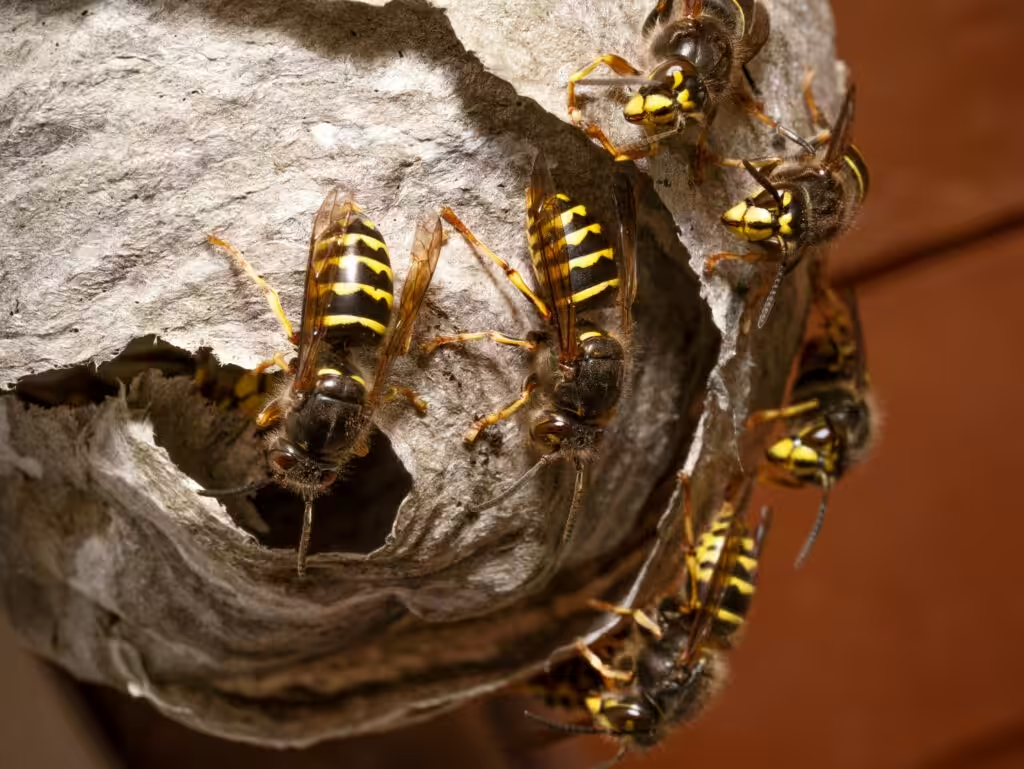
Most stinging insects people call hornets aren’t hornets at all. The word gets used loosely for anything that looks bigger and meaner than a wasp. That’s why we get plenty of calls about “hornet nests” that turn out to be paper wasps, yellow jackets, or even bumblebees.
Real hornets exist in the PNW, but they’re less common than the casual usage would suggest. Effective hornet pest control depends on knowing what you’re dealing with first.
This guide covers how to tell hornets from other stinging insects, where they build nests around here, and what works to get rid of them without ending up on the receiving end of a defensive swarm.
Hornet Identification: What to Look For
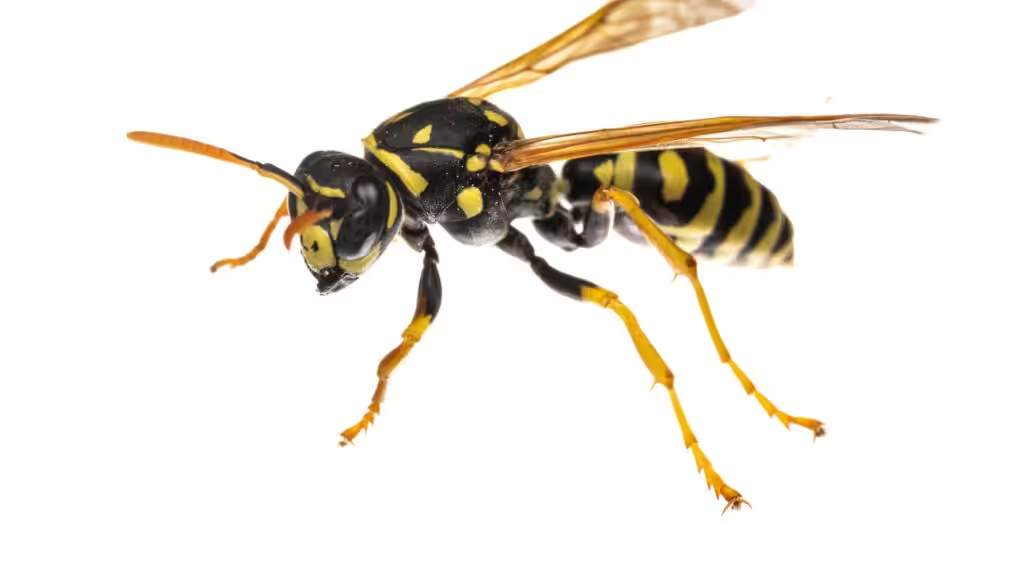
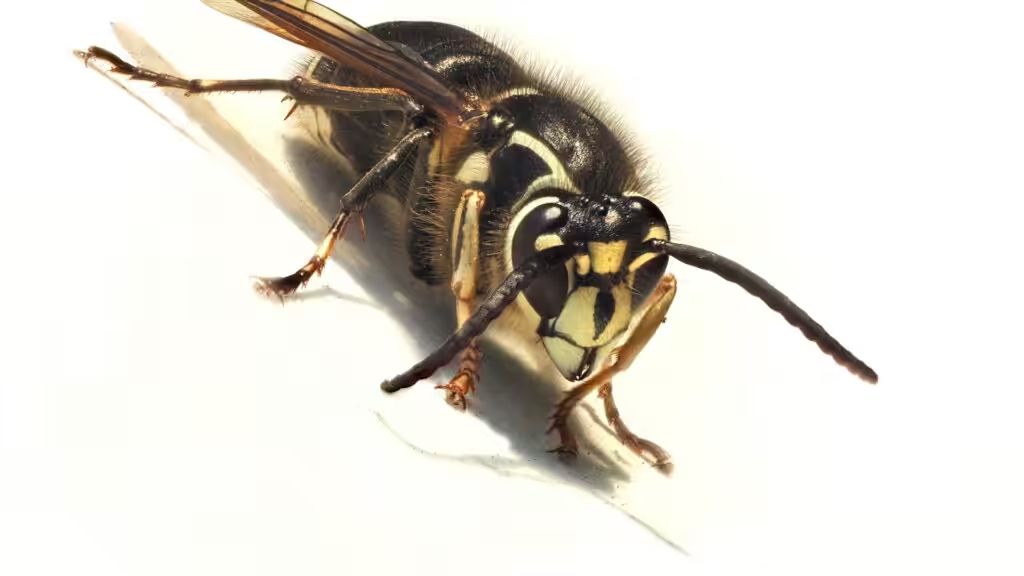
Hornets are larger than most wasps and have a thicker, heavier build. The two species you might run into around Vancouver are the bald-faced hornet and the European hornet, and they look fairly different from each other.
What they share is size. Both run noticeably bigger than the average paper wasp or yellow jacket. That’s the first clue you might be dealing with a true hornet.
A few markers to check:
- Body length around three-quarters of an inch (queens run over an inch)
- A wider, more rounded abdomen than a typical wasp
- The body is smooth with limited hair, unlike a bee
- A distinct head with large eyes set into a flat, broad face
The size difference is the easiest tell in the field. If the insect looks small and slim, it’s almost certainly a wasp, not a hornet. If it’s bulky enough that you do a double-take, that’s worth investigating. Our breakdown of bumblebees and wasps covers the broader comparison between the stinging insects most people mix up.
Bald Faced Hornet vs. European Hornet
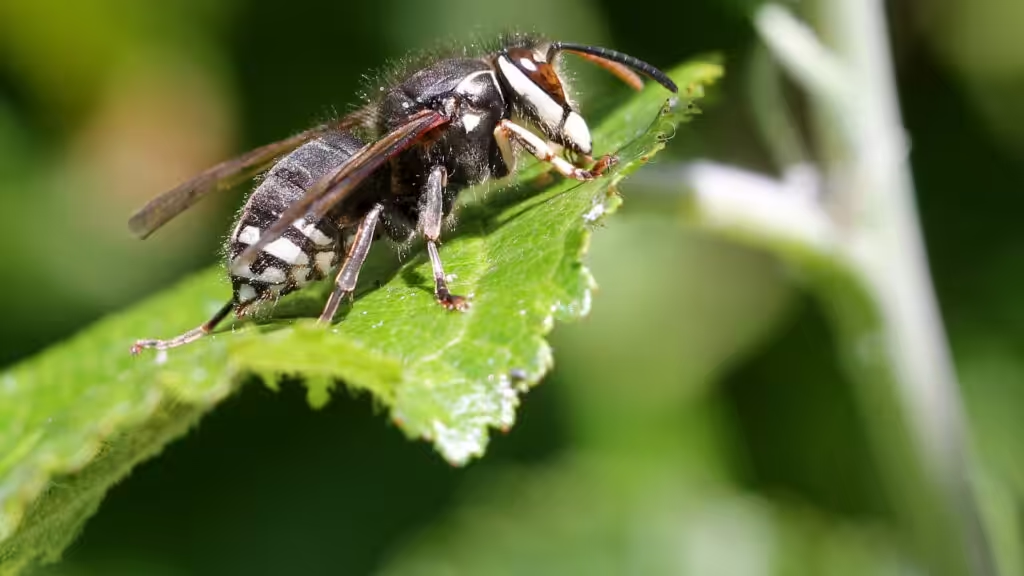
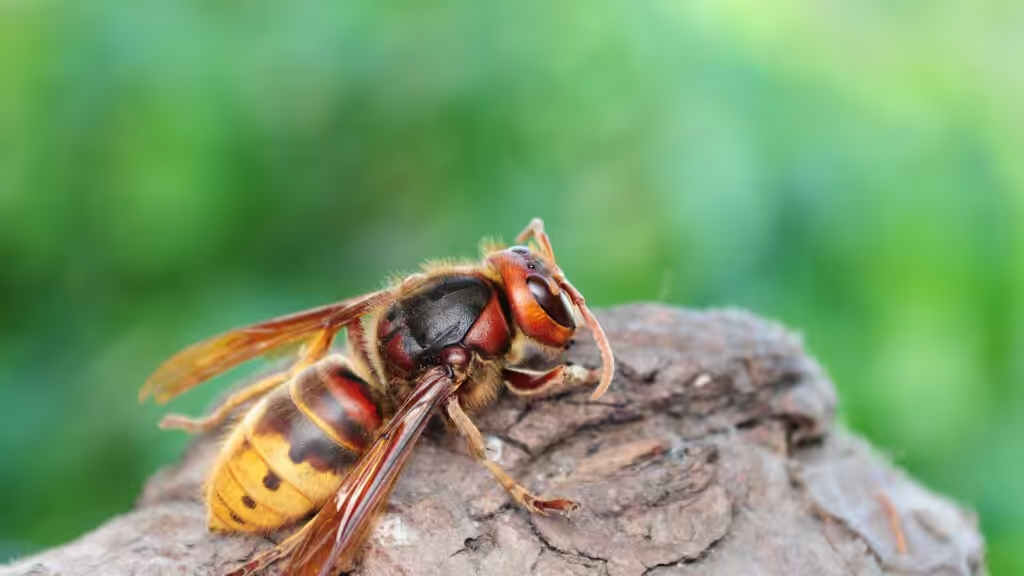
These two are the hornets you’re most likely to see in southwest Washington, and they don’t look alike at all.
The bald-faced hornet is mostly black with stark white markings on its face and abdomen. They build the football-shaped paper nests you see hanging from tree branches and eaves, the overhang along the roofline. Those nests look like an alien growth made of gray pulp. Despite the name, bald-faced hornets are technically a type of yellow jacket, but they look and behave more like classic hornets than their underground cousins.
The European hornet looks like a giant yellow jacket. Yellow and brown with red-tinted markings, roughly an inch long, and active at night. That nighttime activity is unusual for stinging insects in our region. If you’ve ever had a large yellow-and-brown wasp bouncing against a porch light at 10 pm, that was probably a European hornet.
Where Hornets Build Nests
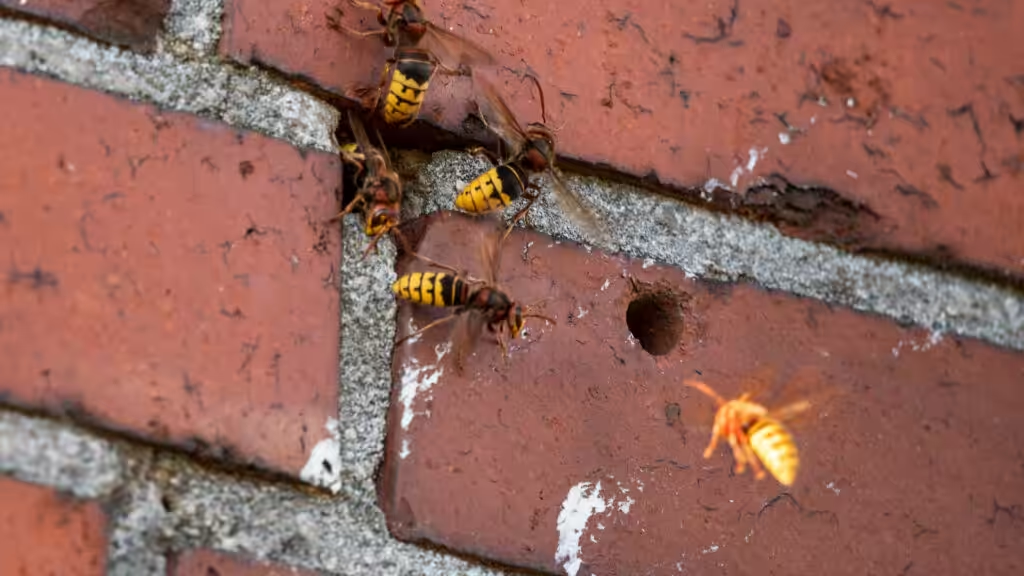
Nest location is one of the strongest identification clues. Bald-faced hornets build aerial nests in trees and on building eaves. Dense shrubs are another favorite spot, and we’ve found nests on utility structures, too.
The nests are pale gray, football or teardrop-shaped, and grow to the size of a basketball or larger by late summer. They have a single entrance hole near the bottom and become visible from a distance once they’ve reached any meaningful size.
European hornets prefer cavities. Hollow trees and wall voids are typical sites. So are attic spaces and abandoned outbuildings. You’re more likely to notice the traffic than the nest itself, since the colony stays hidden inside the structure. Watch for a steady stream of large brown wasps entering and exiting a single point on a building.
What an Active Hornet Nest Looks Like
A mature bald-faced hornet nest is hard to miss. It’s gray and layered, with hornets crawling on the outer surface and a constant trickle of workers coming and going from the entrance. By August, an established colony can have 400 to 700 workers, and the nest itself can reach two feet across.
European hornet nests are easier to miss because most of the structure is hidden. Vibration or scratching sounds inside a wall is one sign. So is steady hornet traffic in and out of a small gap.
Chewed wood debris on surfaces below the entry point is another. If you suspect a wall void or attic nest, don’t open the cavity to check. Disturbing the interior triggers a defensive response from inside the wall, and that’s a bad place for a hornet swarm to come out.
How to Get Rid of Hornets Safely
Effective hornet removal requires timing and approach. Treatment happens at dusk or right before dawn, when most of the colony is inside the nest and outdoor activity is at its lowest. The product needs to reach the interior of the nest, not just coat the outside. That takes professional-grade equipment to deliver treatment through the entrance.
For aerial nests, we treat from a safe distance using equipment designed for long-reach application. Cavity nests in walls or attics take a different approach. Treatment goes through the entry point, and we don’t open the structure until activity has stopped. Once the colony is confirmed dead, the nest can be removed and the access point sealed.
Why Hornet Removal Isn’t a DIY Job
A few specific reasons hornets sit in a different category than smaller stinging insects:
- Hornets sting repeatedly and inject more venom per sting than smaller wasps
- They defend nests aggressively, and they’ll chase a threat farther than yellow jackets will
- Aerial nests usually sit above ground level and need equipment that most homeowners don’t have
- Nests inside walls or structures can’t be reached without professional tools and protection
Add the size factor and the volume of venom involved, and a defensive response from a hornet colony is a meaningfully worse outcome than the same response from paper wasps. We’ve treated nests where the homeowner had attempted DIY removal and ended up with a colony that was now both alive and significantly more agitated.
Hornet Pest Control That Lasts
Removing the nest you can see is the immediate fix. Hornet pest control that lasts means thinking about what brought the colony to your property in the first place. Hornets feed on other insects: caterpillars, flies, and similar soft-bodied prey. A property with a heavy insect population will draw them in.
Treating the nest while also reducing the food and shelter that drew the hornets in is what separates a one-time call from a real solution. We approach hornets as part of our broader wasp control services because the management strategy overlaps significantly with how we handle yellow jackets and paper wasps.
Keeping Hornets Away Year-Round
A few habits cut hornet activity on the property:
- Inspect eaves, soffits (the underside of the roof overhang), and tree branches monthly during spring. Early-stage nests are the size of a golf ball and easy to handle then
- Seal exterior wall gaps, soffit vents, and pipe or wire entry points to block nesting inside walls and structures
- Outdoor lighting near doors draws European hornets at night. Cut back on bright white bulbs
- Firewood, lumber piles, and yard debris should sit away from the foundation
Spring nest inspections are the biggest single win. A queen-only nest in April is something a homeowner can knock down with minimal risk. The same nest in August has hundreds of workers defending it and needs professional removal.
Call Natura for Hornet Control
Hornet colonies hit peak size and peak defensiveness in late July through September. By that point, both worker numbers and the colony’s willingness to defend its space are at their highest. That’s when most of our hornet calls come in. Treating a nest in June, while the colony is still building, is faster and safer than waiting until activity peaks.
Call us at 360-215-2876 to schedule an inspection. If you’ve spotted a nest or you’re seeing repeated hornet traffic around your house, we can identify what species you’re dealing with and put together the right plan for removal.