

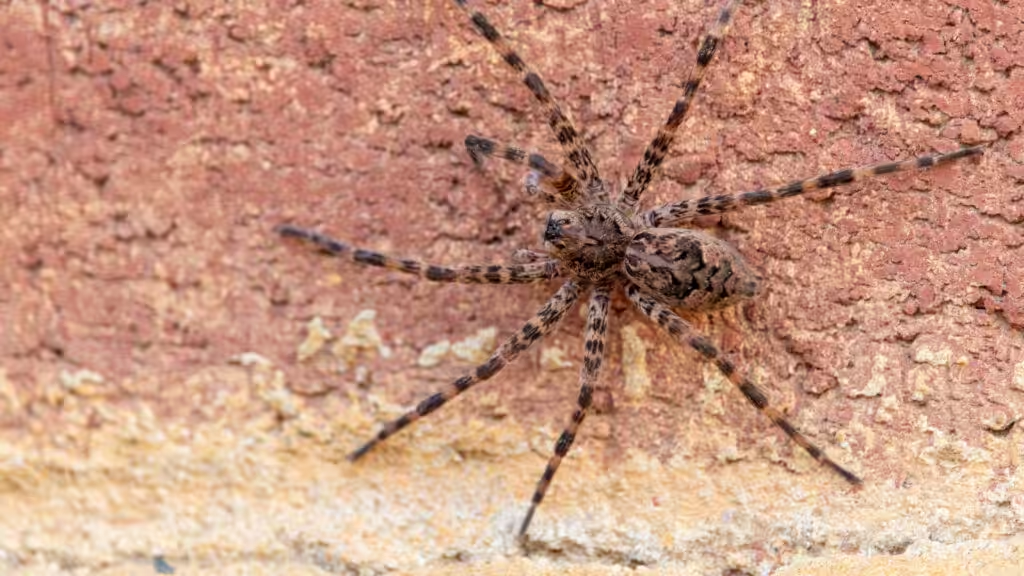
The hobo spider has one of the worst reputations of any spider in the Pacific Northwest, and most of it is wrong.
For decades, it was blamed for serious tissue-destroying bites that turned out to belong to other spiders, or to skin conditions that had nothing to do with spiders at all. The research has shifted in the past 15 years, and the picture today looks very different from what most homeowners still believe.
That doesn’t mean hobo spiders are nothing. They’re fast, they’re common, and they show up in homes all over Washington and Oregon. Here’s what we know about identifying them, what their bite does, and what works to keep them out.
How to Identify a Hobo Spider
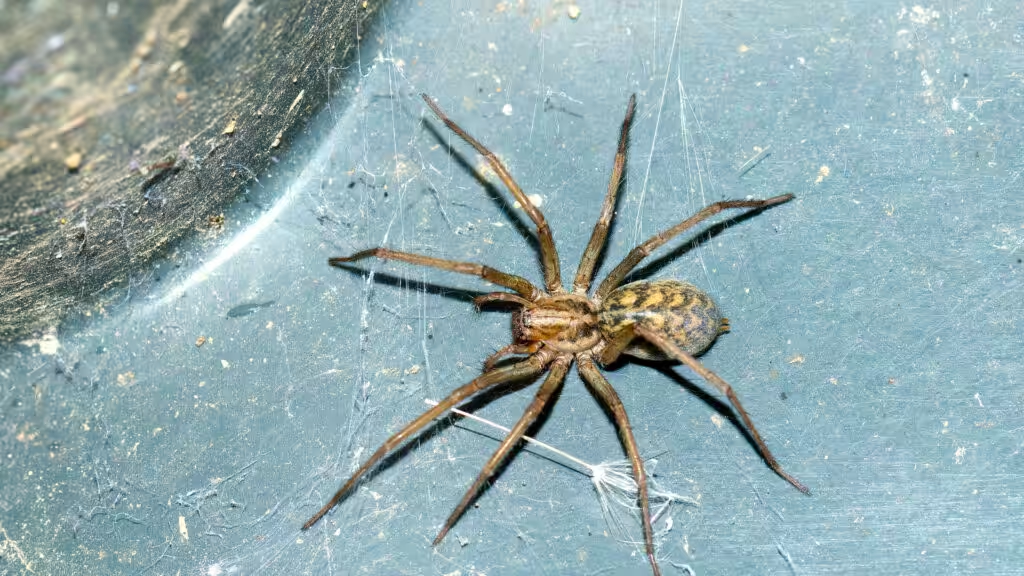
Hobo spiders are medium-sized brown spiders with a body length of around half an inch and a leg span closer to one and a half inches. They look plain compared to most spiders people worry about. That’s part of the identification problem. They get confused with several other brown house spiders constantly.
A few markers separate them from lookalikes:
- Solid brown body with faint chevron markings on the abdomen
- The legs are uniformly brown, not banded or striped like a wolf spider’s
- A funnel-shaped web in corners, woodpiles, or window wells
- They move fast at ground level instead of climbing walls
The funnel web is the most reliable clue if you can find one. Hobo spiders build flat sheet webs with a tube-shaped retreat at the back, and they sit at the mouth of the funnel waiting for prey. If you spot a web like that in a basement corner or along a foundation, the spider that built it is probably a hobo or a closely related funnel weaver.
Hobo Spider vs. Giant House Spider
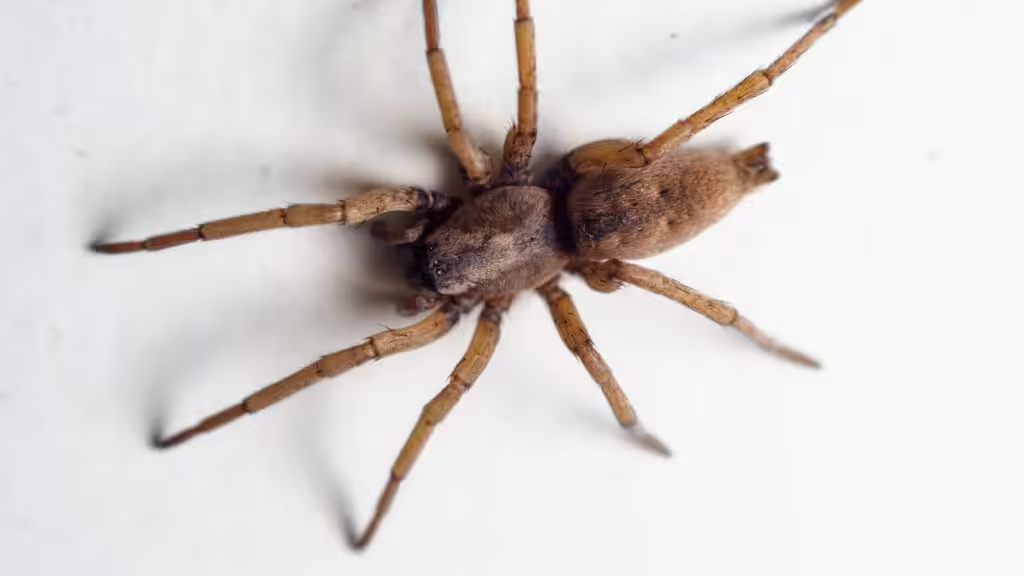
This is the comparison that trips up the most people. The giant house spider looks nearly identical to the hobo at first glance and lives in the same kinds of places. It’s also more common in PNW homes than the hobo is.
The giant house spider is noticeably bigger when you see them side by side, and its legs look darker and slightly hairier. Its body has more contrast in the markings. Most spiders you find in basements and garages around here that look like hobos are giant house spiders.
Misidentification doesn’t matter much in practice, though. The giant house spider isn’t considered medically significant either.
Hobo Spider vs. Brown Recluse
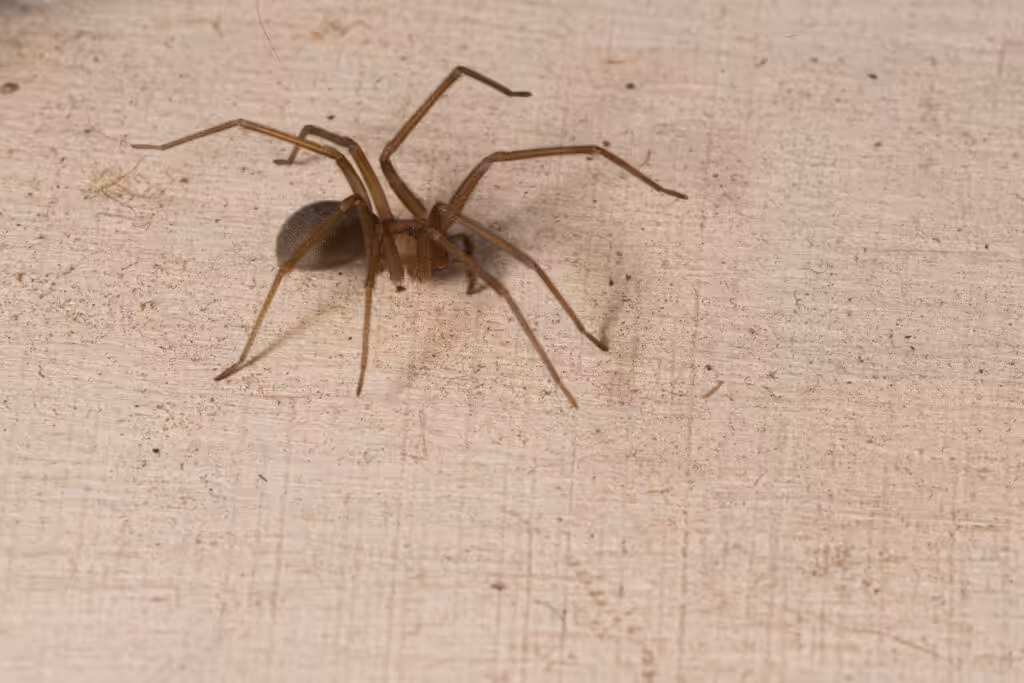
Online, the brown recluse gets blamed for nearly every bad spider bite in North America. The problem is that brown recluse spiders don’t live in the PNW. Their range stops well east of here.
Hobo spiders look superficially like recluses to people who aren’t familiar with either. Both are brown, medium-sized, and ground-dwelling. The recluse has a distinct violin-shaped marking on its back and only six eyes arranged in three pairs.
The hobo has eight eyes and no violin marking. Once you know what you’re looking at, the two aren’t that similar, but the confusion persists because the recluse gets so much press.
Why the Recluse Myth Won’t Die
Part of it is that “brown recluse bite” became a catch-all diagnosis for any wound that didn’t heal normally. MRSA infections got labeled as recluse bites. So did diabetic skin ulcers and bacterial cellulitis — a type of skin infection. Allergic reactions ended up in the same category.
The hobo spider inherited some of that reputation because it was the closest visual match in the PNW. Both labels stuck even after the research moved on.
For a fuller breakdown of which spiders in the region cause real medical issues, our post on dangerous spiders in Washington covers the short list. Spoiler: it’s shorter than the internet would have you believe.
What the Hobo Spider Bite Research Says
Until the early 2010s, the CDC listed the hobo spider as a spider of medical concern based on a small set of older studies. Those studies have since been challenged and largely walked back. Studies from UC Riverside, including controlled research on confirmed hobo spider bites, found no consistent evidence that the bites destroy tissue or cause severe medical problems in humans.
That doesn’t mean every hobo bite is harmless. Some people react more strongly than others to any spider bite, and secondary infections can develop in any wound. But the picture of a hobo spider bite as something comparable to a recluse bite has been thoroughly revised. Our older write-up on whether hobo spider bites pose a real danger goes into the shift in more detail.
What to Do If You’re Bitten
If you’re confident a hobo bit you, the response is the same as any common spider bite. Wash the area with soap and water. Apply a cold pack to manage swelling. Take an antihistamine if it itches. Most bites resolve completely within a few days without complications.
Get medical attention if the bite develops worsening pain over 24 hours. Blistering is another red flag. So are signs of infection, like spreading redness or warmth around the puncture. These are reasons to get a doctor’s eyes on it, regardless of what spider was responsible. Bring the spider if you have it, and a photo of the bite progression. Both help with diagnosis.
Hobo Spider Pest Control That Works
Effective hobo spider pest control has two parts. Reduce the conditions hobos like, and treat where they live and travel. They prefer dark, undisturbed spaces close to the ground. We find them in basements and crawlspaces most often. Garages and window wells are next.
Storage areas come up, too. Upper floors of a home see far fewer hobos than the lower levels because the spiders don’t climb well.
Treatment works best when it targets the real hiding spots, not just the spiders you’ve already seen. Spraying a single hobo you spotted on the bathroom floor at 11 pm does almost nothing for the population behind the wall it came out of.
We focus on entry points and foundation perimeters first. We also treat interior areas where the insects spiders hunt tend to build up.
Keeping Hobo Spiders Out Year-Round
A few habits cut hobo activity around the home significantly:
- Seal foundation gaps, vent screens, and weatherstripping at exterior doors
- Basements, garages, and crawlspaces accumulate undisturbed clutter where webs sit for months. Clear it out
- Vegetation and mulch should sit at least 12 inches back from the foundation
- Yellow porch bulbs and fewer ground lights cut the insect population near the home
Hobos follow their food. Reduce the food and the population thins out on its own.
Call Natura for Hobo Spider Control
Late summer and early fall are when hobo spider sightings peak around here. Males leave their webs to look for mates and end up indoors more often. That’s when most calls come in. If you’re seeing them now, in June, that’s an early signal that the population around the structure is already building.
Call us at 360-215-2876 to schedule an inspection. We’ll take a look at where they’re getting in and put together a treatment plan that addresses their hiding spots, not just the spiders you’ve already seen.