
A small paper wasp nest on an accessible eave is a straightforward job. A yellow jacket colony that’s been building underground for three months is a different conversation entirely. So is a bald-faced hornet nest the size of a basketball in the eaves of a two-story home. The species determines the difficulty, the time needed, and how much protective equipment is involved.
Access shapes the price just as much as the species. A nest you can walk up to from the ground with clear sightlines is manageable. One inside a wall void, an attic, or a crawl space means opening the structure to locate and treat it. That changes the scope of the job considerably.
Species, Access, and Nest Size
The combination of these factors determines most of what removal will cost:
- Social colonies like yellow jackets and hornets are more dangerous and time-intensive than solitary species
- Nests inside walls, attics, or elevated structures cost more to treat than accessible ground-level ones
- An established colony needs more product, more time, and sometimes a follow-up visit to confirm elimination
- Late-season colonies are larger, more aggressive, and harder to treat safely
A job that looks simple from the outside can become more involved once treatment begins. A yellow jacket colony inside a wall void may mean locating and sealing entry points in addition to treating the nest. That scope isn’t always apparent until work starts.
Wasp and Hornet Nest Removal: Pricing Factors
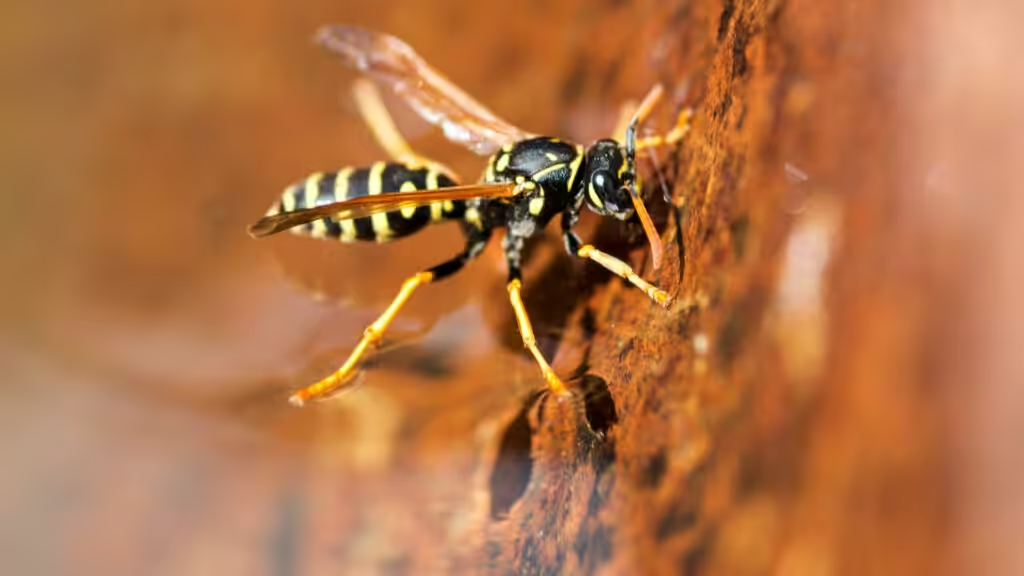
Wasp removal cost and hornet nest removal cost both reflect the risk as much as the labor. Paper wasps build open-comb nests and defend them when disturbed, but their colonies are relatively small and the nests are usually visible before treatment starts. Yellow jackets and hornets are different. They build enclosed paper nests housing significantly larger populations, and both species are considerably more aggressive when the colony is threatened.
Aerial nests attached to structures above head height need ladders and positioning that add time and risk to the job. Nests near entryways or high-traffic areas of a property factor in as well, since treating an active colony in those locations creates a more immediate hazard during the work itself.
Why Enclosed Nests Cost More to Remove
Paper wasp nests are open comb. You can see the structure and the activity before treatment starts. Yellow jacket and hornet nests are built differently: an enclosed paper shell, a single entry point, and a more aggressive colony inside. Getting treatment to the interior needs different products and application methods than spraying an exposed comb.
Ground nests are more complicated still. The entry point sits at surface level, but the colony can extend several feet below in a network of tunnels. Treatment has to penetrate deep enough to reach the population, and the site often needs a follow-up to confirm the colony is gone. Reviewing the signs of a wasp nest before calling helps us understand what we’re working with before we arrive.
Bee Removal Cost vs. Other Stinging Insects
When a honeybee colony is accessible, relocation to a working hive is often the preferred outcome over extermination. That single factor makes bee removal cost more variable than wasp or hornet removal. Relocation is a fundamentally different job, and the range of what it involves is wider.
Relocation is skilled, time-consuming work. The queen has to be located, the comb and brood need to move intact, and the population has to transfer to a suitable hive without the colony collapsing in the process. Coordinating with a beekeeper adds a logistical layer on top of the technical work itself, which affects both the timeline and the overall cost.
When Relocation Changes the Equation
Relocation is feasible when a colony is accessible and the comb is largely intact. Colonies inside wall voids or tight structural spaces are harder to move without opening the building. That increases the cost regardless of whether the plan is relocation or extermination, since both paths need the same access work upfront.
Not all bee situations call for relocation. Bumble bee nests and smaller swarms are handled differently than established honeybee colonies. If you’re unsure what you’re looking at, describing the location and activity pattern when you call helps us give you an accurate picture before we quote the job. For more on what’s most active in this region, our page on bees and yellow jackets in the Vancouver and Portland metro area covers what we see most often and why species ID matters for treatment.
Is DIY Removal Worth the Risk?
For small paper wasp nests in accessible spots, with the right protective gear and a can of wasp freeze used at night, DIY is often workable. Anything involving yellow jackets or hornets, a ground nest, or a colony inside or near a structure is a different situation. The risk is disproportionate to what professional removal costs.
A disturbed nest produces a faster, larger defensive response than most people expect. Ground nests are particularly hazardous because the entry point is easy to step on without realizing an active colony is below. Partial treatment, or anything that doesn’t reach the queen, often causes the surviving colony to relocate to a different part of the structure. That makes the follow-up job harder than the original one.
What Professionals Do That DIY Can’t
The visible activity is a fraction of what’s there. We use products that penetrate the nest structure and reach the queen, apply them when worker activity is at its lowest, and inspect afterward to confirm the colony is gone. Not just the nest.
For nests inside structures, we also locate and seal the entry points that let the colony build there in the first place. Skipping that step leaves ready-made access for a new colony the following season. For more on how to think through your options before deciding, our page on DIY wasp removal walks through the scenarios where it makes sense and where it doesn’t.
Get a Stinging Insect Removal Estimate
What removal costs depends on what’s there. The fastest way to get an accurate number is a quick inspection. Contact us today and we’ll tell you what you’re dealing with, what our wasp control approach involves for your specific situation, and what removal looks like before any work begins.