

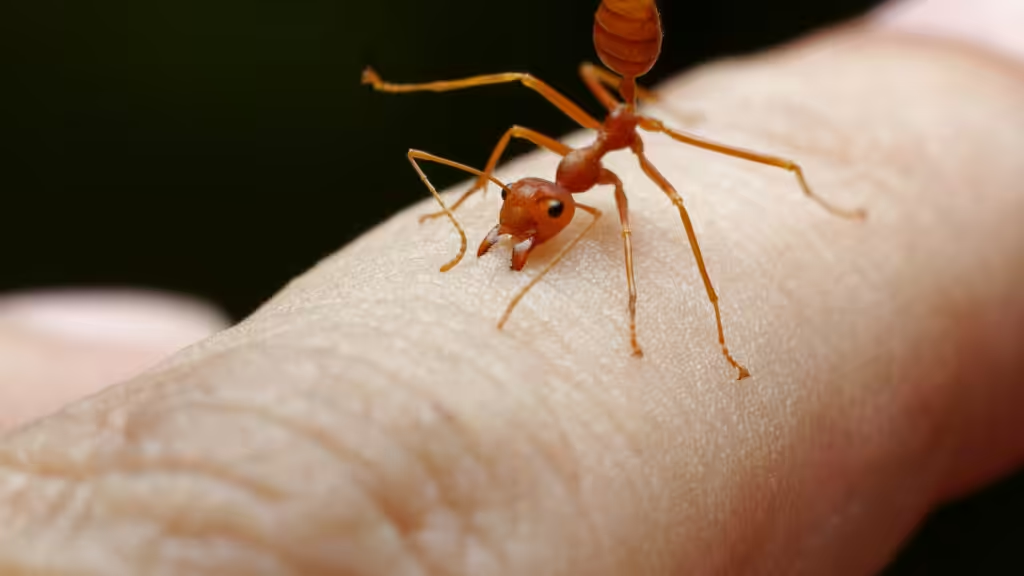
Both, depending on the species. The distinction matters because it changes how the injury presents. Ants that bite use their mandibles to grip, often holding on while they inject venom through a stinger at the abdomen. Ants that only bite cause a different type of wound entirely.
In the Pacific Northwest, the ants you’re most likely to encounter indoors don’t have functional stingers. The odorous house ant, the pavement ant, the carpenter ant: all bite but don’t sting. The reaction is usually minor and short-lived. Fire ants are less common here but present in parts of Oregon, and they both bite and sting, repeatedly.
The Difference Between Biting and Stinging Ants
Understanding what you’re dealing with helps explain the reaction:
- Pavement and odorous house ants leave a small red mark with minimal venom and short-lived irritation
- Fire ants bite to grip, then sting to inject venom. That combination produces a more intense, longer-lasting reaction than a bite alone.
- Carpenter ants spray formic acid into the wound. The acid is what causes the burning to linger well past the initial contact.
- Harvester ants are capable of both biting and stinging, with venom ranked among the most potent of any ant species
In practice, the ant you’re most likely to encounter indoors in Washington or Oregon bites but doesn’t sting meaningfully. The reaction should be mild unless you’re in an area where fire ants are present or you have a known sensitivity to insect bites.
Ant Bite Identification
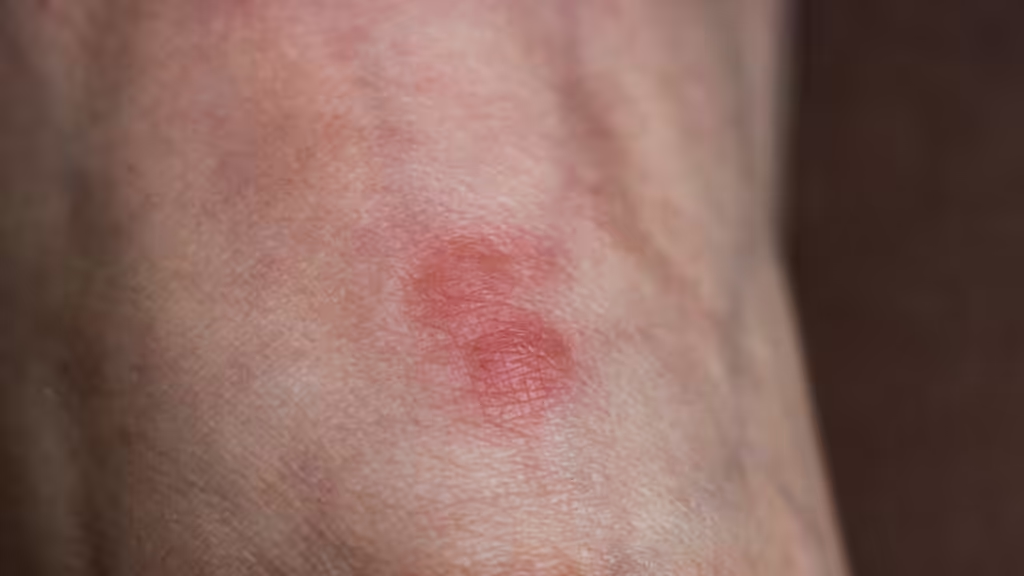
A bite from a common household species isn’t dramatic. Small raised red dot, sometimes with a faint puncture at the center, mild itching or a brief burning sensation for a few hours. A single bite from a pavement ant or carpenter ant isn’t a health concern on its own.
Eight to twenty-four hours after a fire ant encounter, the sting sites develop into fluid-filled pustules. Multiple stings produce clusters of them. The initial burning is significantly more intense than a typical household ant bite, and the pustules can persist for several days. If you haven’t been around fire ants before, the pustule stage catches a lot of people off guard. The blisters look worse than a standard insect bite reaction, and that’s normal.
Ant Bite vs. Mosquito Bite: Key Differences
Small itchy red welts could be mosquitoes. A few differences help narrow it down:
- Location: ant bites concentrate on the feet and lower legs where ground contact happens; mosquito bites appear anywhere on exposed skin
- Shape: ant bites are smaller and sharper-edged; mosquito bites produce a larger, softer raised welt that fades more gradually
- Onset: ant bites cause immediate pain or irritation; mosquito bite itching often develops 10 to 30 minutes after the bite
- Pattern: ant bites cluster tightly together; mosquito bites are spread more widely across the body
If you’re finding tight clusters on your feet or lower legs after time in the yard or near an active ant trail, ant bites are the more likely explanation.
Ant Bite Symptoms and Treatment
Most ant bites from species common to this region don’t need much. Wash the site with soap and water, use a cold compress to reduce swelling, and apply over-the-counter hydrocortisone or an antihistamine if itching persists. That covers the majority of cases.
Fire ant stings are a different protocol. Don’t break the pustule that develops. Breaking it raises infection risk. Keep the area clean and dry. If the site becomes warm, increasingly red, and swollen beyond the original sting area, or if redness is spreading outward, that warrants medical evaluation.
When to Get Medical Attention
Most ant bites don’t need a doctor. Get evaluated promptly if you experience any of these:
- Hives, widespread rash, or itching spreading beyond the sting sites after fire ant exposure
- Swelling in the face, throat, or difficulty breathing
- Dizziness, nausea, or a sudden drop in blood pressure following a sting
- Signs of infection at a bite site: increasing warmth, spreading redness, or discharge
If someone in your household has a known allergy to insect stings, carrying an epinephrine auto-injector when working outside is worth making a habit. Anaphylaxis from ant stings isn’t common, but fire ant exposure is the situation where it comes up. For more on the health risks associated with indoor ant infestations, our page on whether ants carry diseases covers what’s been documented.
How to Prevent Ant Bites
Outdoors, the simplest precaution is avoiding bare feet in areas with visible ant activity. Checking shoes and clothing left outside before putting them on removes the most common accidental contact point. Those two habits cover most of the exposure risk without requiring much else.
Ant activity inside the home changes the picture. Trails along baseboards or across kitchen floors mean regular ground-level contact, especially for children and pets. Managing the symptom, meaning the individual bites, doesn’t solve anything. Addressing the infestation removes the risk at the source.
Reducing what draws ants inside is part of that. Accessible food, moisture under a sink, or entry points at door thresholds and pipe penetrations all contribute. Fixing those conditions doesn’t replace treatment, but it makes treatment more durable.
When Ants in the Home Mean a Bigger Problem
An indoor bite, especially a recurring one, isn’t the problem. It’s the signal. An active colony is operating somewhere in the structure, and the bites are what make it visible.
Past the bites, recurring ant trails, frass near woodwork, or ants appearing in the same spots day after day are all worth noting. A closer look at the seven signs of an ant problem can help you confirm what’s going on before treatment. Species ID drives the approach. Get it wrong and the colony either doesn’t respond or splits and spreads further into the structure.
Dealing with Ants? Natura Can Help.
If ants are biting people inside your home, or showing up in numbers outside, the infestation is active enough to address. Contact us today. We’ll identify what species you’re dealing with, find where the colony is operating, and take care of it.