

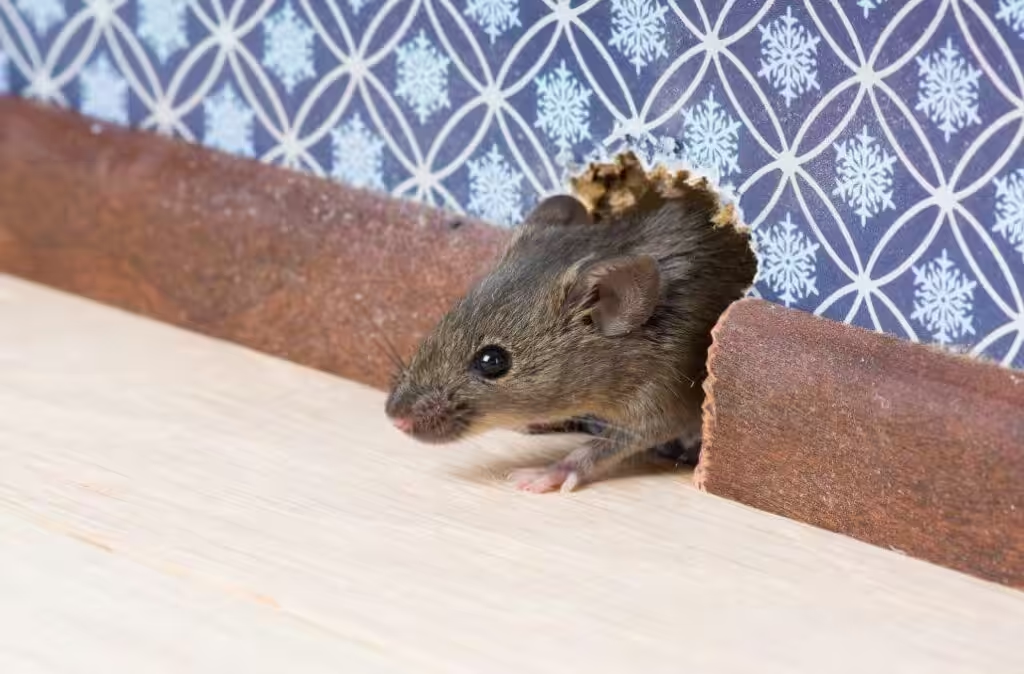
Sealing your home against mice means closing every gap about as wide as a pencil or larger, since that’s roughly the smallest opening an adult mouse needs to squeeze through. Steel wool packed into small holes and sealed over with caulk works well because mice can’t chew through it the way they chew through plastic or foam. Larger openings, like a missing dryer vent flap or a torn vent screen, need hardware cloth or a metal cover instead. Fall is the best time to do this work, since mice start looking hard for a way inside as soon as the weather turns cold. Walking the full perimeter of your house at ground level, plus checking the roofline and attic vents, catches most of what people miss.
The first cold snap of the year is usually when the scratching starts, somewhere behind a wall or up in the attic, right around the time outdoor food sources dry up and mice start looking for someplace warmer. By then, they’ve usually already found their way in.
Where Mice Actually Get Into Homes
Most homeowners picture mice slipping in through an obviously broken door or a hole in the siding, but the real entry points are smaller and easier to miss. Gaps around water lines, gas lines, and wiring where they pass through an exterior wall are common weak spots, since the hole cut for the pipe is almost always bigger than the pipe itself.
The same goes for the gap under a garage door, a torn screen on a foundation vent, or the small space where a deck or porch attaches to the house. We check spots like these on every rodent inspection, since they’re usually the ones a homeowner never thinks to look at twice.
Many homes across our service areas are older, and older homes tend to have more of these small gaps because materials shift and settle over decades. A house built in the 1970s or 80s has usually gone through several rounds of remodeling, plumbing updates, or added wiring, and every one of those projects can leave a gap behind that never got sealed back up.
Once you know what to look for, a slow walk around the outside of your house with a flashlight at dusk will usually turn up two or three gaps you’d never have noticed from the sidewalk.
What Actually Stops Them
Not every material works the same way. Steel wool, packed tightly into a gap and then sealed over with caulk, stops mice cold because they can’t chew through the metal fibers the way they chew through plastic, wood, or foam insulation.
Bigger openings, like the gap around a dryer vent or a missing vent screen, need something more rigid, like hardware cloth (a heavy metal mesh mice can’t chew through) or a metal cover, since steel wool tends to work loose over time in a larger hole. A few materials to skip:
- Plain caulk alone on any gap wider than a pencil, since it doesn’t stop chewing on its own
- Foam insulation spray; mice tunnel straight through it without much effort
- Plastic mesh or screen thinner than standard hardware cloth
The Spots Everyone Forgets
There are a few common mistakes that attract mice to your house, coupled with a handful of entry points that get missed even by homeowners who’ve already sealed the obvious ones:
- The attic vent screens, which crack or rust loose over years of weather
- Where the roof meets the top of an exterior wall, especially on older homes with worn trim boards
- Any gap around a pipe or wire entering the crawl space
- A garage door that doesn’t sit flush against the ground underneath it
None of these are hard to fix once you know to look for them, but they’re rarely on a homeowner’s radar until something’s already gotten through.
Why Fall Is the Right Time to Do This
September and October are when we see rodent calls climb across the Pacific Northwest, and it’s not a coincidence.
Once outdoor temperatures start dropping at night, mice shift from foraging in the yard to looking for a warm, dry place to spend the winter, and a house that was fine all summer suddenly looks appealing. Sealing up now, before the weather turns, means there’s nothing already inside working its way toward your walls when the first real cold hits.
This is also why our seasonal treatments are timed around pest life cycles rather than run on a flat calendar. A yard treatment that made sense in July doesn’t address what mice are doing in October, and waiting until you hear mice in the walls to act means exclusion happens after the fact, not before.
How We Handle Exclusion at Natura
When we come out for a rodent inspection, exclusion, which just means sealing off the gaps mice use to get in, is the first thing we look at. We walk the full exterior, find every gap large enough for a mouse, and seal what we can on the spot with steel wool, caulk, or hardware cloth depending on the size and location.
From there, we place traps or bait stations where we know rodents travel, and we check back on a set schedule rather than assuming the first round solved it. Pest control is a process, not an event, and rodent activity is one of the clearest examples: a house sealed once in October can develop a new gap by spring, so follow-up visits matter as much as the initial work.
If you’re already dealing with mice inside, our rodent control program covers both removal and sealing in one visit. If anything reappears before your next scheduled visit, the re-service is free.
Hearing scratching in the walls or find droppings along a baseboard? Sealing the entry points now is worth more than another trap, since mice rarely stay confined to just one room for long.
Call (360) 215-2876 to take back control before winter sets in and experience the Natura difference.
- Portland, OR
- Beaverton, OR
- Amboy, WA
- Longview, WA