

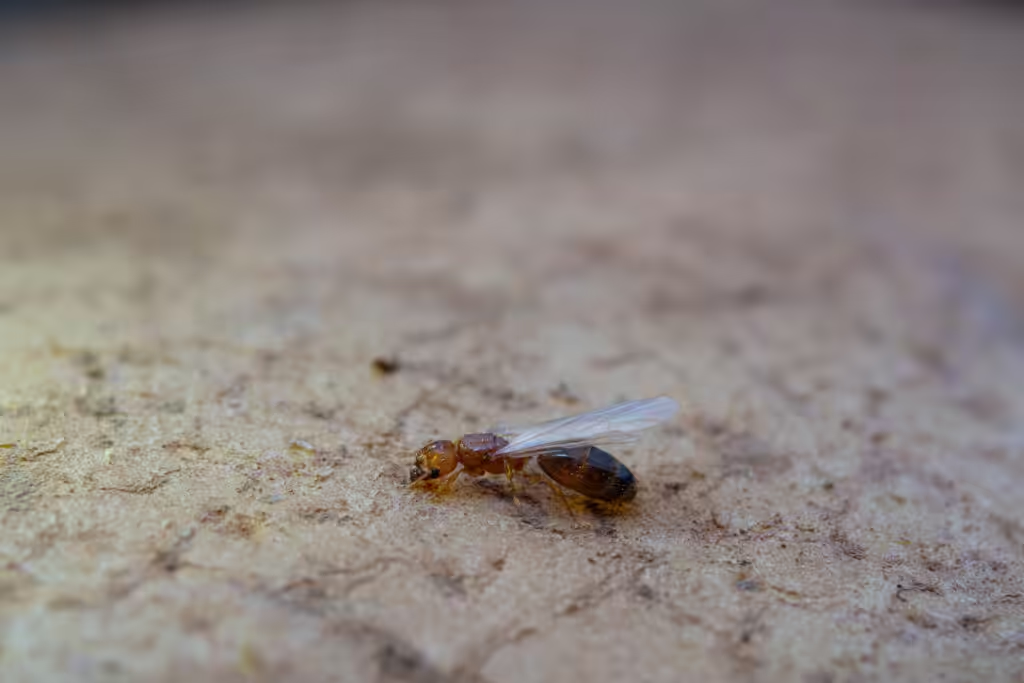
Termite swarmers are winged, reproductive termites that leave an existing colony to start a new one, and finding them inside your home usually means there’s an active colony nearby. They show up on warm, humid days in spring or early fall, often right after a rain, and porch lights or sunny windows pull them in fast. If you see a cluster of them near a windowsill or foundation crack, don’t just spray and move on. The swarmers aren’t the actual problem; the colony behind them is. Catch a few in a jar if you can, then get a professional out for an inspection, since those discarded, papery wings on the windowsill are sometimes the only warning before real damage starts underneath.
A cluster of small, dark, winged insects pooling along your windowsill on a warm September afternoon isn’t just an odd nuisance. Here in the Pacific Northwest, that kind of gathering usually means one thing: a termite colony nearby has just sent out its swarmers, and it’s worth taking seriously before the wings disappear and the evidence goes with them.
What Termite Swarmers Really Are
Termite swarmers are the winged, reproductive termites a mature colony produces once it’s large enough to branch out.
Their entire purpose is to leave the nest, pair off, and start a brand-new colony nearby. A colony healthy enough to swarm has usually been established for years already, quietly working the whole time before you ever noticed a sign of it.
Seeing swarmers inside your home is different from seeing them out in the yard. A swarm crossing your lawn on its way from a tree stump or old fence post isn’t automatically an emergency, but it’s still worth a second look. Indoor swarmers, or their shed wings scattered on a windowsill, along a baseboard, or across a carpet, point to a colony that’s already inside your walls or foundation.
Our termite treatment plans start with figuring out exactly what we’re dealing with before we touch anything, since the two call for very different next steps.
Termite Swarm Season in the Pacific Northwest
Our region sees two main swarm windows: a spring push and a smaller one in early fall, which is when a lot of homeowners start noticing them again. Warm, humid air after rain is more often the trigger than the date on the calendar.
Dampwood termites, which nest in damp or decaying wood and are one of the two species we deal with most across Oregon and Washington. They swarm on mild evenings and head straight for porch lights and lit windows.
Subterranean termites, which live in the soil and tunnel up into a structure, are the other regional priority here. They’re more likely to swarm during the day, once rain has softened the ground enough for them to break through.
Both species have been active in the PNW for generations, and the older, damper housing stock common in a lot of our service areas gives them plenty of wood to work with. A colony that swarms in a neighbor’s yard this month could just as easily be the same one that’s been working a few feet from your own foundation without anyone noticing yet.
Termite Swarmers vs. Flying Ants
Flying ants show up around the same time of year and get mistaken for termite swarmers constantly, which is frustrating when you’re trying to figure out if you actually have a problem. A few close details separate them:
- A termite’s waist is thick and straight, not pinched like an ant’s
- All four of a termite’s wings are the same length, while an ant’s front pair is noticeably longer
- Look for straight, beaded antennae; ants have bent, elbowed ones
- Termite swarmers shed their wings fast once they land, leaving small piles behind, while ants keep flying
If you’re holding one and still can’t tell, that’s exactly the kind of thing worth a quick photo and a call rather than a guess. A misidentified swarmer costs nothing; an ignored one can cost quite a bit more once it’s had a season or two to work.
What to Do When You See Termite Swarmers
Resist the urge to grab the vacuum or a can of spray the moment you spot them. Swarmers themselves don’t damage wood, and killing the ones you can see does nothing to the colony that sent them out. A few things actually help:
- A small jar with a few swarmers or shed wings, useful for accurate identification
- The exact spot you found them: near a window, a baseboard, or the foundation
- A quick screwdriver test on nearby wood trim; damaged wood gives way easily instead of splintering
- If it’s been more than a day since you saw them, call for an inspection rather than assuming it was a one-time fluke
Wing piles are one of several signs that you have termites in your house, and they’re one of the easiest to miss if nobody’s looking for them. A few papery wings behind a curtain or under a windowsill can sit there for weeks before anyone connects them to anything.
How We Handle Termite Swarms at Natura
When you call us about swarmers, we start with a full inspection instead of a guess, since dampwood and subterranean termites call for different approaches.
Our entomologists, who are ACE-certified (Associate Certified Entomologists), know exactly which signs point to which species. We check the foundation, crawl space, attic, and any spots where wood touches the ground, since that’s usually where a colony first finds its way in.
From there, we build a treatment plan around your home’s specific access points and soil conditions instead of running the same routine on every job. We stand behind that work with a straightforward guarantee: we stay on the job until the colony is gone. This matters with termites in particular, since a colony that goes quiet for a season hasn’t necessarily left.
September swarms tend to be the last clear warning before winter sets in and any existing colony keeps working undisturbed under your siding. If you’ve found wings on a windowsill or a cluster of swarmers near a foundation crack this month, it’s worth having someone take a look before the trail goes cold.
Ready to take back control? Call (360) 215-2876 and experience the Natura difference.
- Vancouver, WA
- Ridgefield, WA
- Sherwood, OR
- Salem, OR