

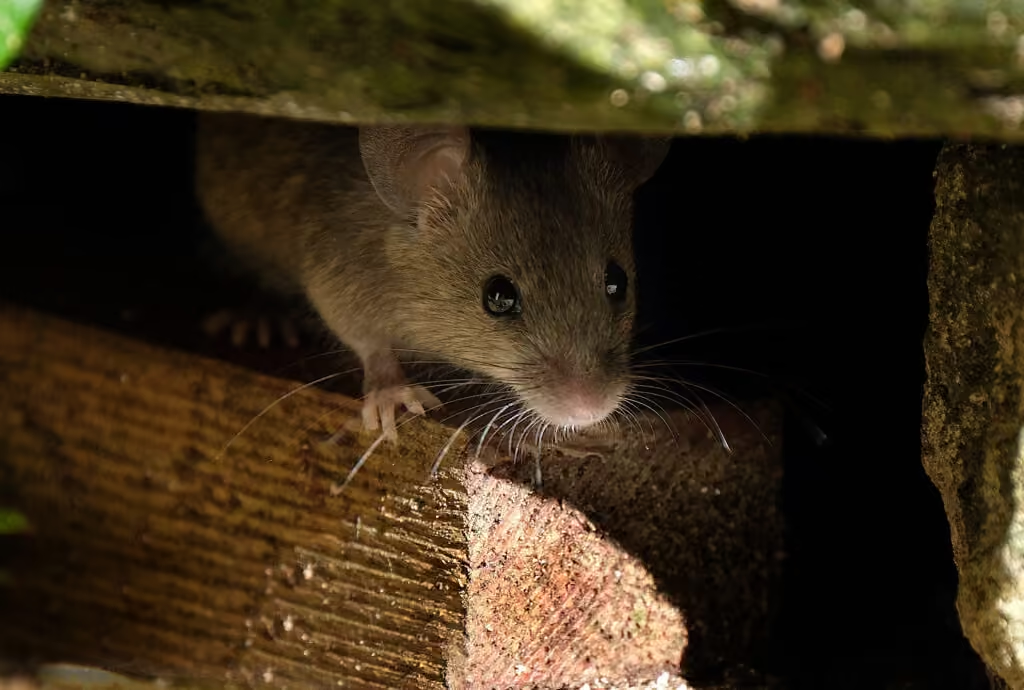
Rats and mice leave different evidence in an attic, and you can usually tell them apart without ever seeing one. Rats sound heavier and move more slowly, drop pellets about the size of a raisin, and press insulation flat, leaving visible trails along the beams. Mice sound faster and lighter, leave far more droppings the size of a grain of rice, and burrow into insulation to build small, shredded nests. Getting the species right matters because it changes where the traps go and which entry points we look for.
Two in the morning, something is moving above the bedroom ceiling, and you are lying there trying to judge how big it is by sound alone. A lot of the rodent calls we take in October start there. The fall rains arrive, the yard stays soaked, and the driest space within fifty feet is the one above your insulation.
The question people ask first is whether it is rats or mice. It is a good question, and the answer changes the whole plan.
What the Noise Is Telling You
A rat in the attic makes more noise than most people expect. You hear distinct footfalls you can track across the ceiling, occasional dragging as it hauls nesting material, and a slow rhythmic gnawing that stops and starts. Thumps are common. Rats climb well, and they get confident once they know the route.
Mice sound busier and lighter. The movement is quick and scratchy, more constant, higher-pitched, and harder to follow because they change direction so often. If you cannot tell where the sound is going, it is usually mice.
Both are night animals, so activity peaks in the first few hours after dark and again before dawn. Daytime noise in a quiet house is a sign the population has grown enough that some animals are foraging off-schedule.
Signs of Rats in the Attic
Get a light up there, and the evidence is usually easy to sort out. Four signs of rats in the attic are worth looking for:
- Droppings about the size of a raisin, scattered along the beams rather than piled
- Insulation pressed flat into narrow trails that follow the floor beams
- Dark rub marks on the rafters (the sloped beams that hold up the roof) and around openings, left by oily fur on repeated trips
- Gnaw damage on wood edges, wiring insulation, and the plastic covers on roof vents
Those flattened trails are the single most useful find. Rats tend to use the same route night after night, and the pressed-down path shows us exactly where to place equipment. Roof rats and Norway rats behave differently once inside, and the species profiles for each cover how they move through a property.
How Mice in the Attic Look Different
Volume is the giveaway with mice in the attic. A single mouse produces dozens of droppings a day, so you find scattered pellets about the size of a rice grain almost everywhere rather than along one clear path. The droppings are smaller and more pointed than a rat’s.
Instead of pressing insulation flat, mice burrow into it. Look for tunnels through the insulation and for loose nests roughly the size of a grapefruit, built from shredded insulation and whatever paper or fabric was within reach.
Mice also reach the attic by climbing through wall voids. You may hear scratching inside the walls before you ever spot evidence overhead. Our rat vs. mouse guide lays out the full side-by-side if you are not sure which one you are dealing with.
Why Attics Fill Up in October
Rodents are not coming in because the house is dirty. They come in because the fall rains set in across the PNW and keep the ground wet for months, and an attic offers dry insulation, stable temperatures, and minimal disturbance. A gap about half an inch wide is enough for a rat. A mouse needs only about a quarter inch, roughly the width of a pencil.
The routes are boring and predictable: a gap where two roof edges meet, an attic vent with no screen behind it, the opening where a cable or dryer vent passes through the wall, an overhanging branch that can put a rat on your roof in one jump.
What to Do About Rats in the Attic
Hold off on tossing poison into the attic yourself. A rodent that dies inside a wall or under the insulation creates an odor problem that can last weeks, and you may never find it to remove it. The approach that works is slower and more methodical:
- Inspect the attic and the outside of the house together, since the evidence inside points to the opening outside
- Place traps directly on the flattened trails rather than spreading them around
- Monitor and adjust, because the first placement rarely catches everything
- Close the entry points, then check the soiled insulation once the activity stops
Then keep watching. One clean week does not mean an empty attic. Pest control is a process, not an event, and rodents are the clearest example of why. Our rodent control service is built around that repeat cycle rather than a single visit.
What the First Visit Covers
Our inspection comes before any equipment goes out. Four of our team are Structural Pest Inspectors, and two are Associate Certified Entomologists (ACEs), so identifying the species and reading the trails is settled on the first trip.
From there, we seal access points around pipes, vents, doors, and windows. Traps and bait stations are placed where the animals already travel, and we return on a recurring schedule to check and adjust them. If activity returns between scheduled visits, we come back at no charge.
Do Not Wait Out the Noise
Noise this month usually means the rodents have already settled into your attic. The longer it goes unaddressed, the more insulation gets soiled, and the more wiring is at risk. Ready to take back control? Call us at 360-215-2876 and experience the Natura difference. We will get into the attic and the crawl space and tell you exactly what is up there.
Areas We Serve
- Vancouver, WA
- Ridgefield, WA
- Portland, OR
- Amboy, WA
- Camas, WA
- Battle Ground, WA
- Longview, WA
- Kelso, WA
- La Center, WA
- Woodland, WA
- Oregon City, OR
- Beaverton, OR
- Gresham, OR
- Hillsboro, OR
- Tigard, OR
- Aloha, OR
- Happy Valley, OR
- Lake Oswego, OR
- West Linn, OR
- Salem, OR