

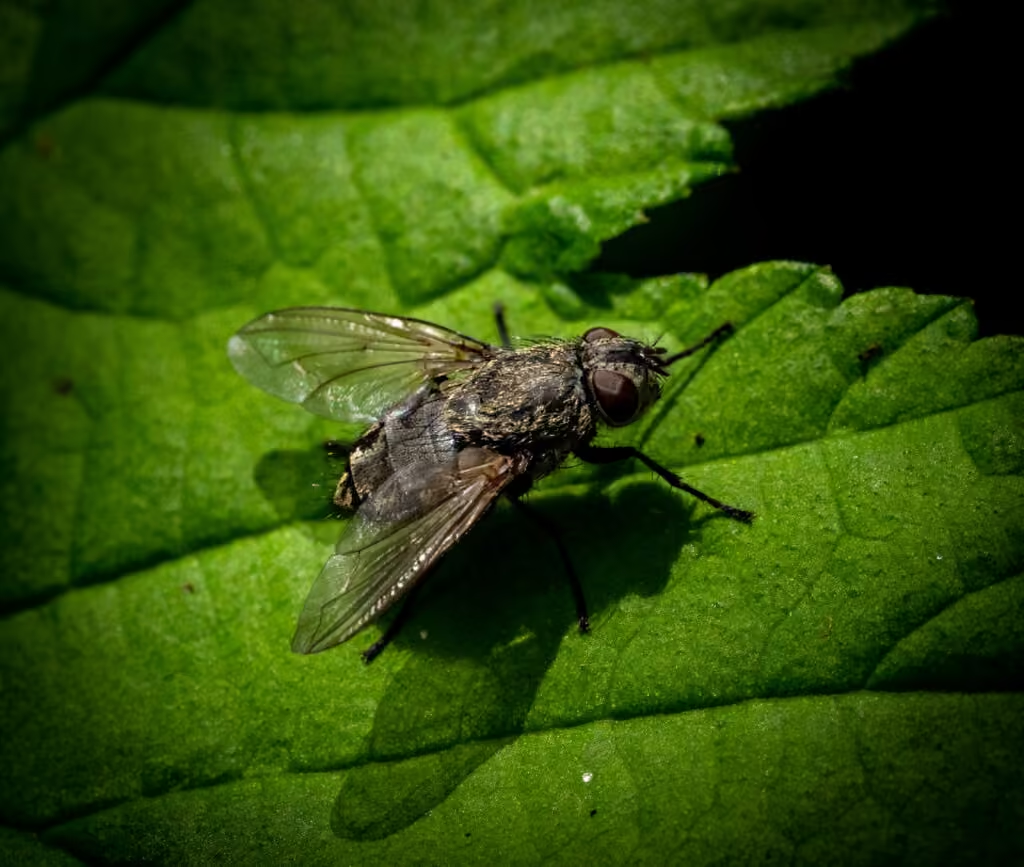
Cluster flies are fall invaders that come indoors only to sleep through winter. They gather by the hundreds on sunny south and west walls on the last warm days of the year, then slide through gaps around siding, vents, and attic trim. Once inside the space within a wall or an attic, they stay still until a warm afternoon wakes them and they drift toward the nearest lit window. They do not bite, sting, or spoil food, and the fix is to seal and treat the outside of the house before they ever get in.
The call almost always sounds the same. Someone in Ridgefield or Battle Ground has a dozen slow, groggy flies bumping against the inside of an upstairs window in the middle of November; the house is clean, there is no garbage anywhere nearby, and nobody can figure out where they came from. Those are cluster flies, and the window is the last stop on a trip that started outside in September.
What Are Cluster Flies?
Cluster flies belong to the genus Pollenia, and their life cycle has nothing to do with your kitchen. The larvae develop inside earthworms out in the yard, pasture, and field edges. That means the flies you see indoors were raised in the soil around your property, not in anything you left on the counter.
Adults spend the summer outside doing ordinary fly things. When the nights cool off and the fall rains start moving in, they change behavior completely and go looking for a dry place to wait out the winter. In the PNW, that is usually the sunniest wall of the nearest house.
Cluster Fly Versus House Fly
Most homeowners assume this is a house fly problem and treat it as such. The spray under the sink never touches a cluster fly, because the flies are not living in the room where they are found. Four differences settle the identification quickly:
- Cluster flies move slowly and clumsily; house flies are fast and hard to swat
- Look for golden or yellowish hairs on the middle section of the body
- At rest, a cluster fly’s wings overlap flat across its back
- House flies breed in waste indoors, while cluster flies breed only in soil outdoors
Size is the least useful clue. Cluster flies run slightly larger, but not enough to call it from across a room.
Why They Pile Up in Attics and Windows
Late September sun hits the south and west walls, warming the siding several degrees above the air temperature. Flies gather on that warm surface, sometimes by the hundreds.
From there it takes almost nothing to get in: a gap behind a piece of trim, an unscreened attic vent, the seam where the underside of the roof overhang meets the wall, a worn seal around a bathroom fan.
Once inside, they settle into the hollow spaces within the walls and the corners of the attic and go quiet. Attic flies are easy to miss for months. Then a mild January afternoon warms the roof, a batch of them wakes up disoriented, and they head for light. That is why the flies show up at upstairs windows and ceiling fixtures rather than in the kitchen, and why they keep coming back in waves.
They cause no structural damage and no health risk. The real problem is that they keep arriving, and no amount of vacuuming reaches the ones still asleep in the wall. Our rundown of strange pest problems we get called about covers a few more that behave this way.
How to Get Rid of Cluster Flies
Timing matters more than product here. Once the flies are inside the wall, you can only manage the ones that emerge. The work that actually pays off happens in late summer and early fall, before the fall rains and cooler nights push them toward the siding.
- Seal around attic vents, the underside of the roof overhang, siding gaps, and the spots where pipes and wires enter the wall
- Repair torn window screens and add screening to the vents up near the roof peak
- Have the sunny exterior walls treated before the fall rains set in
- Vacuum the ones that emerge indoors rather than spraying them
Vacuuming gets pushback, and it should not. Dead flies left in window tracks and light fixtures can attract carpet beetles later, so vacuuming up the ones you can reach is the cleaner outcome. Cluster flies aren’t the only insects looking for a warm wall in October. Our guide to fall bugs worth watching for covers the rest.
Where Our Technicians Start
We begin by walking along the sunny side of the house and noting where the flies land, because that tells us which entry points matter.
Two of our team members are Associate Certified Entomologists (ACEs), so the identification is settled on-site. Four of us are Structural Pest Inspectors, and finding the seam a fly slipped through is the same skill as finding the one a rodent used.
From there, we apply our eco-conscious liquid barrier around the house, including the sunny walls where the flies land, so they pick it up before they find a gap. We seal what we can reach and fold the house into a recurring plan with a visit every 90 days.
We reapply because the products are built to break down naturally rather than sit on your siding for a year. If the flies come back before your next visit, we return at no charge. You can see how the recurring plan works across every pest we handle on our services page.
Get Ahead of the Fall Rains
The window for stopping cluster flies is short. Once those warm October afternoons give way to steady rain and the flies are already tucked into the attic, all that is left is cleanup. Let us walk the sunny side of your house while it still matters.
Pest control is a process, and this is one pest where getting ahead of the calendar does most of the work. Ready to take back control? Call us at 360-215-2876 and experience the Natura difference.
Areas We Serve
- Vancouver, WA
- Ridgefield, WA
- Portland, OR
- Amboy, WA
- Camas, WA
- Battle Ground, WA
- Longview, WA
- Kelso, WA
- La Center, WA
- Woodland, WA
- Oregon City, OR
- Beaverton, OR
- Gresham, OR
- Hillsboro, OR
- Tigard, OR
- Aloha, OR
- Happy Valley, OR
- Lake Oswego, OR
- West Linn, OR
- Salem, OR