

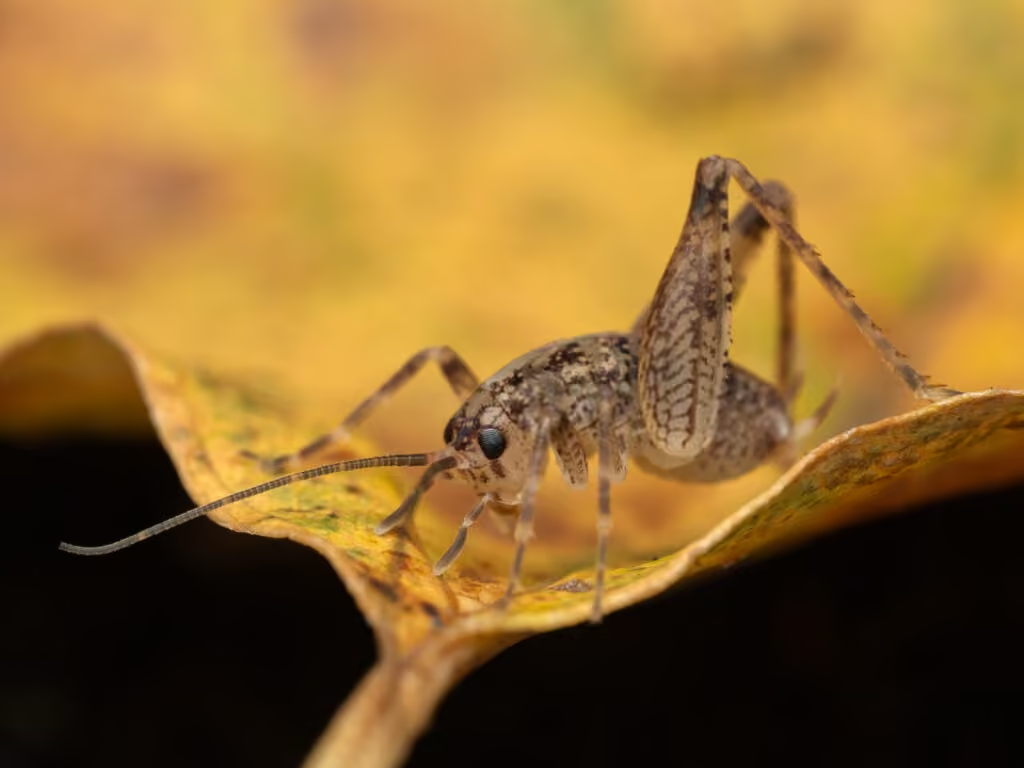
Camel crickets are wingless, humpbacked crickets that live in dark, damp places like crawl spaces, basements, and window wells. They cannot chirp, and they cannot bite you in any way that matters. They jump at anything that startles them, which is why they seem aggressive. Finding them under a Pacific Northwest home is normal and usually means the crawl space is holding more moisture than it should. Drying out the space and sealing the gaps do most of the work.
You lift the crawl space hatch, point a flashlight in, and a dozen brown things launch straight at your face. Nobody forgets that. But it’s close to the least dangerous thing that can happen to you under a house, and the jump is a panic reaction, not an attack.
Camel crickets go by several names around here. Cave cricket, spider cricket, spricket. It’s the same insect, and it lived under logs and rocks long before it found its way into crawl spaces.
What Camel Crickets Are
They are crickets that cannot make a sound. Camel crickets have no wings, and without wings they lack a sound-producing structure, so they cannot chirp at all. What they have instead is a rounded, humpbacked body, enormous back legs, and antennae longer than the whole rest of the body.
Coloring runs mottled tan to dark brown. From a few feet away in a poorly lit crawl space, it looks like a spider, which is where the spider cricket nickname comes from. Look closer, and the six legs and the long antennae seal the deal.
The jumping is worth explaining, because it drives most of the fear. Camel crickets see poorly and cannot fly. When something large disturbs them, their only defense is to lunge at it and hope the surprise buys them a second. It reads as an attack. It is closer to a panic.
Why They Live in Crawl Spaces
Moisture is the main reason. Camel crickets dry out fast and need consistently damp air. A PNW crawl space fits that description once the fall rains arrive in October, and it usually stays that way through May. Add a torn plastic ground sheet on the crawl space floor, or a yard that slopes toward the house instead of away from it, and the population grows quietly for years without anyone lifting the hatch to notice.
The same conditions pull in a whole crowd of damp-loving pests. We usually find camel crickets sharing the perimeter with the slugs and snails on the same wet ground. Outside the crawl space, look for them in window wells, under deck boards, behind stacked firewood, and in the corners of unfinished basements.
Do Camel Crickets Bite?
Practically, no. They have no venom, no interest in people, and mouthparts built for scraping fungus and soft plant material rather than breaking skin. There are occasional reports of one nibbling at skin if it gets picked up, and nothing comes of it. They carry no disease we need to warn you about.
What they do damage is stored belongings, and that catches people off guard:
- Cardboard boxes and paper stored directly on a basement or garage floor
- Fabric, especially anything with starch or a natural fiber content
- Houseplant leaves and seedlings kept in damp low-light spaces
- Small dark droppings left across whatever they have been crawling over
The staining is the usual complaint. A box of stored photographs that spent a winter in a crawl space comes out speckled.
Keeping Camel Crickets Out
Drying the space is the first move and the one that lasts. The other steps support it.
- Repair or replace the torn plastic ground sheet so soil moisture stops rising into the crawl space
- Screen the crawl space vents and seal the gaps around the access hatch
- Move firewood, leaf litter, and yard debris away from the base of the house
- Pull cardboard storage up onto shelving and swap it for sealed bins
Then treat the outside edge of the house. New camel crickets keep moving in from the yard, woodpiles, and window wells, so a treated band around the base of the home stops many of them before they reach the crawl space. Camel crickets are far from the only surprise hiding in a crawl space. Our notes on unusual pest infestations cover a few of the stranger ones.
What a Crawl Space Visit Involves
Our technicians go into the crawl space rather than guessing from the hatch. Four of our team are Structural Pest Inspectors, so we check the ground sheet, the yard’s slope, and the vent screening while also checking for insect activity. Two of our team are Associate Certified Entomologists (ACEs), meaning they are certified insect specialists. That keeps the identification accurate on a call where the homeowner is certain they are looking at spiders.
From there, it is an eco-conscious liquid treatment around the base of the home, a granular product spread ten to twenty feet out into the lawn, sealing what we can reach, and a return visit every 90 days. We reapply because our products are built to break down naturally rather than sit under your house for a year.
If the crickets come back before the next scheduled visit, we return at no charge. Protecting the good insects while we do it is the point of Bee Careful, our pollinator work.
Before the Wet Season Settles In
A crawl space that is damp enough for camel crickets in October only gets wetter as the fall rains continue through winter. The insects are harmless. The moisture keeping them there is not.
Call us at 360-215-2876 and let us get under the house before the wet season settles in. We work with families across Vancouver and the rest of the PNW, and pest control is a process, not an event. Ready to take back control? Experience the Natura difference.
Areas We Serve
- Vancouver, WA
- Ridgefield, WA
- Portland, OR
- Amboy, WA
- Camas, WA
- Battle Ground, WA
- Longview, WA
- Kelso, WA
- La Center, WA
- Woodland, WA
- Oregon City, OR
- Beaverton, OR
- Gresham, OR
- Hillsboro, OR
- Tigard, OR
- Aloha, OR
- Happy Valley, OR
- Lake Oswego, OR
- West Linn, OR
- Salem, OR