
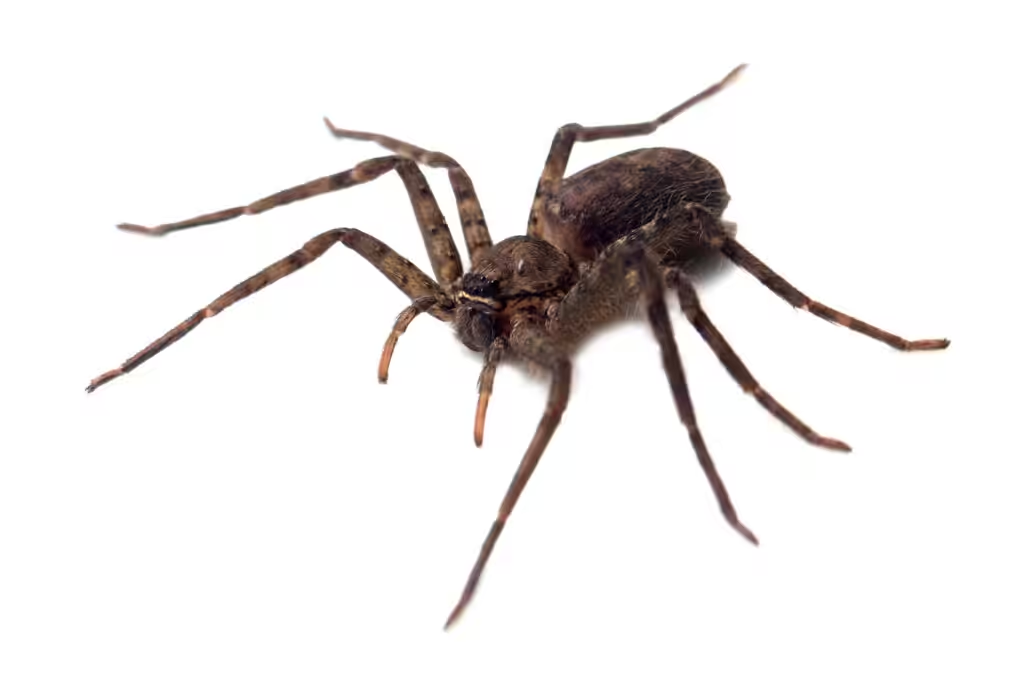
Hobo spiders in Washington are not nearly as dangerous as their reputation suggests. For years, they were blamed for necrotic, flesh-damaging bites similar to a brown recluse, but that connection was never solidly confirmed and has since lost most of its scientific support. A hobo spider bite is uncommon in the first place, since these spiders aren’t aggressive and only bite when trapped against skin. When a bite does happen, it typically causes redness and swelling that clears up within a few days. The bigger issue in most Washington homes is misidentification, not venom, since hobo spiders end up blamed for symptoms that usually have nothing to do with a spider at all.
Late summer and early fall in Washington are when we get the most calls about hobo spiders turning up somewhere unexpected, usually a garage floor or a basement corner. Male hobo spiders leave their webs and wander during mating season, which runs roughly August through October here in the state.
That wandering is why sightings climb right when the weather starts cooling off. Most of these calls come from homeowners who’ve already looked up the spider online and found a decades-old warning about flesh-eating bites. That warning doesn’t hold up nearly as well as it once did.
Where the Hobo Spider’s Bad Reputation Came From
The hobo spider’s reputation as dangerous traces back largely to a handful of studies from the 1990s that linked its bite to necrotic skin lesions, the kind of wound a brown recluse bite can cause.
Washington and Oregon don’t have an established brown recluse population, so when a patient showed up with a wound like that, the hobo spider became the default suspect. Later attempts to reproduce those original findings couldn’t replicate the tissue damage, and several of the case reports behind the scare never confirmed that a hobo spider was what bit the patient in the first place.
Some of the original studies worked from only a handful of cases, and few researchers ever caught the actual spider responsible rather than assuming based on the wound alone. On venom toxicity, the short version is that the science behind the original scare has weakened considerably since it first spread.
What Changed in the Research
Entomologists who studied hobo spider venom directly in follow-up research were never able to reproduce the necrotic wounds described in the early case reports. The broader scientific consensus has moved away from treating it as a genuine health threat on par with a brown recluse.
None of that means a bite does nothing. It means the specific claim that hobo venom destroys tissue like a brown recluse bite never survived closer testing. A confirmed hobo spider bite typically causes localized redness, swelling, and some pain at the site, similar to a bee sting, and those symptoms usually resolve within a few days without any lasting damage.
That gap between the old reputation and where the research landed hasn’t caught up with most people yet. We still get calls from homeowners who want every spider in the garage killed on sight, worried that any one of them could be a hobo spider capable of a dangerous bite.
Most of what’s really living in a Washington garage is far less concerning than that: cellar spiders, wolf spiders, and other harmless wanderers that never bite anyone at all.
Why Bites Are Rarer Than People Assume
Hobo spiders aren’t aggressive, and they don’t chase down people or pets. They build funnel-shaped webs low to the ground, tucked into woodpiles and cluttered basement corners along with other ground-level junk piles.
Bites happen defensively when a spider gets pinned against skin, most often when someone reaches bare-handed into a dark space or slides a foot into a shoe with a spider already inside.
Much of what gets reported as a hobo spider bite in Washington is never confirmed, since the spider is rarely caught in the act and other conditions, like a bacterial skin infection or a bite from a different insect, can look similar in a photo alone.
When a Spider Problem Needs a Pro
Lower risk doesn’t mean no risk. A heavy hobo spider population around a house is still worth addressing, especially with young kids, pets, or anyone with a known sensitivity to insect bites in the home. A few signs point to a bigger population than normal:
- Funnel-shaped webs turning up in more than one corner of the basement or garage
- Seeing spiders indoors well outside the typical August-to-October mating window
- A sudden jump in sightings right after firewood, mulch, or storage boxes get moved
Finding hobo spiders regularly, rather than the occasional wanderer, usually points to a bigger food source nearby: the smaller insects hobo spiders hunt have built up enough to support a larger population.
Still, other, more dangerous spiders in Washington pose a greater risk than hobo spiders.
How We Handle Spiders at Natura
When we come out for a spider issue, hobo or otherwise, our entomologists, who are ACE-certified (Associate Certified Entomologists), start by locating where they’re hiding rather than just treating the spots where someone happened to see one.
Clearing out egg sacs and existing webs matters as much as any spray, since removing them cuts down the population directly instead of only addressing the adults wandering around. From there, we treat to cut off the food source driving the population, the smaller insects spiders are hunting, since a yard that’s already under control for other pests naturally supports fewer spiders too.
This is the same Integrated Pest Management approach we use for every pest we service: figure out what’s actually drawing spiders to a specific property before deciding how to treat it, rather than running the same spray on every job regardless of what’s really going on.
Our spider control service covers both the immediate problem and the conditions that let it build up in the first place. Like every service we run, pest control is a process, not an event, with free re-service built in if spiders show up again before your next scheduled treatment.
September and October are exactly when hobo spider sightings climb across our service areas here in the PNW, and most of what we get called out for turns out to be more of a nuisance than a genuine health risk. Still, we’d rather confirm what’s actually living in your home than have you guessing based on an old warning label.
Ready to take back control? Call (360) 215-2876 and experience the Natura difference.
- Aloha, OR
- Camas, WA
- Battle Ground, WA
- Happy Valley, OR