

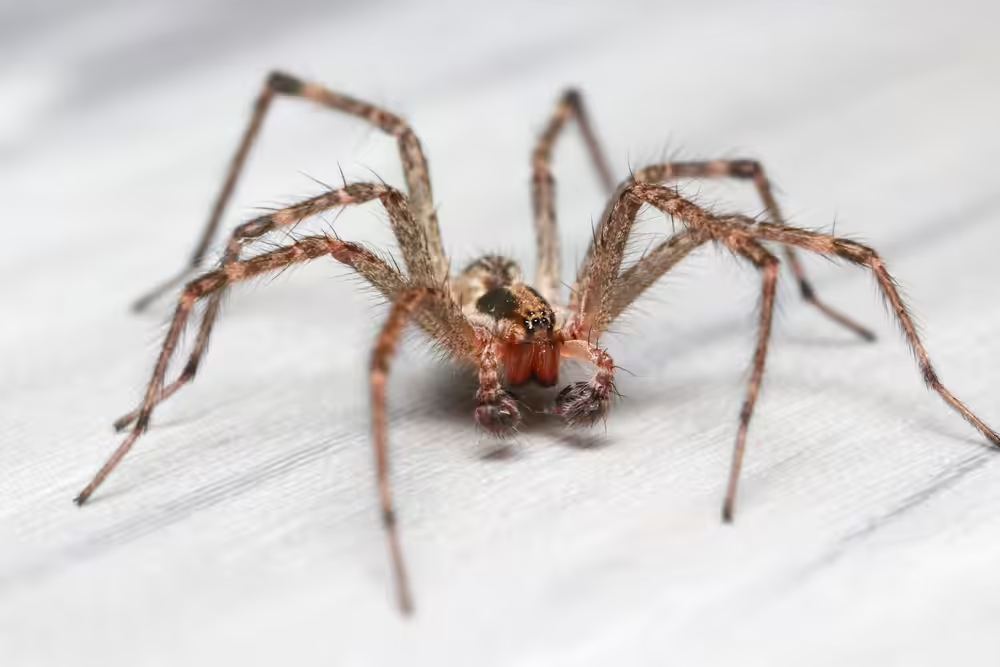
Here in Oregon and Washington, from Portland to Salem to Vancouver, we know all too well that spiders tend to show up in unexpected places come late summer and early fall.
And they’re certainly not welcome visitors, either.
Among these familiar eight-legged visitors are hobo spiders, which are often misunderstood and feared. But are hobo spiders poisonous, or is their reputation one that’s simply built on myth?
Before you grab the nearest shoe, let’s explore the truth about hobo spiders, their behaviors, and whether their venom is anything to worry about.
What Are Hobo Spiders?
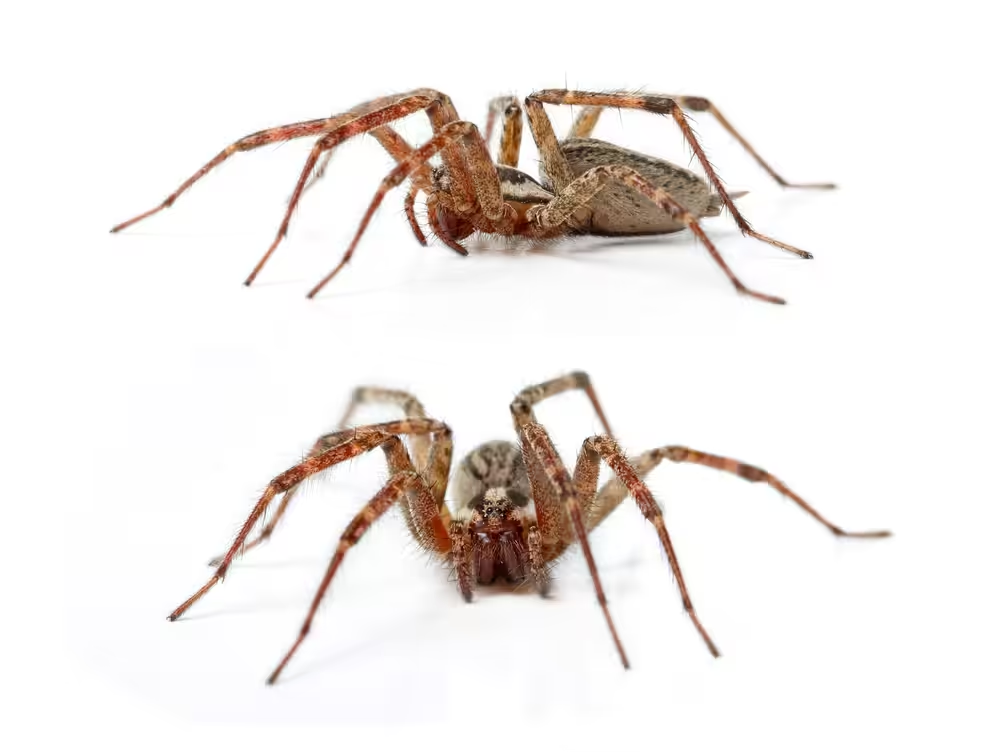
The hobo spider (Eratigena agrestis) is a member of the funnel-web spider family. These spiders are referred to as “funnel-web” builders because their webs have a tube-like structure where they lie in wait for unsuspecting prey.
The hobo spider is not native to the United States but was introduced from Europe in the early 1900s. Since then, they have spread throughout the Pacific Northwest, including areas we serve here at Vancouver, like Albany, Tigard, and Silverton.
Contrary to their old nickname, the “aggressive house spider,” hobo spiders aren’t aggressive by nature. That misnomer comes from a mistranslation of their Latin species name, agrestis, which actually means “field-dwelling” or “rural” rather than “aggressive.”
That’s not to say their appearance isn’t intimidating: a mature female hobo spider can grow to about 16.5 millimeters (⅝ inch), with long legs and subtle yellow chevron patterns on their abdomen.
Are Hobo Spiders Poisonous?
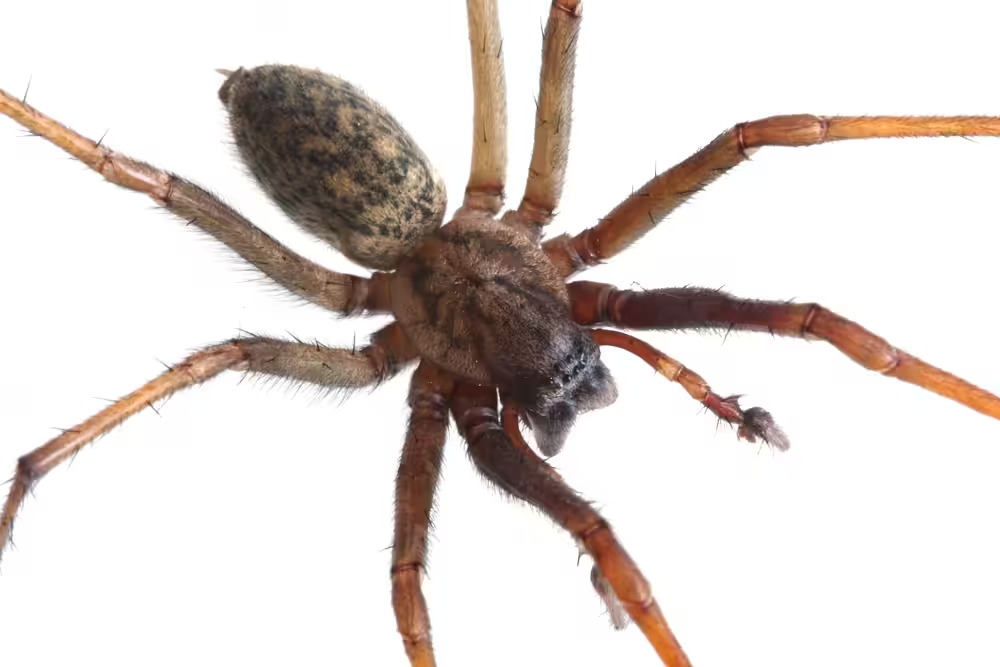
This question has likely crossed the minds of many homeowners in Oregon City or Sherwood after spotting a hobo spider weaving its funnel web in the backyard. The short answer is no, hobo spiders are not officially classified as poisonous or a threat to human health.
The idea of hobo spiders having venom that causes necrotic (or flesh-eating) wounds originated more than 30 years ago, but follow-up research has debunked this claim.
Nevertheless, institutions like the CDC and entomology experts have not included hobo spiders on the list of medically significant venomous species in the U.S. Most reported “spider bite” complications in the West are actually caused by MRSA infections or other bacteria, rather than spider venom.
The good news is that only a small percentage of spiders in Oregon, such as black widow spiders, pose any serious health risks, and hobo spiders aren’t one of them.
While hobo spiders rarely bite, if one does, it may cause mild redness or irritation, similar to a bee sting. Severe reactions are highly unusual and can often be attributed to secondary skin infections rather than venom toxicity. If you experience unusual symptoms following a bite, consider consulting a medical professional.
Why Do Hobo Spiders Come Indoors?
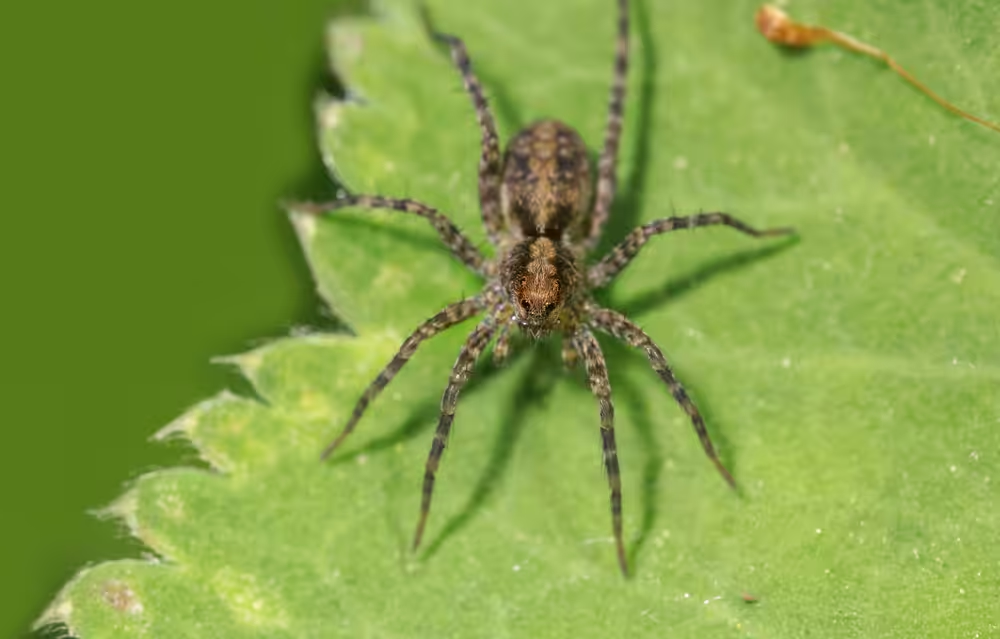
Like many arachnids, hobo spiders are most active from August to October, when the males wander in search of mates.
During this time, you might spot them in basements, garages, or even stuck in sinks and bathtubs. They aren’t particularly adept at climbing smooth surfaces, which is the most common explanation for these kinds of encounters.
Some other common habitats for hobo spiders include:
- Wood and rock piles
- Foundation cracks
- Tall grass near homes
- Cluttered basements
How to Prevent Hobo Spiders in Your Home in the Future
While hobo spiders aren’t necessarily dangerous, their sudden appearances often make homeowners uncomfortable.
Here’s how you can prevent them from taking up residence in your home:
- Seal entry points: Caulk gaps around windows, doors, and foundation cracks.
- Replace door sweeps: Make sure you have a snug connection to the floor.
- Minimize clutter: Tidy up storage areas, both inside and outside.
- Install weatherstripping: Make sure this is installed on exterior-facing doors and windows.
- Use sticky traps: Place these along baseboards to monitor spider activity.
- Call a professional: If all the above steps feel overwhelming, Natura Pest Control can help take the guesswork out of keeping spiders at bay.
Don’t let a fear of hobo spiders ruin your peace of mind! At Natura Pest Control, we’re committed to serving homeowners throughout Oregon, from Salem and Milwaukie to Wilsonville and beyond.
Contact our expert team at Natura Pest Control to schedule a free consultation and keep your home spider-free today!
Did You Know?
Despite their bad reputation, hobo spiders can be beneficial to the ecosystem. Their webs trap common pests around your home, like beetles and flies. Plus, hobo spiders themselves are prey for other predators, contributing to the local food chain.
FAQ
Are hobo spiders poisonous to humans?
No, they are not considered poisonous, nor are they particularly dangerous. Research has shown that their venom does not cause necrotic wounds or serious health issues.
What should I do if I find a hobo spider inside my home?
Gently capture and release it outdoors if you’re comfortable. For frequent sightings, consider contacting professional pest control services for long-term prevention.
How can I tell a hobo spider apart from other species?
Hobo spiders are brown with subtle yellow chevron patterns on their abdomen and lack dark leg bands. Correct identification often requires a microscope, so leave it to the experts if you’re unsure.
What’s the best way to keep hobo spiders out of my home?
To keep spiders out, seal cracks, reduce clutter, and consider seasonal pest control treatments as a preventative measure.
Do I need professional pest control for hobo spiders?
While DIY solutions may suffice for occasional sightings, larger infestations may require expert assistance to treat and prevent.