

Physical appearance is a useful starting point, but it only works if you can observe from a safe distance. Behavior in flight often tells you more quickly than markings alone.
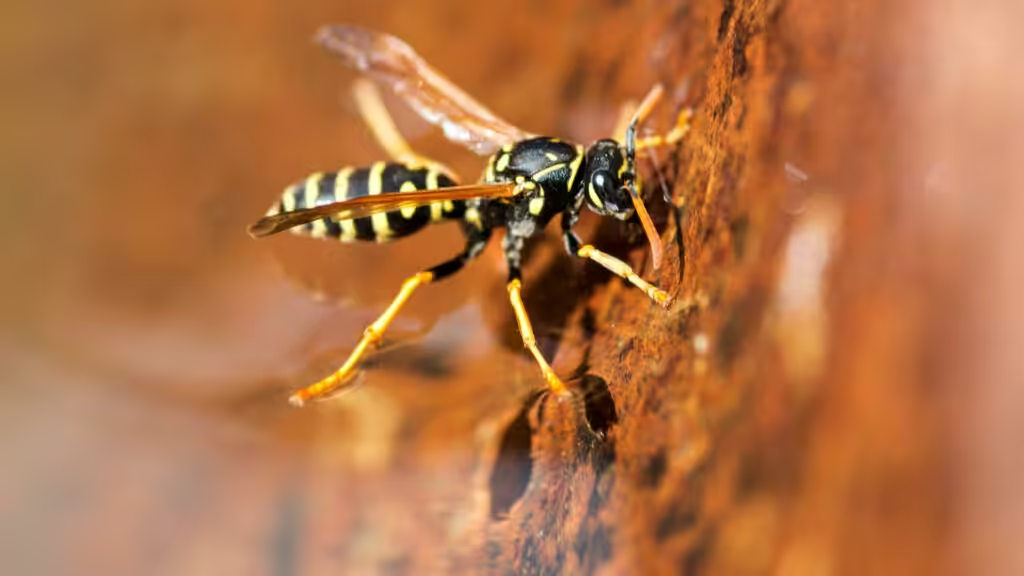
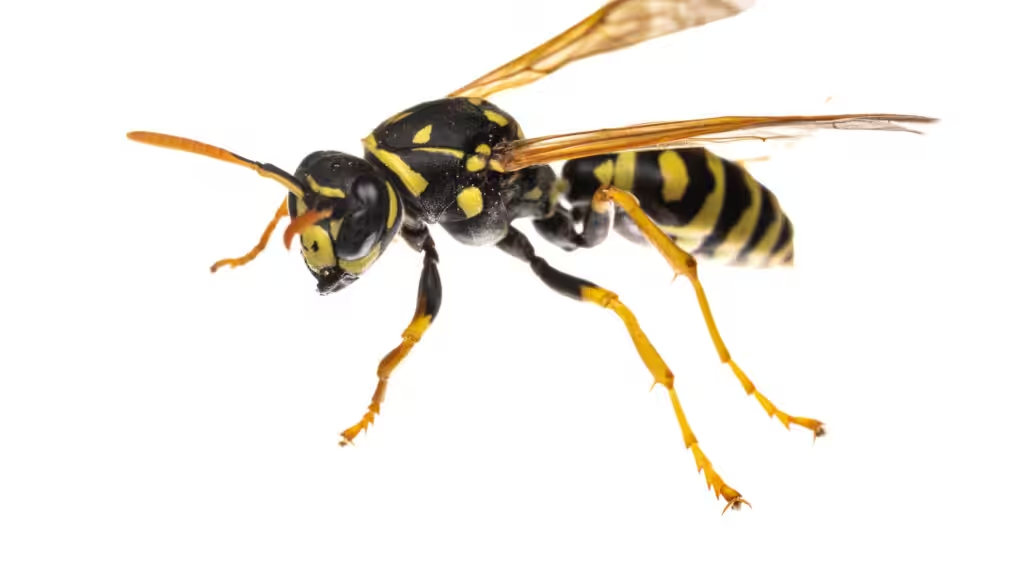
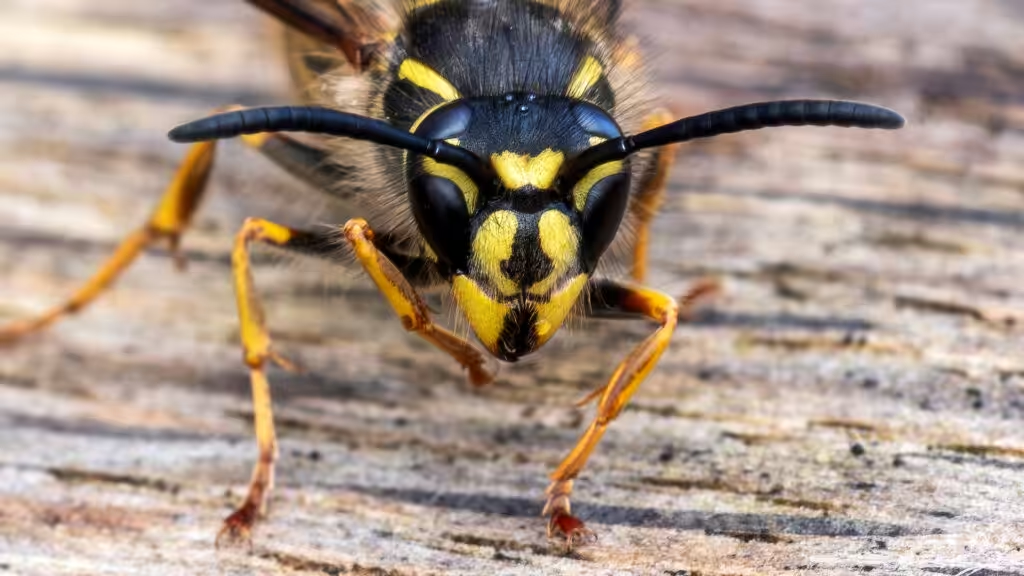
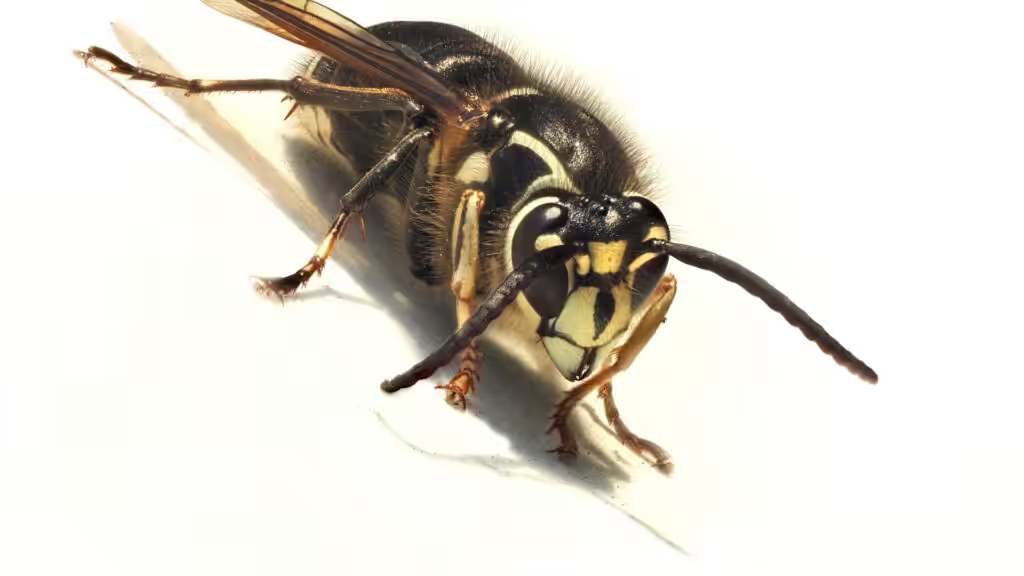
Paper wasps are slender, with a strongly pinched waist and long legs that trail visibly behind them in flight. They’re generally the least aggressive of the three, responding to direct disturbance at the nest but not actively pursuing. Yellow jackets are shorter and stockier, flying with a faster, more direct movement pattern and bright yellow and black banding. Hornets are the largest. Bald-faced hornets, common in Washington and Oregon, are black and white rather than yellow, which trips people up regularly.
Size, Color, and Body Shape Differences
A few comparisons make identification more reliable:
- Paper wasps: slender and long-legged, 0.75 to 1 inch, with a pinched waist visible even in flight
- Yellow jackets: compact and thick-bodied, 0.5 to 0.75 inch. Bright yellow-black banding, fast and direct in flight.
- Bald-faced hornets: black with white facial markings, stocky, 0.75 to 1 inch. Frequently mistaken for a black-and-white yellow jacket.
- European hornets: the largest of the group at up to 1.5 inches, brown and yellow, and unlike the others, active at night
A few common misidentifications are worth knowing. Bald-faced hornets are technically yellow jackets, not true hornets, despite the name. Paper wasps get confused for yellow jackets at a quick glance. If you’re not sure, watching flight behavior and looking for the nest structure is more reliable than trying to distinguish markings from a distance.
Nesting Habits: Where Each One Builds
In a yard, the nest tells you more than the insect does. Paper wasps build open, exposed paper combs with no outer shell. Eaves, door frames, and porch ceilings are the typical spots. The exposed comb is visible and unmistakable once you know what you’re looking at.
Yellow jackets and bald-faced hornets both build enclosed paper nests with a layered outer shell and a single entry point. Yellow jackets are versatile nesters. A wall void, an attic, an underground burrow left by rodents: all are fair game. Bald-faced hornets prefer aerial sites in trees or on structure exteriors, often at four feet or higher. European hornets use tree cavities and wall voids similarly.
Why Nest Location Shapes Your Risk Level
A yellow jacket nest in a tree at the back of the yard away from foot traffic is a different situation from one inside a wall void next to your front door. Location shapes the risk as much as the species does.
Ground nests are the most hazardous for accidental disturbance. There’s nothing visible before you’re already too close. Mowing over the entrance or stepping near it triggers the response before you realize what’s happening. Aerial nests near entryways are the next highest risk. Bald-faced hornets in particular defend aggressively at considerable distance from the nest. If you’re unsure whether you’re looking at a yellow jacket or a bumblebee, our page on bumblebees vs. wasps covers the key differences in appearance and nesting behavior.
Behavior: How Each Species Reacts to Threats
Visual ID gets you part of the way there. Behavior is what determines the actual risk level. Paper wasps are defensive rather than offensive. They respond to direct disturbance of their nest but don’t typically pursue. Yellow jackets will follow a perceived threat well beyond the nest site. Bald-faced hornets maintain a defensive radius that can extend 10 feet or more from the nest.
By August, colony populations peak and food resources tighten. All three species get more defensive as a result, but yellow jackets are the most noticeable shift. An encounter that produces no reaction in June can trigger a swarm response by late August. Late-season jobs are the most hazardous for exactly that reason.
What Triggers a Defensive Response
Proximity, vibration, and direct disturbance are behind most stinging incidents. Yellow jackets are drawn to food and sweet beverages. That creates contact situations that have nothing to do with the nest itself, which is part of what makes them unpredictable in late summer. Hornets respond strongly to vibration from power equipment running near their nest.
Staying calm and moving away slowly if you find yourself near a nest or being investigated by foragers is genuinely effective. Fast movements and swatting signal a direct threat and accelerate the response. Identifying a nest early, before peak season, gives you more options for how to handle it.
Wasp and Hornet Control: Why ID Matters
What works on a paper wasp nest won’t work on a yellow jacket colony inside a wall, and a ground nest is a different job from either. Wasp and hornet control depends on the species, the nest location, and the colony size. Get one of those wrong and you end up with incomplete treatment, an agitated colony, or a nest that relocates and becomes harder to reach the second time.
Yellow jacket nests inside structures aren’t always obvious from the outside. Locating the colony is part of the job before treatment starts. Hornets in trees need a different access approach than hornets in a wall void. Attempting removal with the wrong product or access method is the most common reason DIY wasp treatment doesn’t hold.
Choosing the Right Approach by Species
Treatment timing matters as much as technique. Paper wasp nests treated in early spring before the colony builds up are considerably more manageable than the same nest in August. For understanding the structural differences between what each species builds, our page on wasp nests vs. bee nests covers what each looks like and why it matters for treatment. For yellow jacket-specific detail, including why the queen’s activity cycle affects timing, our page on yellow jacket queens explains what to know before treatment begins.
Need Help with Stinging Insects?
If you’ve got a stinging insect situation you’re not sure how to handle, identification is the first step. Some of what we find needs immediate attention. Other situations can wait until there’s a clear plan. Contact us today and we’ll tell you what you’re dealing with, what the risk level is, and what treatment looks like for your specific situation.