


Mice aren’t as unpredictable as most people think. Every entry point they use, every route they run, and every hour they’re active follows a pattern. Once you understand how mice in the house actually operate, spotting the early signs and shutting down an infestation becomes a lot more straightforward than a midnight panic suggests.
When Do Mice Sleep
House mice are nocturnal by nature, but their sleep schedule is less straightforward than most people assume. Rather than sleeping in one long stretch, mice cycle through multiple short rest periods across a 24-hour day. Each sleep period lasts roughly one to two hours, followed by a burst of activity. Over a full day, mice sleep anywhere between 12 and 14 hours total.
When do mice come out most actively? Primary activity concentrates between dusk and dawn, peaking in the hours just after dark and again before sunrise. During mouse season in Washington, which intensifies in fall and winter as temperatures drop, mice push indoors, and their nighttime activity inside your home increases significantly.
During summer, mice are less likely to seek shelter indoors, though they remain active in garages, crawl spaces, and outbuildings where conditions stay cool.
Do Mice Avoid Light
Can mice see in complete darkness? Not exactly. Mice have poor eyesight overall and rely heavily on smell, hearing, and their whiskers to navigate. Their eyes are more sensitive to low-light conditions than human eyes, but total darkness gives them no advantage either. They navigate familiar spaces through memory and scent trails, not vision.
Do lights deter mice from entering a space? Bright light creates discomfort and makes mice feel exposed, so sudden light can startle them back into cover temporarily.
Still, keeping lights on does not prevent mice from moving through your home. A hungry mouse with an established route will run it in full light if it feels safe enough. Relying on lighting alone as a deterrent gives you a false sense of security without addressing what’s actually pulling mice in.
Mouse Behavior at Night
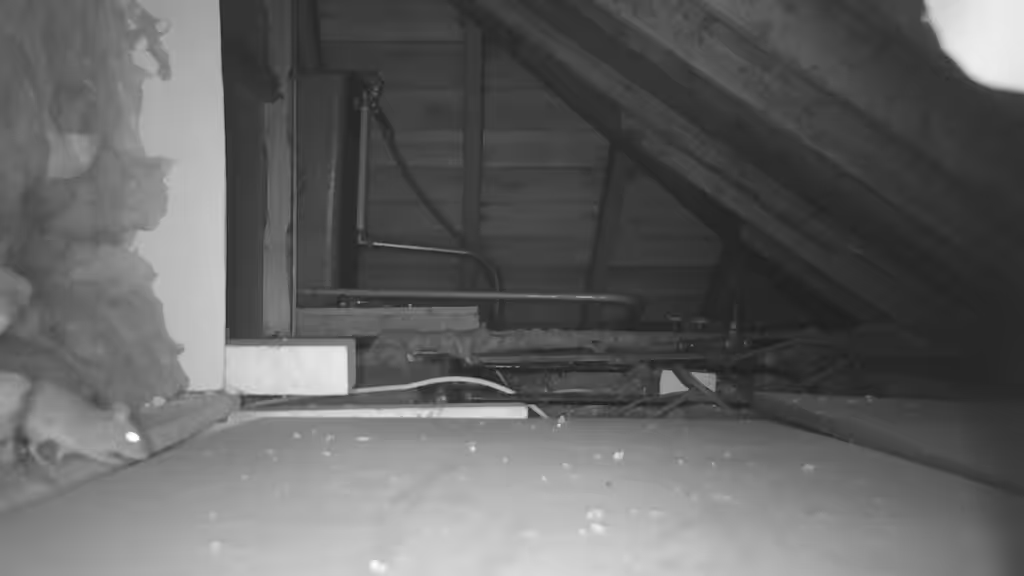
Nighttime is when mice get everything done. They forage for food, chew through materials to build nests, explore new areas, and reproduce. A single mouse covers a surprisingly large territory within your home each night, often returning to the same foraging routes repeatedly once it finds a reliable food source.
Do mice make noise at night? Consistently. Scratching inside walls, gnawing on wood or wiring, and soft scurrying sounds across ceilings are the most common sounds homeowners report. If noise seems to come from multiple areas at once, you’re likely dealing with more than one mouse.
A single mouse sounds manageable. A growing population inside your walls is a different problem, and understanding the danger mice pose in your home puts the urgency into perspective.
Signs Mice Are Active in Your Home at Night
You don’t need to catch a mouse in the act to know one is operating in your space. Watch for these during your morning routine:
- Fresh droppings near food storage, under sinks, or along baseboards
- Gnaw marks on food packaging, wooden furniture, or wiring
- Grease smears along walls and baseboards from repeated contact with mouse fur
- Nesting material like shredded paper, fabric, or insulation tucked into corners or inside cabinets
- A stale, musky odor in enclosed spaces like pantries, cabinets, or behind appliances
These signs tell you where activity is concentrated and help you place traps and deterrents in the right spots rather than guessing.
How to Keep Mice Out of Your House
Most mice in room situations trace back to a small number of entry points and attractants that are easy to fix once you know where to look. Mice squeeze through gaps as small as a dime, which means gaps around pipes, utility lines, vents, and foundation cracks are all viable entry points.
Start with these steps:
- Seal gaps around pipes, utility penetrations, and foundation cracks with steel wool and caulk
- Store food in hard-sided, sealed containers rather than cardboard or thin plastic packaging
- Keep garbage bins sealed and away from the exterior of your home
- Clear clutter from garages, attics, and basements since mice use dense, undisturbed material to nest
- Trim vegetation and woodpiles back from your exterior walls to remove shelter near entry points
- Fix leaky pipes and reduce moisture in crawl spaces, since mice seek water sources indoors
Several common habits make homes far more attractive to mice than they need to be. If you want a thorough look at what might be drawing them in, reviewing the mistakes that attract mice to your house is worth your time before you set a single trap.
To get rid of mice permanently requires both sealing entry points and eliminating the population already inside. Traps handle active mice but won’t stop new ones from entering if the access points stay open.
Keep Your Home Mouse-Free with Natura Pest Control
Hearing mice at night and not acting on it gives them time to establish themselves deeper inside your home. In Washington, fall marks the start of peak mouse season, and populations that build through winter become significantly harder to address by spring.
Natura Pest Control locates entry points, removes active mice, and seals access so the problem doesn’t repeat itself season after season. Professional rodent control reaches areas traps and store-bought products can’t, and builds a plan around your home’s specific layout rather than a generic fix.
If you’re hearing noises at night or finding signs of activity each morning, contact Natura Pest Control before a small problem turns into a full infestation.