

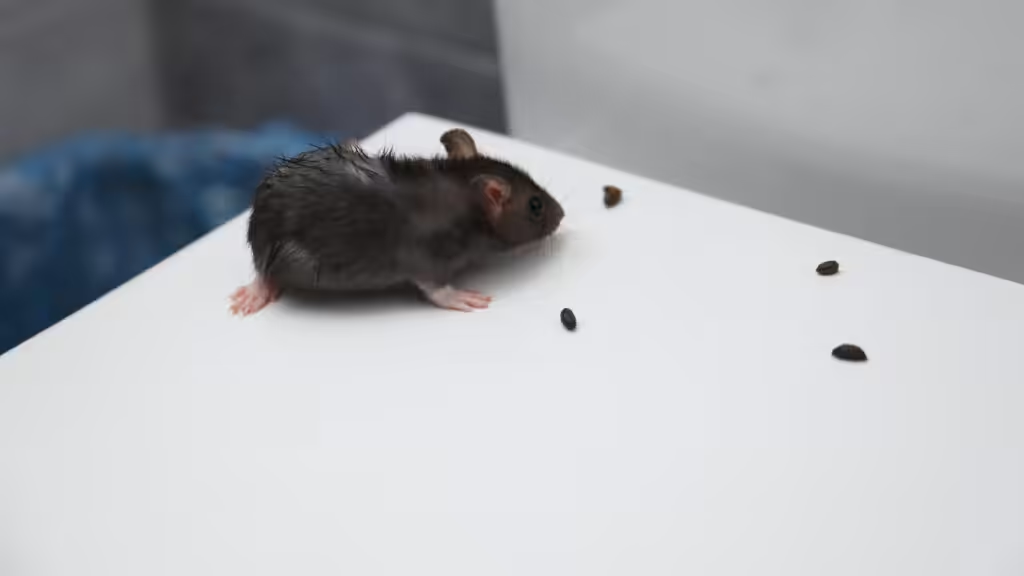
Mouse droppings are small, dark brown to black pellets about the size of a grain of rice, 3 to 6 millimeters long, and tapered at both ends. Fresh droppings are soft with a slight sheen. Old ones dry to a grayish-brown and crumble when pressed. Clusters in one area point to a nearby nest.
Mouse Droppings and the Health Risks They Carry
You found something small and dark in the back of a kitchen drawer, maybe along a baseboard, or behind the refrigerator, where you haven’t looked in months. Before you assume it’s dirt or debris, it’s worth knowing what rodent poop actually looks like.
Misidentifying it means a mouse problem quietly grows while you’re busy ruling it out. And droppings can tell you more than whether mice are present. They can tell you where mice are active, how long they’ve been there, and roughly how bad the problem is.
Where to Find Mouse Droppings in Your Home
Mice don’t wander randomly. They follow the same routes repeatedly, hugging walls and moving through tight spaces to stay hidden. Their droppings concentrate in specific zones rather than being evenly distributed throughout a house. Kitchen cabinets and pantry shelves are the first places to check. So is the area directly behind large appliances. Check those areas first.
Behind your water heater is worth checking. Basement walls, spaces inside the walls near where pipes come through the wall, and attached garage corners also see regular traffic. Droppings cluster at turning points: where two walls meet, along shelf edges, at the back of a drawer they’ve been using as a feeding spot.
A dense cluster of droppings in one spot often means a nest is close. Mice don’t travel far from where they sleep. Concentrated activity in one spot is always worth following up on. If the cluster is fresh, the nest is probably within a few feet.
The Spots Most Homeowners Miss
Inside kitchen drawers and underneath drawer liners are two spots that go months without a proper look. Mice can get into a closed drawer through the gap at the back where the drawer slides meet the cabinet frame.
Mice chew pipe insulation in crawl spaces and basements for nesting material and leave droppings right where they work. Attic insulation near roof overhang vents is worth checking, too. Mice enter through those gaps and rarely move far from the entry point before settling in.
If you’ve found droppings in one location, check the full run of that wall on both floors before assuming the activity is isolated. Mice travel vertically through spaces inside the walls as easily as they do horizontally along baseboards.
How to Identify Mouse Droppings
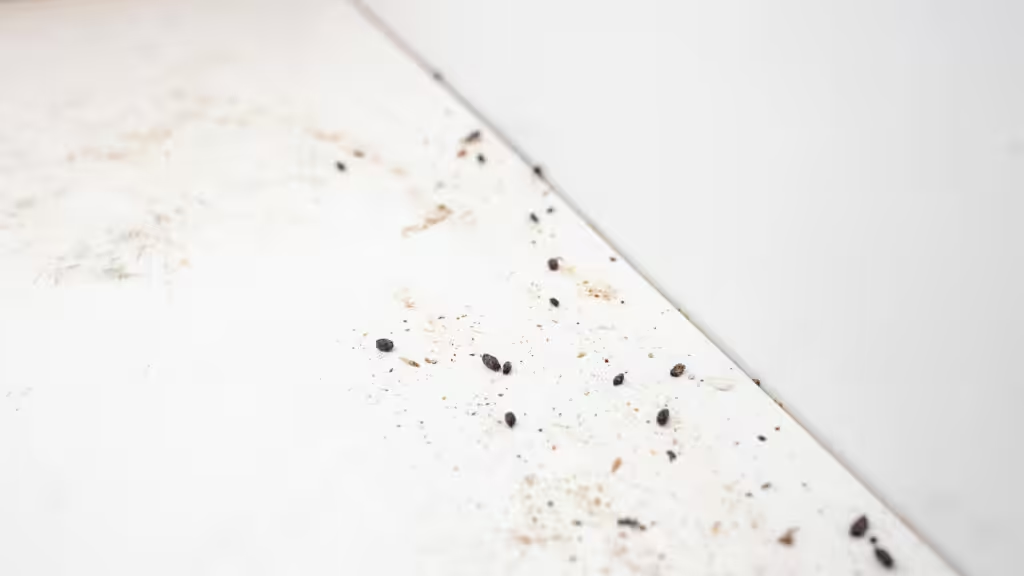
Fresh droppings are dark brown to black, soft in texture, and have a slight sheen. As they age, they dry out, lighten to a grayish-brown, and become crumbly when disturbed. Color and texture together are faster to read than size alone.
A quick press test helps too: fresh droppings compress slightly, old ones crumble. The age of droppings matters because it tells you whether mice are currently active or whether you’re looking at evidence of an old problem. Old droppings in one spot don’t rule out active mice somewhere else in the house.
Size, Shape, and Color Guide
Mouse droppings are small, roughly 3 to 6 millimeters long, about the size of a grain of rice. They’re tapered at both ends. That taper is the detail that most reliably separates them from rat droppings. Size narrows it down further:
Mouse droppings: 3 to 6mm, tapered at both ends, rice-grain shaped
Rat droppings: 12 to 20mm, larger and blunter, often capsule-shaped
Cockroach droppings: similar in size to a mouse but cylindrical with ridged edges
Bat droppings: slightly larger than mouse, crumble to powder when pressed
If what you’ve found matches the mouse description: small, tapered, dark when fresh, treat it as an active mouse problem until you have reason to think otherwise. Don’t wait for more evidence. By the time droppings are easy to find, the population is usually well established.
What Mouse Droppings Mean for Your Health
Finding mouse droppings is a health problem, not just a nuisance. Hantavirus, Salmonella, and leptospirosis (a bacterial infection spread through rodent urine and waste) are all transmissible through contact with droppings or contaminated surfaces.
Hantavirus gets the most attention because it can be inhaled when dried droppings are disturbed. Sweeping or vacuuming fresh droppings without precautions is dangerous. It’s a real exposure risk.
Droppings in a pantry mean any unsealed food in that space has been compromised. Droppings near HVAC return vents (the large vents that pull air back into your heating and cooling system) are a particular concern because disturbed particles can move through ductwork into rooms where no mice have been seen.
The structural risks go beyond droppings. Our page on rodent home damage covers both in detail.
Health Risks of Mouse Feces
Cleaning up mouse droppings the wrong way can be more dangerous than temporarily leaving them alone. Never dry-sweep or vacuum fresh droppings.
Ventilate the area for at least 30 minutes first. Then put on disposable gloves and an N95 mask, wet the droppings with a bleach solution, and wipe rather than sweep. Seal everything in a plastic bag before disposal. Wash your hands thoroughly even after removing gloves.
If the contamination covers a large area (entire drawers, pantry shelves, or spaces inside the walls), that cleanup should be handled professionally. Our mouse exterminator handles both the infestation and the contaminated areas so your home is safe to use again, not just treated.
Get Rodent Control Help in Washington
If you’ve found mouse droppings, fresh or old, don’t wait to see if more appear. One mouse rarely stays one mouse for long. They reproduce quickly. We start with a thorough inspection of active entry points, nesting areas, and travel routes. Then we build a treatment plan around what’s in your home, not a standard protocol.
That matters because two houses with mouse droppings in the kitchen can have completely different entry points, nesting locations, and population sizes. Call us at 360-215-2876 or reach out online to schedule an inspection. Our team is ready to help.
We proudly serve homeowners across: