

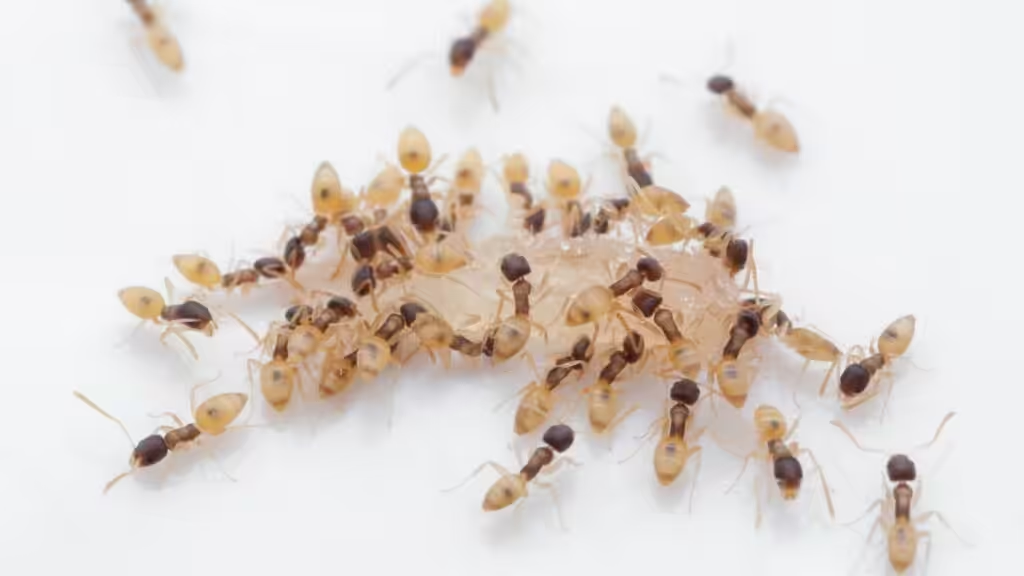
The name is accurate. Workers have a dark head and thorax attached to a nearly translucent abdomen and legs. On a light-colored counter, half the ant disappears. That combination makes them easy to overlook until there’s a real problem underway. They’re about 1.5 millimeters long, among the smallest indoor ant species in this region.
Movement helps with the ID. Ghost ants travel in rapid, erratic bursts rather than the steady single-file lines you’d see from odorous house ants or pavement ants. The trail can be hard to track at first. Stop and watch for a moment, and it becomes visible.
Key Features That Set Ghost Ants Apart
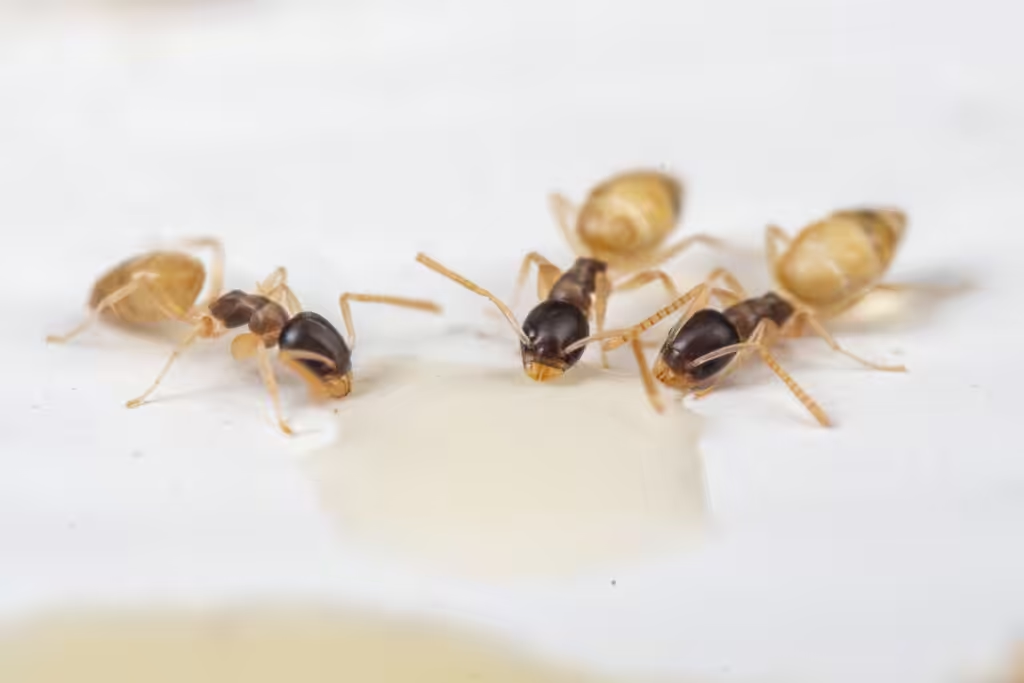
A few characteristics make ghost ants easier to confirm once you spot them:
- Two-toned body: dark head, translucent abdomen that nearly disappears on pale surfaces
- Roughly 1.5mm long, among the smallest indoor species you’re likely to find
- Moves in rapid, erratic bursts, not the steady march of most other ant species
- Smells faintly of coconut when crushed, the same as odorous house ants
That last point helps rule out a misidentification. Both species produce that coconut smell, and they share some behavioral overlap. The translucent abdomen is the clearest physical distinction between them. It matters because the two don’t respond the same way to treatment. For a closer look at how they compare, our page on odorous house ants vs. carpenter ants covers the key differences.
Where Do Ghost Ants Come From?
Tropical in origin, ghost ants don’t survive outdoor winters in the Pacific Northwest on their own. Structures aren’t convenient for them. They’re necessary. Once inside, they establish multiple satellite colonies throughout a building, and that’s the behavior that makes ghost ant control genuinely difficult.
A single colony can have multiple queens and dozens of nesting sites spread through a structure. Those sites are typically inside wall voids, cabinet spaces, or electrical outlets. Somewhere with consistent warmth and humidity. Taking out one satellite doesn’t collapse the others. The population continues from the remaining sites while foragers set up new ones, often in areas that were previously undisturbed.
How Ghost Ants Enter Your Home
Potted plants are one of the most common entry routes we find during inspections. Ghost ants nest readily in potting soil, and a plant moved from a patio directly to a kitchen counter can introduce an active colony with no visible warning. It’s one of the more surprising source points, and it comes up more often than most homeowners expect.
The standard access points apply too. Gaps at door thresholds and cracks near the foundation cover most cases. Spaces where utility pipes enter the wall are worth checking as well. Once inside, they follow moisture gradients toward kitchens and bathrooms. If you’re seeing them in multiple rooms, satellite colonies are probably already active in more than one spot.
What Draws Ghost Ants into Your Kitchen?
Sweet food sources pull ghost ants in for foraging, but that’s not what keeps them there. Moisture anchors the nest. Ghost ants need both to establish a stable indoor presence, and kitchens provide both in ways that aren’t always obvious at first.
A leaky pipe under the sink or condensation near a refrigerator line matters more to ghost ants than the crumbs on your counter. Damp spots behind appliances can anchor a satellite colony even in an otherwise clean kitchen. Eliminating food sources alone won’t resolve an active infestation if moisture conditions stay the same.
Why Moisture Matters as Much as Food
Small body size makes ghost ants more vulnerable to dry air than most common indoor species. They desiccate faster, so they cluster wherever humidity stays consistent. Bathrooms and the spaces under kitchen sinks are where we start every ghost ant inspection. Drainage issues and slow leaks are often what we find there.
If ghost ants keep coming back to the same area after treatment, there’s usually a moisture source nearby. Fixing a dripping pipe or improving ventilation under a cabinet often shifts things more than more spraying does. That’s worth addressing before treating again. The same moisture dynamic shows up with several overlapping species, including the ones covered on our sugar ant control page.
Pest Control for Ghost Ants: What Works
The multi-queen, multi-satellite structure that makes ghost ants hard to eliminate is also why slow-acting baits work so well on them. Workers pick up the bait and carry it back through sharing behavior. With queens spread across multiple nesting sites, that shared exposure is the mechanism that reaches colony members you can’t locate or access directly.
Placement is most of the work. Bait goes on active foraging trails, confirmed during inspection, not placed where it seems logical. Ghost ants are selective. Bait away from the routes they’re actively using gets ignored. We adjust placement based on what we confirm during the inspection visit, which is a meaningful difference from guesswork.
Why DIY Treatments Usually Fall Short
If your first move was a repellent spray and the ants came back in a different part of the kitchen a few days later, that’s not a coincidence. Repellents trigger colony splitting. Foragers detect the barrier, route around it, and establish new satellite colonies beyond the treated area. The infestation doesn’t shrink. It spreads.
Off-the-shelf gel baits run into a different problem. Ghost ants shift between sweet and protein-based bait preferences depending on what the colony needs at a given time. A formulation that worked last week may get ignored this week. We use multiple bait types and adjust based on what’s attracting foragers during the treatment visit. That flexibility isn’t easy to replicate with hardware store options.
For more on what to look for before treating, the seven signs of an ant problem can help confirm you’re dealing with ghost ants and not a different species. If you’re comparing bait options, our page on the best ant baits covers what separates professional formulations from what’s available off the shelf.
Ready to Clear Out Ghost Ants?
Ghost ant colonies don’t collapse from a single treatment. They’re built not to. If you’ve sprayed and the ants turned up in a different part of the kitchen a few days later, that’s the colony splitting around the barrier, not a fluke. The right approach reaches the satellite sites directly instead of pushing them further into the walls.
If you’re seeing ghost ants in your kitchen, bathroom, or in the same spots repeatedly after DIY treatment, we can help. Contact us today to schedule an inspection.