
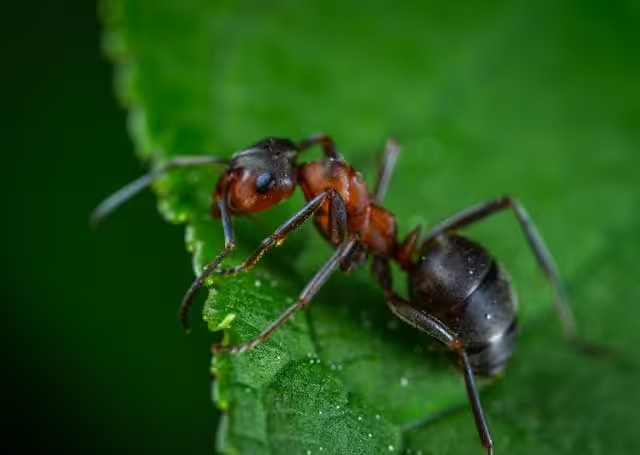
Yes, ants spread disease by picking up bacteria from garbage, drains, and animal waste, then carrying it across food prep surfaces. Salmonella and E. coli are the most common risks in household kitchens. Ants contaminate surfaces through contact, not through bites. Any food ants have walked across should be discarded.
How Ants Carry Bacteria Through Your Home
A handful of ants on the counter looks like a minor problem. It often is. What makes ants a real health concern is how they move through a home. The same workers foraging across your drain cover are the ones walking across your cutting board an hour later. The contamination risk is real, and it’s worth understanding before it becomes a food safety issue.
Which Bacteria Do Ants Carry?
Studies have found Salmonella, E. coli, Staphylococcus, and Streptococcus on ant bodies from kitchen environments. Salmonella and E. coli are the two most relevant to household food safety. Both cause gastroenteritis — vomiting, diarrhea, and stomach cramps — and spread through contaminated surfaces.
Pharaoh ants receive particular attention in hospital settings. They’ve been found to carry Clostridium and Pseudomonas — bacteria that are especially dangerous in medical settings and can cause serious infections in vulnerable patients.
You can’t predict contamination risk from ant presence alone. It depends on where those ants have been foraging, and that route changes every day.
Which Foods Are Most at Risk of Ant Contamination?
Anything left uncovered at room temperature is fair game. Bread bags left open at the top, honey jars with residue on the outside, loose-lidded sugar containers. Ants find these first.
Sweet and carbohydrate-rich foods are the main draw for odorous house ants and pavement ants. Once ants have established a foraging trail to a food source, hundreds of workers follow the same pheromone route back to it.
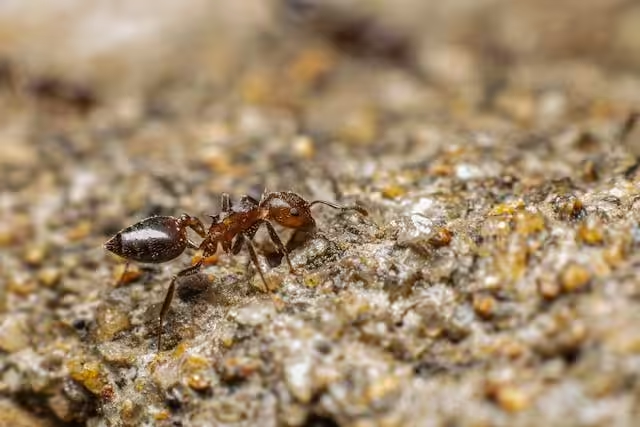
Pharaoh ants and carpenter ants go after protein. Meat scraps, stovetop grease residue, pet food left in bowls. These species also forage in areas with higher bacterial loads: drains, spaces inside walls near plumbing, and spaces behind appliances where organic matter collects.
Signs Ants Have Gotten Into Your Food
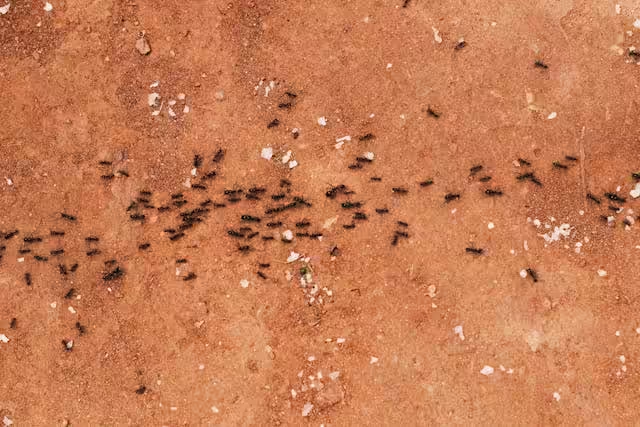
Finding live ants inside or around food packaging is the most obvious sign. Less obvious are the trails. A line of ants moving toward a cabinet or pantry shelf means they’ve already found a food source inside.
Check every container on that shelf, not just the ones where you can see ants. Ants that have been working a trail for any length of time will have thoroughly explored the surrounding area.
Discard any food that ants have had direct contact with, even if it looks undamaged. The contamination risk is real, and there’s no reliable way to know which individual ants have come from a contaminated source versus a clean one. When in doubt, throw it out and store replacements in sealed hard-sided containers.
How to Reduce Ant Contamination Risk
Move pantry staples into airtight containers with lids that seal completely rather than just sit on top. That single change removes most of what draws ants into a pantry. Wipe down the outside of containers before putting them away.
Sugar bags and honey jars with residue on the outside attract foraging ants before they even get into the packaging. Sticky lids and drips are enough. Keep fruit in the refrigerator or in sealed containers rather than open bowls.
Wipe down countertops and stovetops after every meal, not just when they look dirty. Residue that’s invisible to you is perfectly readable to an ant. Empty and wash pet food bowls rather than leaving them on the floor with remnants. Take trash out before bins overflow.
When DIY Ant Control Isn’t Enough
An established colony that has been working through your kitchen for weeks won’t respond well to store-bought sprays. The foraging network is large and well established by then, and surface treatments only reach what’s visible. The workers you see are a small percentage of the total colony. The queen and the bulk of the population are elsewhere.
We use targeted baits and exclusion techniques — sealing off the — that address the colony rather than just the foraging trail. An inspection tells us which species you’re dealing with, where the nest is likely located, and which treatment approach fits the situation. entry points ants are using to get inside
Different ant species respond to different bait types, and using the wrong one wastes time. If ants have been getting into your food, that’s worth resolving properly rather than managing with traps that slow the problem without solving it.
Contact Us for Ant Control in Washington
Ants foraging through your kitchen aren’t just an annoyance. They’re moving bacteria from wherever they’ve been into the spaces where you prepare food.
If you’re dealing with an ant problem that’s gotten into your pantry or keeps coming back after DIY treatment, call us at 360-215-2876. We’ll identify the species, locate the colony, and treat it in a way that actually sticks.
We proudly serve homeowners across: