

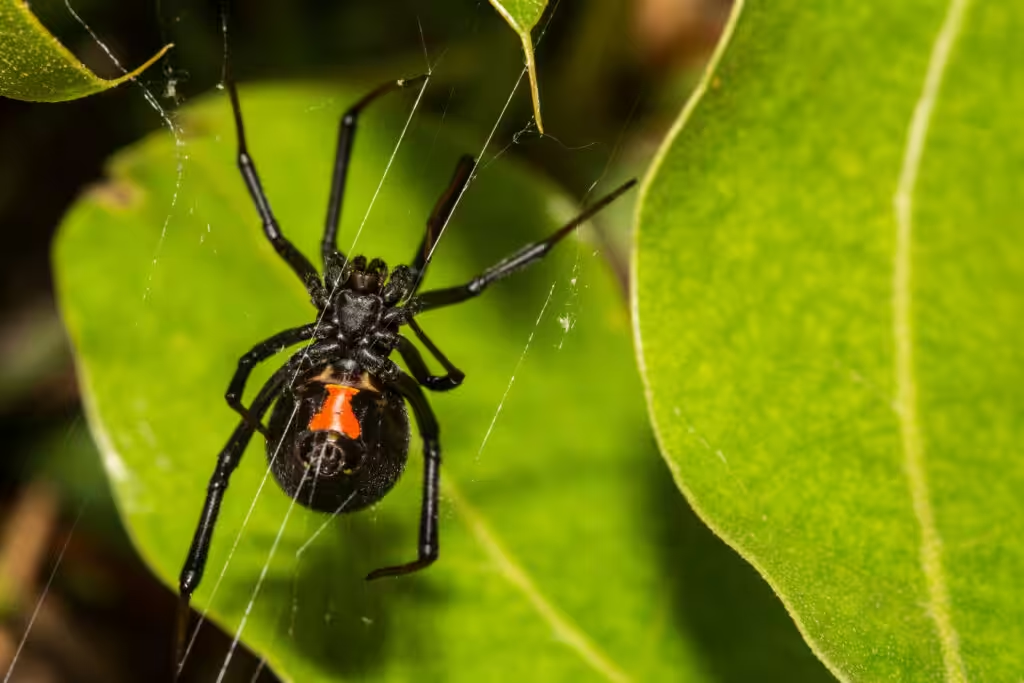
Black widow spider identification separates dangerous encounters from harmless ones in Washington homes. These venomous spiders build webs in dark, undisturbed spaces where you might reach without looking, like woodpiles, garages, and storage areas, becoming prime territory for widows seeking shelter.
Recognizing authentic black widows versus similar-looking spiders protects you and your family from unnecessary panic while ensuring you respond appropriately to genuine threats.
Identifying Black & Red Spider Markings
Black and red spider coloring doesn’t automatically mean you’ve found a black widow. Several spider species have dark bodies with red or orange markings, but widows exhibit distinctive patterns that distinguish them from lookalikes.
Adult female black widows display shiny, coal-black bodies with a distinctive red or orange hourglass shape on their underside. Some Washington widows show variations, such as split hourglasses, incomplete markings, or additional red spots on their backs. Body size reaches about half an inch, not counting legs, making them appear as big black spiders compared to common house spiders.
Some spiders have spots that help identify them as widows. Juvenile black widows display more complex patterns with white, yellow, and red markings across their abdomens. As they mature through successive molts, these colors fade until only the signature hourglass remains on adult females.
Male vs Female Black Widow Differences
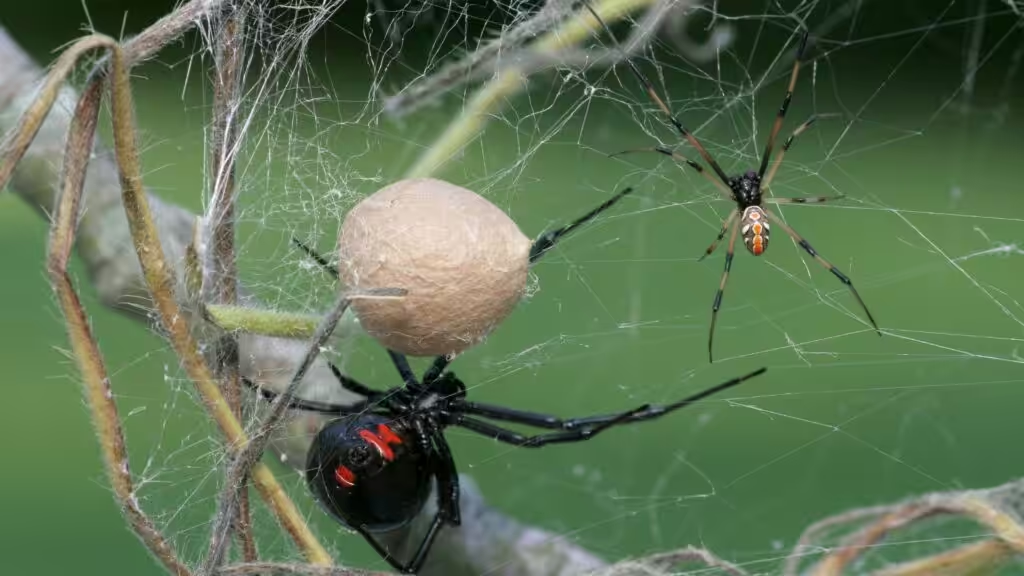
Black widow male and female spiders look dramatically different, leading many people to misidentify males as a completely separate species.
Males measure roughly half the size of females and display brown or gray bodies with lighter markings along their sides and backs. You’ll rarely encounter males since they die shortly after mating and spend most of their lives wandering in search of females rather than building webs.
Females create the iconic messy, three-dimensional webs you associate with black widows. Males produce minimal webbing and focus on detecting female pheromones. Black widow spider on spider web sightings almost always involve females guarding their territory or egg sacs.
Female widows live up to three years in protected environments, while males survive only a few months. This lifespan difference explains why pest control efforts target female populations and their egg sacs rather than short-lived males.
Black Widow Egg Sacs & Spider Nests
Female widows produce distinctive egg sacs that signal active breeding populations near your home. Each black widow spider egg sac appears as a smooth, papery sphere roughly the size of a marble, ranging from off-white to tan in color. Understanding black widow egg development helps you identify how established an infestation has become.
Black widow spider nest locations concentrate in areas that stay undisturbed for extended periods. Check these common spots:
- Behind stored items in garages and sheds
- Inside meter boxes and outdoor utility covers
- Under deck stairs and patio furniture
- Within woodpiles stacked against structures
- Inside unused equipment and machinery
Females guard their egg sacs aggressively, remaining nearby until newborn black widow spiders emerge. Each sac contains hundreds of eggs, though only a fraction survives to maturity. Multiple egg sacs near each other indicate an established female has nested in your space for months.
Black vs Brown Widow Egg Sac Guide
Black vs brown widow egg sac differences help you identify which species invaded your Washington property. Brown widows, less common in Washington but occasionally found in warmer microclimates, produce spiked egg sacs covered in silk projections that look like tiny sea mines. Black widow egg sacs remain smooth with no external spikes.
Brown widow egg sacs also appear whiter than black widow sacs, maintaining their pale coloring throughout development. Black widow sacs may darken slightly as spiderlings mature inside, though they never match the pure white of fresh brown widow sacs.
Location patterns differ, too. Brown widows build webs in more exposed areas like fence posts and building exteriors, while black widows prefer concealed spots with overhead protection. Finding spiked egg sacs in open locations suggests brown widows, while smooth sacs in hidden corners indicate black widows.
Most Toxic Spider: Black Widow Danger
Black widows rank as the most toxic spider in Washington based on venom potency. Their neurotoxic venom affects the nervous system, causing muscle cramps, pain, and in rare cases, serious complications requiring medical attention. Bites occur when spiders feel trapped or threatened; reaching into dark spaces without checking first creates prime bite scenarios.
Female widows deliver medically significant bites, while males produce negligible venom amounts that rarely cause symptoms. Bites feel like sharp pinpricks initially, followed by spreading pain and muscle rigidity over the next few hours. Severe reactions demand immediate medical care, especially for children, elderly individuals, or people with compromised immune systems.
Getting rid of black widow spiders safely requires caution since disturbing webs provokes defensive behavior. Avoid reaching directly into web areas, and never crush spiders with your bare hands. Professional removal eliminates colonies without putting you at risk while addressing egg sacs that would produce future generations.
Natura Pest Control Spider Removal
Our Washington team provides targeted spider control that eliminates black widows from your property while preventing reinfestation. We start every service with thorough inspections of high-risk areas where widows establish webs. Garages, crawl spaces, and outdoor structures receive particular attention.
Professional spider exterminator treatments combine direct web removal, residual applications in harboring areas, and exclusion recommendations that reduce future widow activity. We identify and remove egg sacs before spiderlings emerge, breaking the reproductive cycle that allows populations to establish.
You’ll receive detailed guidance on reducing conducive conditions around your home. Eliminating clutter in storage areas, sealing entry points, and maintaining yard cleanliness all support our professional treatments. Comprehensive spider control programs include regular monitoring visits that catch new activity before widows multiply.
Our technicians understand black widow behavior and biology, allowing us to predict where they’ll nest and how they’ll respond to treatments. We also address other spider species that might occupy similar spaces, giving you complete protection rather than a single-species focus.
Contact our team for inspections that reveal exactly where widows hide on your property and what it takes to eliminate them safely.