

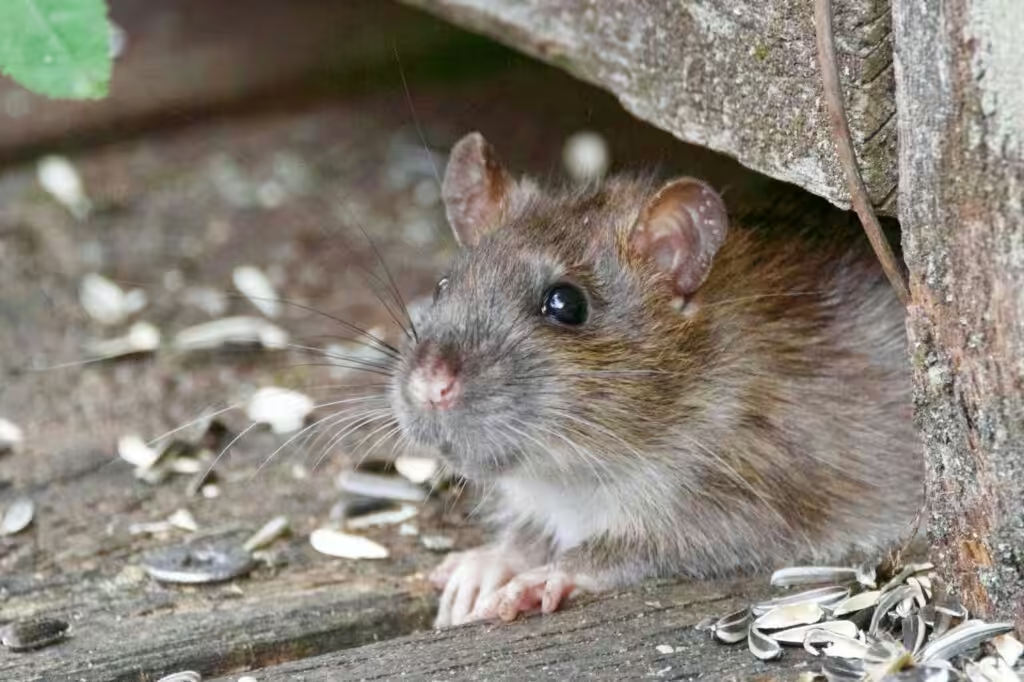
Yes, rats can carry fleas into a home, and it’s one of the more overlooked ways a flea problem starts even in houses with no pets. Fleas ride along on a rat’s fur as it moves between the outdoors and the inside of your walls, and they can drop off and start breeding in carpet or bedding before anyone ever spots the rat itself. Norway rats and roof rats both carry the same flea species that bites cats, dogs, and people, so an unexplained flea bite is sometimes the first real clue there’s a rodent problem underneath it. Treating the fleas alone won’t fix much if the rat that brought them is still coming and going.
A flea bite with no pet in the house is one of the more confusing calls we get, especially once a homeowner has already ruled out the dog and the cat. More often than people expect, the actual source is a rat that’s been coming and going for weeks without ever being seen.
Do Rats Actually Carry Fleas?
Rats carry fleas the same way cats and dogs do: the fleas live in their fur and feed on their blood, riding along wherever the rat goes. Norway rats and roof rats are the two species most common across the Pacific Northwest. They both carry the same rat flea species that will just as easily bite a person, a dog, or a cat once it’s inside a house.
A rat doesn’t need to nest inside your walls to bring fleas in, either. Fleas can drop off during a single trip through the attic or crawl space and stay behind long after the rat has moved on.
This is part of why flea problems in houses without pets confuse people so much. Most homeowners assume fleas only travel with a cat or dog, so when bites show up and there’s no pet to blame, the actual cause gets overlooked for weeks while the fleas already inside keep breeding.
How the Fleas End Up Inside Your Home
Fleas don’t stay loyal to one host. Once a rat carrying fleas travels through an attic, a space inside a wall, or a crawl space, the fleas can jump off onto insulation, stored boxes, or even a pet that wanders through the same area later.
From there, the fleas that survive will lay eggs in carpet fibers, pet bedding, or cracks in flooring, and a new generation hatches whether or not the rat ever comes back. That’s usually when a homeowner starts finding bites and has no idea where they’re coming from.
An attic is one of the more common places this happens, since a rat can pass through the same section of insulation dozens of times over a few weeks without ever building a full nest there. Each pass leaves a little more behind, and by the time anyone notices scratching sounds overhead, the fleas dropped off long before that.
Rats vs. Mice: Which Brings More Fleas?
Rats and mice can both carry fleas, but rats are the bigger risk in most PNW homes because they travel farther and nest closer to human living space more often, especially roof rats moving through attics.
Mice tend to stay closer to their nest and food source, so while a mouse problem can absolutely come with fleas too, it’s usually a smaller-scale version of the same issue. The fix is the same in both cases: deal with the rodent first, then the fleas, not the other way around.
What This Means If You Already Have a Rat Problem
If you’ve already spotted rat droppings, gnaw marks, or heard movement in the attic, it’s worth checking for flea bites too, even if you haven’t seen a flea yet. Early flea activity can be easy to miss, since a small population hides well in carpet and pet bedding long before it becomes obvious. A few things point to a combined problem rather than just one or the other:
- Bites around the ankles that showed up around the same time as attic noise or droppings
- A pet that suddenly starts scratching more, even one that’s on regular flea prevention
- Small dark droppings near a pet food bowl, attic access point, or garage corner
Treating for rats without checking for fleas can clear one problem while the other grows for weeks. Our rodent control team checks for exactly this kind of overlap on every inspection.
How We Handle Rats and Fleas Together
When a property has both rats and fleas, we treat them as connected rather than two separate calls. Our rodent program focuses on exclusion first, sealing the gaps rats use to get in and placing traps or bait stations where we find activity, so fleas stop getting a fresh supply of hosts.
Alongside that, our flea and tick treatment applies a specialized outdoor barrier and granular yard treatment to cut off the flea population outside before it keeps working its way back in.
If you’re dealing with rodent activity and flea bites at the same time, mention both when you call. This helps us plan the right visit from the start, since a technician coming out for fleas alone might not think to check the attic for rat activity, and vice versa.
Fall is when rat activity climbs across our service areas as they look for a warmer place to spend the winter, and that’s exactly when this kind of flea problem tends to show up too. If you’ve noticed either one, don’t wait for it to sort itself out.
Ready to take back control? Call (360) 215-2876 and experience the Natura difference.
- Hillsboro, OR
- Tigard, OR
- West Linn, OR
- Lake Oswego, OR