

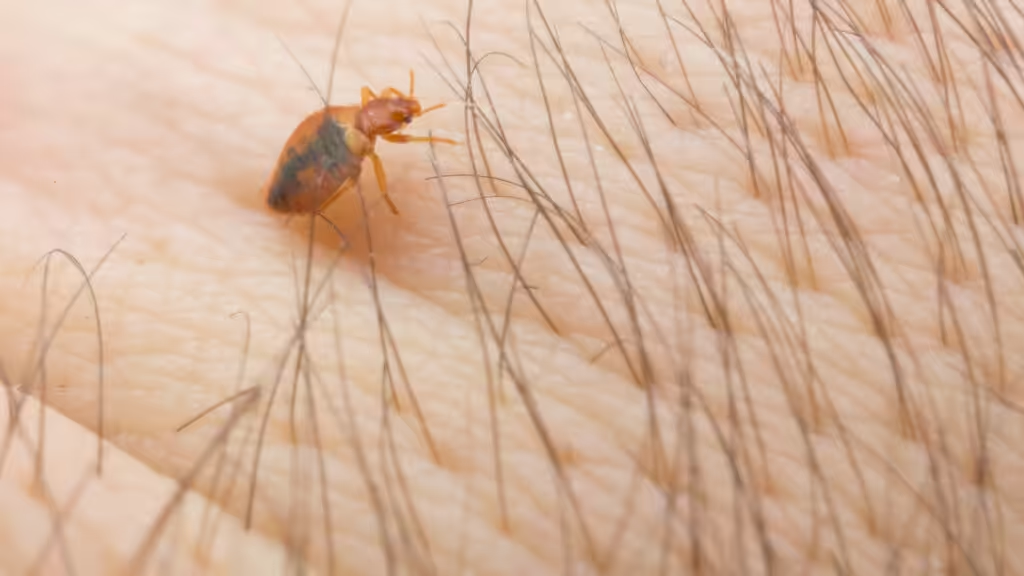
Bed bugs can get in your hair, but they rarely stay there. Unlike lice, bed bugs aren’t built for hair. Their bodies are flat and broad, not designed to grip hair shafts. They prefer to feed and retreat to flat surfaces. Finding bed bugs in your hair is uncommon, but finding them in your bed is not.
If bed bugs are in your bed while you sleep, your hair is right there. It makes sense to wonder whether they end up in it. Here’s what actually happens and why it matters less than the infestation itself.
How Bed Bugs Actually Move and Feed
Bed bugs feed on blood, but the feeding event itself is brief. They emerge when they detect carbon dioxide and body heat from a sleeping host. They feed for three to ten minutes. Then they retreat. They don’t linger on the body after feeding. They go back to their harborage area â the tight, sheltered spot where they rest between feedings.
It’s almost always a flat, tight surface close to where you sleep: mattress seams, box spring folds, bed frame joints.
Bed bugs aren’t looking for a permanent host. They want a feeding opportunity and a safe place to digest afterward. Hair doesn’t offer either. It moves constantly, it isn’t flat, and there’s no enclosed space in it to shelter between meals. A bed bug in your hair is one that hasn’t made it back to where it wants to be.
Why Hair Isn’t Their Preferred Habitat
Bed bug bodies are oval and flat, well-suited to sliding into cracks and crevices but poorly suited to navigating hair. They lack the claws that allow lice to grip individual hair shafts and move through a tangle of strands. A bed bug on your scalp is exposed and has nothing to grip. It’s not where it wants to be.
Do bed bugs live in hair? Not for long. When you do find a bed bug on your body, it’s almost always passing through, not settling in. Situations in which bed bugs stay in hair for any length of time are rare and typically involve someone sleeping directly on a heavily infested surface with nowhere for the bugs to retreat.
Bed Bugs vs. Lice: Key Differences
The confusion between bed bugs and lice is understandable. Both cause itching, both show up in sleeping areas, and both are small enough to miss on first inspection. The two insects are built differently and behave in opposite ways.
Lice have evolved specifically for hair. Their legs end in curved claws designed to grip a hair shaft, and they lay eggs attached directly to individual strands close to the scalp. Take them off a human host and they die within a day or two.
Bed bugs live in the environment between meals. They hide in furniture, walls, and luggage. They can go months without feeding. Their bodies are built for flat spaces. Beyond both being nocturnal biters, bed bugs and lice share almost nothing biologically or behaviorally.
Which One Bites While You Sleep?
Both bite, but for different reasons. Lice are always on the host, so feeding happens throughout the day and night. Bed bugs time their emergence to your sleep cycle, specifically. A still, warm body exhaling carbon dioxide steadily is exactly what draws them out.
Lice bites concentrate on the scalp and neck. Bed bug bites appear on any skin exposed during sleep: arms, shoulders, legs. They cluster or line up along the edge of clothing or bedding. Scalp bites point to lice. Bites on the arms and torso point to bed bugs.
What to Do If You Find Bed Bugs
Can bed bugs stay in your hair long enough to need treatment? Technically, yes, briefly.
The hair isn’t the problem. The bedroom is. Even if a bug made it into your hair overnight, it came from somewhere in your sleeping environment, and that’s where the infestation lives. The infestation is in your bedroom, not on your body. Washing your hair won’t solve a bed bug problem. Treating the hiding spots will.
Strip the bed and examine the mattress seams, box spring, and bed frame closely. Look for small dark spots (fecal staining), shed skins, or live bugs in the folds and joints. Check the headboard, nearby furniture, and baseboards. Bed bugs rarely travel far from where they’ve been feeding.
How to Check Your Bedding for Bed Bugs
Pull back all bedding and examine each layer separately. Fecal spots look like small dark ink dots and often bleed slightly into the fabric.
Shed skins are translucent, hollow casings about the size and shape of a live bed bug. Live bugs are reddish-brown and flat when unfed. They balloon slightly after feeding. Use a flashlight and check the seams, tufts (the gathered fabric around any buttons), and any labels on the mattress.
If you find evidence of bed bugs, avoid moving bedding or furniture to other rooms before treatment. Moving infested items spreads the infestation. Bag clothing and bedding in sealed plastic bags before washing on high heat.
Call us before attempting DIY treatment on a confirmed infestation. Heat treatment and professional-grade insecticides work a lot better than consumer sprays once an infestation has taken hold.
Get Bed Bug Help in Washington and Oregon
Whether you’ve found a single bed bug or you’re waking up with bites every morning, we can help you figure out what you’re dealing with and get it handled. Call us at 360-215-2876 to schedule an inspection. We’ll assess the situation, identify where they’re hiding, and recommend a treatment that fits.
We proudly serve homeowners across: