

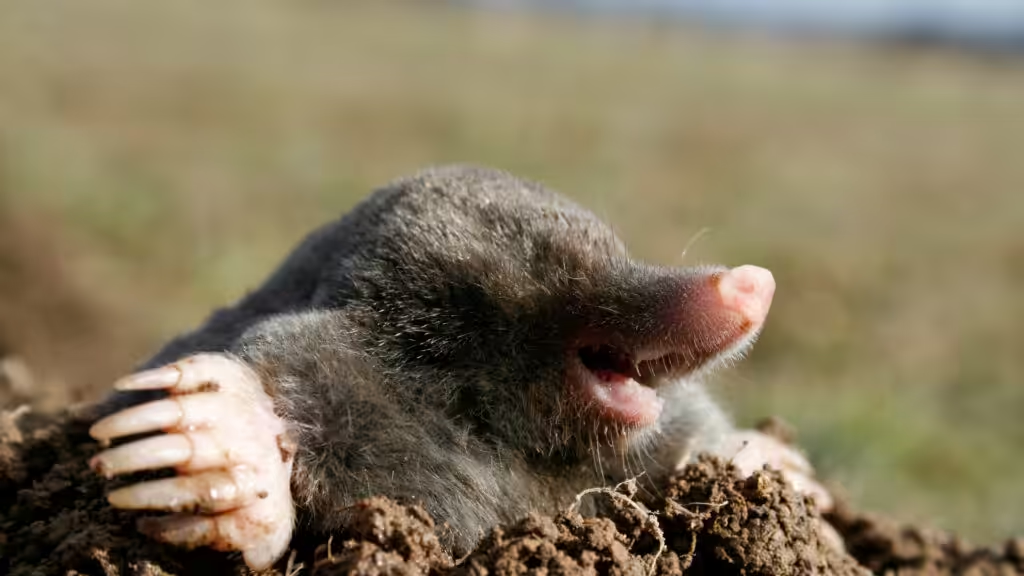
Yes, moles bite. Their small, sharp teeth are built for gripping worms and grubs underground, and a cornered or handled mole will use them on a person. Bites are uncommon because moles avoid contact with humans, but they break the skin and carry bacteria from consistent soil contact. Wash any bite with soap and water immediately and contact your doctor.
Mole Bite Risks to Health and Property Damage
Most homeowners who spot a mole in their yard focus on the tunnels rather than their own safety. But if you’ve found one trapped in a window well, cornered one in a garage, or tried to relocate one by hand, the question comes up fast: Does a mole bite? The short answer is yes.
Moles have small, sharp teeth built for gripping earthworms and grubs, and a frightened mole will use them. Knowing what to expect before you get close can save you a painful surprise and a trip to urgent care.
What Happens if a Mole Bites You
Mole bites don’t happen often, but when they do, they tend to catch people off guard. A mole that feels cornered or handled without warning will bite reflexively. The bite itself is usually small and puncture-like rather than a wide, open cut, but it reliably breaks the skin.
Because moles spend their entire lives underground, burrowing through soil, their mouths carry a high bacterial load from consistent contact with dirt, decomposing matter, and the creatures they hunt. That load goes straight into an open wound.
Wash the wound thoroughly with soap and water, apply an antiseptic, and cover it with a clean bandage. If you haven’t had a tetanus shot in the past five years, contact your doctor. A puncture wound from a wild animal is reason enough to get checked out.
Signs of a Mole Bite Infection
Watch the bite site closely for the first 48 to 72 hours. Any redness still spreading after the first day is worth paying attention to. Swelling that grows rather than shrinks, discharge, or a fever means the wound has moved past minor. Get it looked at.
A bite that seems manageable on day one can turn into something more serious if bacteria from the soil enter the bloodstream through broken skin. If any of those signs appear, see a doctor promptly rather than waiting to see if it clears up on its own.
Are Moles Dangerous to Handle?
You’re not going to get chased by a mole. They don’t attack humans, stalk pets, or defend territory the way a raccoon or groundhog might. The danger with moles is the stress response when they’re cornered.
A mole pulled out of the ground has no idea what’s happening to it. It’s disoriented, terrified, and will bite, scratch, and struggle with surprising force for an animal that size. Their front claws are built for moving compacted soil and can leave marks even through light gloves.
Don’t take it upon yourself to remove moles from your yard. Call us and let our team manage the removal. Mole behavior in the wild is almost entirely subterranean. The ones you encounter above ground are usually disoriented or injured to begin with. Don’t assume a mole sitting still is calm.
Do Moles Carry Diseases or Infections?
The flea and tick populations in your yard get a boost every time a mole moves through. Both parasites hitch rides in mole fur and surface in the same areas your kids and pets use. Rabies is documented in moles, but transmission to humans is extremely rare.
A bite wound getting infected is a far more realistic concern. Either way, a wild mammal bite is worth a call to your doctor.
What Moles Actually Do to Your Property
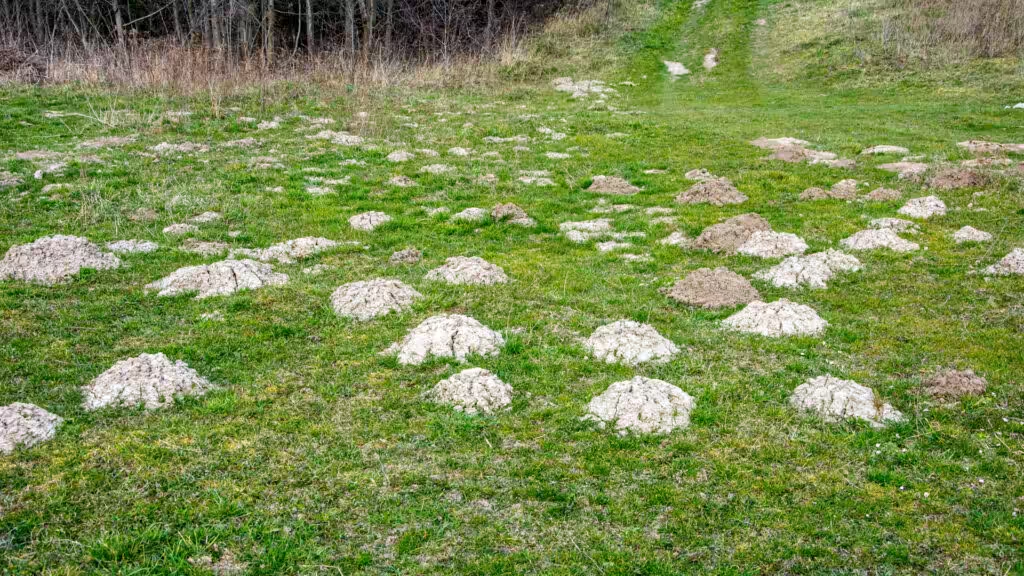
The bite risk is real but situational. The property damage is constant. A single mole can dig up to 100 feet of tunnels in a single day while hunting for earthworms and grubs. That underground network destabilizes soil and collapses root systems. The raised ridges and soft spots you notice when walking across the lawn are the visible result.
Vegetable gardens and ornamental landscaping take a harder hit than open lawn areas. As moles push through soil, they disturb root systems even when they aren’t eating the plants directly. Bulbs get dislodged. Shallow-rooted plants lose their grip in soil that no longer holds together the way it should.
Garden beds develop spongy, uneven patches that are hard to level without knowing where the tunnels run. Our mole control services address both active moles and the damage they’ve already caused, so your yard can recover rather than cycling through temporary fixes.
Mole Damage vs. a Direct Bite Risk
A mole bite happens once, under specific circumstances, almost always when someone reaches for an animal they shouldn’t touch. The yard damage happens every day the mole is still there. Most homeowners will never be bitten by a mole. The yard damage is the problem that shows up, and it gets worse every week the animal stays.
Both risks are avoidable. Don’t handle moles by hand. And don’t wait for a mole problem to resolve on its own. Moles don’t relocate without intervention. They stay where the food is, and your yard’s soil is full of it.
When to Call Natura for Mole Control
If you’re seeing surface ridges, soft spots underfoot, or fresh mounds appearing overnight, the mole isn’t going to move on. We use proven trapping methods and seal off the tunnels and entry points moles are using.
Our team knows how moles behave in the Pacific Northwest. Mole activity here runs year-round. Mild winters and consistently moist soil keep earthworm populations active at shallow depths, which means there’s no slow season for mole damage. Call us at 360-215-2876 to schedule a property assessment.
We proudly serve homeowners across: