

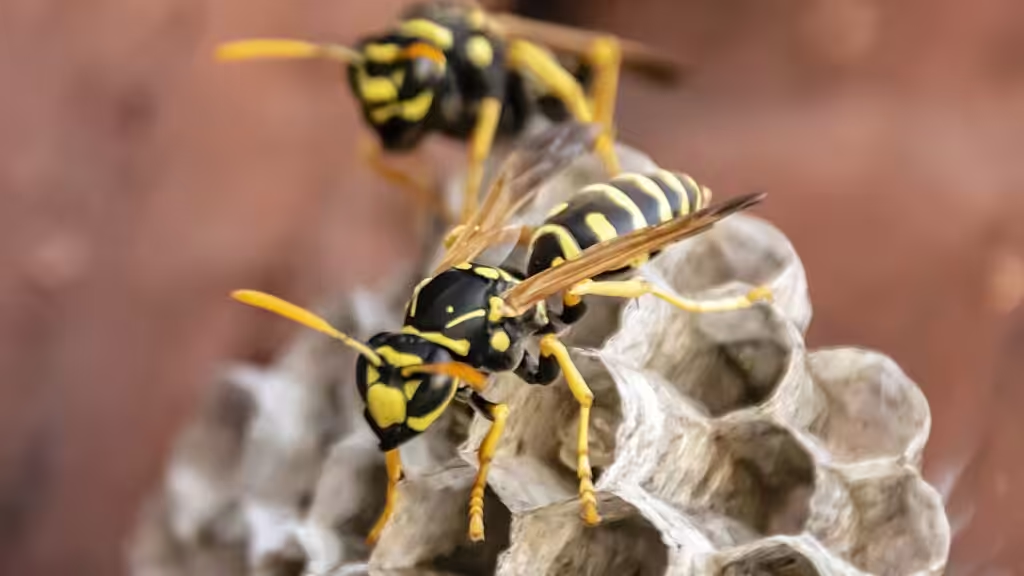
Not every wasp nest looks the same, and it matters. The species determines the structure, and the structure determines how you approach it. Washington is home to several, each building something distinctly different.
Open-Comb Paper Nests: The Paper Wasp
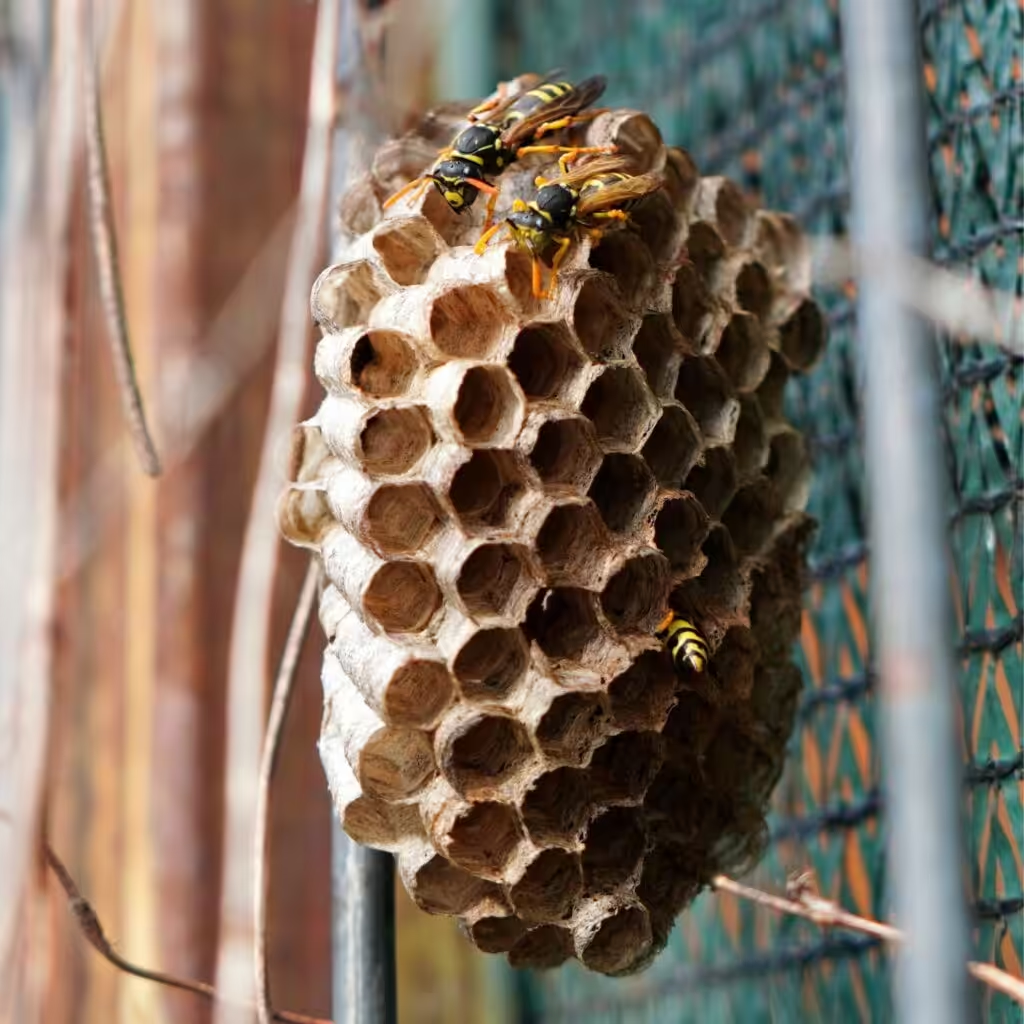
No outer shell. No enclosure. Just an open umbrella of gray hexagonal cells hanging from a single stalk. That’s a paper wasp nest, and once you’ve seen one, you won’t confuse it with anything else.
But what does a paper wasp nest look like up close? Think of a small exposed honeycomb, gray or tan, suspended in open air with nothing covering it.
That papery texture is chewed wood. Workers strip fibers from fences and dead wood, mix them with saliva, and press the pulp into shape. The finished structure has that weathered, grayish appearance because it’s essentially recycled wood fiber.
Compared to yellow jacket or hornet colonies, paper wasp populations are modest. A few dozen to a couple hundred workers at peak. Small size doesn’t lower the risk, though. Disturbing even a compact nest triggers a fast defensive response.
Where Do Paper Wasps Build Their Nests?
The spots paper wasps choose all share one thing: overhead protection. In a Washington yard, that means eaves and porch ceilings first. Window frames and door frames are common too, and so are tree branch forks where the structure gets natural cover from rain.
These nests are easy to miss early on. By the time they’re obvious, the colony has had weeks to establish. Checking for signs of a wasp nest before the season peaks gives you more options.
Enclosed Paper Nests: Yellow Jackets and Hornets
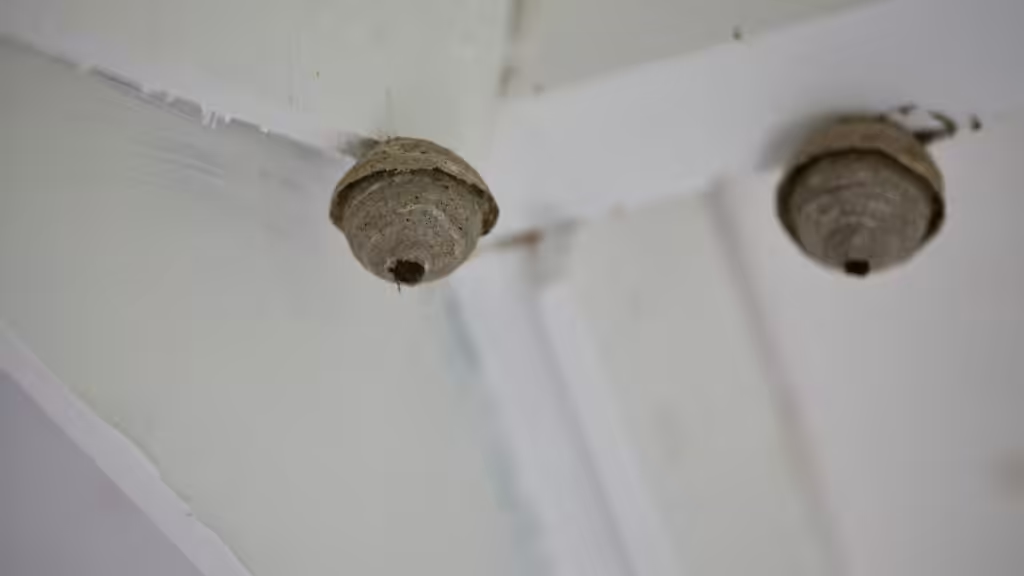
Yellow jackets and hornets take a different approach. Rather than leaving their comb exposed, they encase it in a layered paper envelope that grows outward as the colony expands. From the outside, a yellow jacket nest looks like a rounded paper globe with a single entry hole at the bottom. Lantern-shaped is the closest description.
Bald-faced hornets, common across Washington, build the same enclosed paper structure but hang it higher. Trees and roof overhangs are the most common anchor points. Both species use the same wood-pulp construction as paper wasps, but the enclosed design produces something considerably more substantial. Size goes up. The defensive response when disturbed does too.
More on where these nests appear and how they develop is in wasp nests in trees, particularly for species that favor elevated locations.
Hornet Nest vs. Wasp Nest: What’s the Difference?
Paper wasp nests are open and compact. Hornet nests are fully enclosed and can grow to basketball size or larger by late summer. The outer shell is the clearest visual difference between them.
Yellow jacket nests are enclosed like hornet nests but smaller. If you see a covered, papery globe with a single hole at the bottom, it’s a yellow jacket or hornet nest, not a paper wasp structure.
Ground Wasp Nests: What’s Hiding Underground
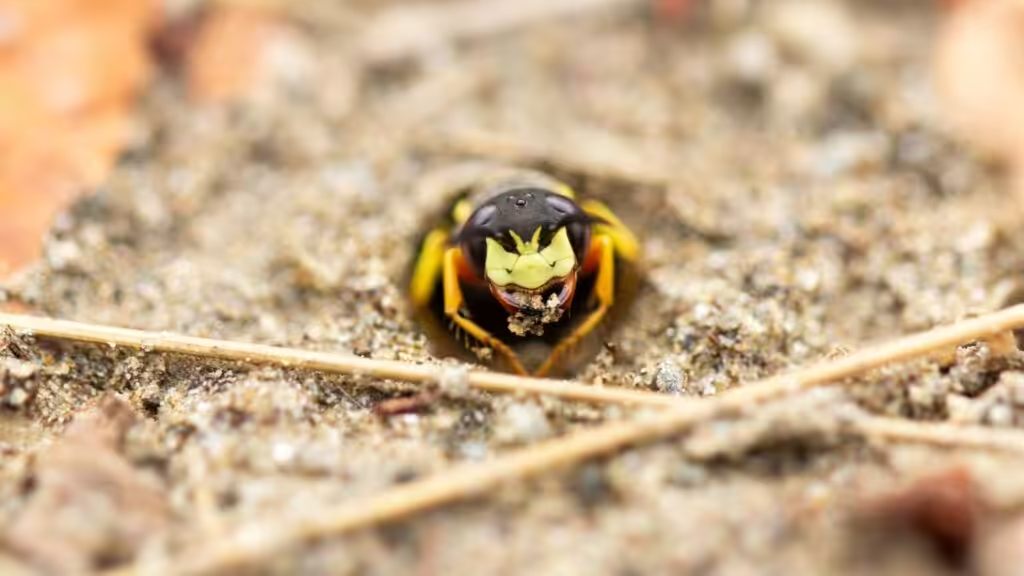
There’s nothing obvious to see at first. That’s what makes ground nests easy to miss.
The entry is a small hole in the ground, sometimes ringed with loose soil, sometimes hidden in lawn grass with no visual marker at all. Yellow jackets are the most common culprit in Washington, nesting in abandoned rodent burrows or soft soil near foundations.
Mowing over a hidden entrance triggers an immediate swarm. Underground colonies can hold thousands of workers by midsummer. Stumbling across one unaware is one of the more hazardous wasp situations in a Washington yard.
If wasps are repeatedly emerging from or disappearing into a spot at ground level, treat that area with caution and don’t disturb it before getting a professional wasp assessment.
Mud Dauber Nests: The Odd One Out
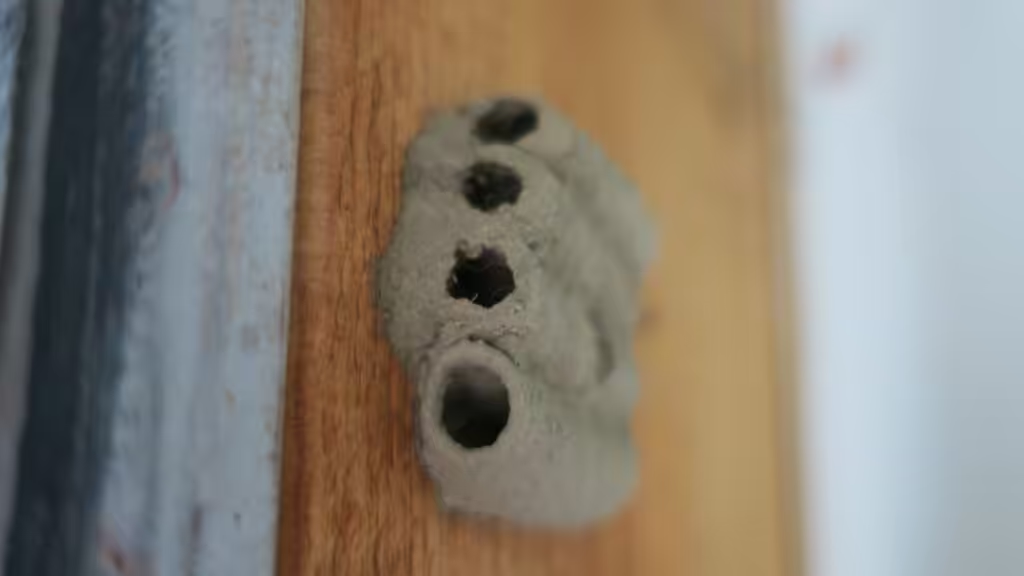
Rough, finger-sized mud tubes pressed flat against a wall or eave. That’s mud dauber construction, and it’s immediately different from anything else on this list.
Instead of wood pulp, they build with wet mud, pressing it into cylindrical tubes or clustered chambers on exterior walls and inside garages or sheds. A lone female builds each nest and stocks it with paralyzed spiders before sealing her eggs inside. Unlike the social species above, mud daubers don’t defend their nests aggressively.
Compared to yellow jackets or hornets, the risk level is low. A single nest isn’t an emergency. Large clusters inside a structure can become a persistent problem over time, but before attempting removal yourself, DIY wasp removal guidelines can help you gauge what’s manageable.
Spotted a Wasp Nest? Here’s Your Next Step.
Whatever you’ve found in your yard, the approach to treating it safely depends on the species. Identification is the easy part. A yellow jacket colony underground or an enclosed hornet nest near an entryway is a different job than removing a small paper wasp structure, and the equipment required isn’t something most homeowners keep on hand. Natura Pest Control handles all of them. Contact Natura today before the colony has more time to build.