

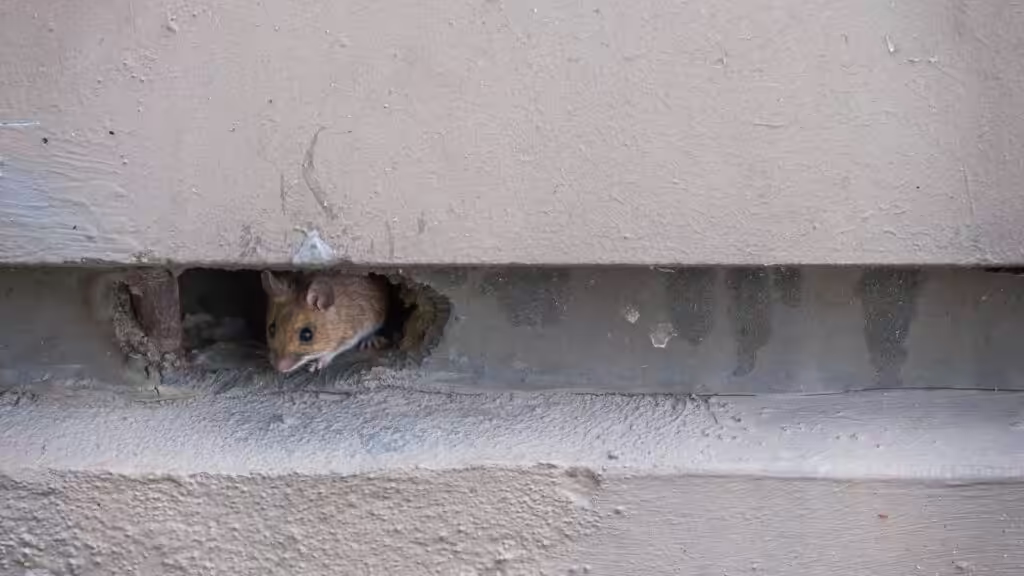
The scratching behind your drywall is worth paying attention to. By the time you hear it, mice have already been working inside your walls long enough to establish travel routes through the structure. Washington’s cooler months push them indoors, and wall cavities are what they find first. The earlier you act, the less damage there is to undo.
Signs You Have Mice in Your Walls
Mice rarely announce themselves. Most of what they do happens out of sight. You’re working with secondhand evidence.
Mice follow the same routes repeatedly, and the oil from their fur eventually marks those paths. Dark smudges along baseboards and wall edges, in spots where the wall should be clean, are worth a closer look.
A gnawed opening the size of a dime is enough for a mouse to squeeze through. Look for them near baseboards and behind appliances, and don’t expect them to be obvious.
Small dark pellets near food sources or along baseboards are the clearest confirmation. If you’re hearing scratching but can’t find any, don’t assume you’re in the clear. Mice active inside wall voids leave droppings in spots that only turn up during a proper inspection, not on any surface you’d routinely check.
A dead mouse in a wall creates an odor that’s hard to ignore once it starts. It doesn’t respond to cleaning, and it doesn’t go away on its own. If that smell is concentrated in one section of wall, something is decomposing in there. Locating it takes professional help and, in some cases, opening that section of wall.
What Do Mice in the Walls Sound Like?
Wait until the house is quiet at night. The scratching you’re trying to identify is light and rapid, not the heavier sound of a rat moving through the same space. Scurrying moves quickly between two fixed points. Soft squeaking is possible too, though less common than the scratching.
Rats produce heavier, slower sounds than mice. Squirrels are active during the day, not after dark. Quick, light scratching after midnight most likely means mice.
Either way, sounds alone aren’t enough. At least one physical sign from the list above should point the same direction before you start treating for mice.
Are Mice in the Walls Dangerous?
More dangerous than most homeowners account for. Inside wall cavities, they chew through insulation and framing. Wiring goes too, and gnawed electrical lines are a fire risk. It’s one of the reasons mice cause serious home damage in ways that go well beyond a scratching noise at night.
The health risk gets less attention than the structural damage, but it’s real. Mice leave pathogens in their droppings and urine. Hantavirus, salmonella, and leptospirosis have all been documented in homes with active mouse infestations in enclosed spaces. Wall cavities collect that material in areas with limited airflow. Any repair or renovation that opens those sections creates direct exposure.
Left alone, an infestation doesn’t plateau. It spreads deeper into the framing.
How Do Mice Get Inside Your Walls?
The entry is almost always at the exterior. Foundation cracks are the most common way in, but gaps around utility pipes and deteriorated weatherstripping are easy to miss, and so are openings where siding meets the roofline. Once they’re inside, wall cavities connect everything.
Clutter near the foundation pulls them in close. Open food sources and unsealed exterior gaps do the rest. These are the same mistakes that attract mice in the first place. They don’t force their way in. They find what’s already open.
How to Get Rid of Mice in Your Walls
Sealing entry points comes first. Every exterior gap you can find should be packed with steel wool and followed by caulk or hardware cloth. Foam and standard caulking alone won’t hold. Mice work through both. Steel wool is what they can’t chew past.
Snap traps along wall edges, near where you’ve confirmed activity, are a better choice than poison bait inside the cavity itself. Bait stations work along the perimeter, but poison inside a wall cavity creates a separate problem: mice die somewhere you can’t reach, and you’re back to dealing with the odor.
Tightly sealed food storage and repaired plumbing leaks cut the conditions that keep mice coming back after initial numbers drop. Getting rid of mice without addressing what attracted them is a short-term fix.
Why Professional Pest Control Gets Better Results
DIY is workable when an infestation is minor and caught early. Wall-dwelling mice are harder than mice moving openly through a kitchen. They’re deeper in the structure, and surface-level trapping misses the travel routes inside the wall void entirely.
Professional treatment brings inspection equipment, placement options inside the wall void itself, and identification of the entry points driving re-infestation. That last part is what most surface-level DIY skips. You can catch every mouse you find and still have more coming through the same gap.
DIY performance drops off fast once mice have built more than one nesting site inside the walls. Professional rodent control gets to those spots.
Hearing Mice in Your Walls? It’s Time to Call a Professional.
If the scratching at night is coming from inside a wall, or that smell from a specific section won’t go away, the problem is already inside the structure. Natura Pest Control serves homeowners across Washington with rodent inspections that get into the wall void, not just the surface. Contact us today to get started.