

If you’ve ever walked through the wooded paths around Lake Oswego or taken a stroll through your backyard in Salem during early fall, there’s a good chance you’ve come face-to-face with the masterpiece of nature that is a spider web.
These intricate creations are not only mesmerizing, but they also play a crucial role in the ecosystem around us.
But did you know that not all spider webs are the same? Each one is unique and tells a fascinating story about the mastermind who built it. And as a resident of Oregon, learning to identify different types of webs can offer insights into the spiders in your area and their habits.
At Natura Pest Control, we often get calls from homeowners in areas like Silverton and Wilsonville with concerns about spider webs around their gardens, homes, and porches. We always recommend taking a closer look, as understanding the different types of spider webs is the first step in learning how to manage them effectively.
Here’s what you need to know.
The Four Main Types of Spider Webs

Spider webs can come in a variety of forms, each designed to cater to specific hunting and living strategies.
Here are the four main types you’ll encounter in the damp and forested areas of Oregon:
Orb Webs
Orb webs are perfectly circular, intricate designs that resemble a wheel with spokes. Who builds them? Generally, it’s spider families like Araneidae, which include spiders like the cross orbweaver (Araneus diadematus), commonly found around Newberg and Tigard.
These webs are designed for catching flying insects such as flies and mosquitoes. One more fun fact is that orb-weaving spiders recycle their webs daily by consuming the silk and reusing it to spin a new one.
Funnel Webs
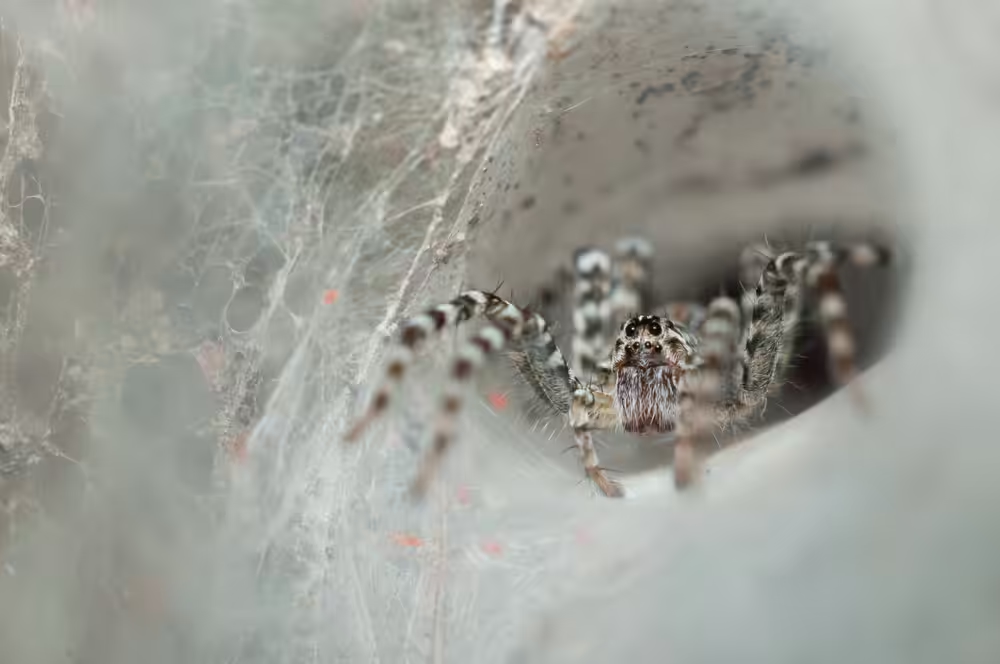
Funnel webs are dense, sheet-like webs with a funnel-shaped retreat at the center or rear. These are constructed by funnel-weaving spiders like grass spiders (Agelenopsis species), which are common in grassy areas around Canby or Salem.
These spiders use the web to detect vibrations when prey wanders onto the flat surface, quickly pulling them into the funnel. Look for these webs in low shrubbery or grass during summer.
Cobwebs (or Tangle Webs)
The quintessential types of spider webs, these are irregular, messy, and sticky webs that appear random in pattern. They’re built by cobweb spiders like the common house spider (Parasteatoda tepidariorum).
While disorganized-looking in appearance, these types of spider webs serve an important purpose, as they’re built to latch onto wandering insects, such as ants or beetles.
You’re most likely to see these spider webs in your house. If they’re driving you crazy, know that regular cleaning around high corners is a great way to prevent their buildup in your home.
Sheet Webs

Sheet webs look like horizontal platforms of dense silk with a vertical tangle of threads above. They’re built by sheet-weaving spiders like filmy dome spiders (Neriene species). The tangle of threads knocks prey onto the flat web below, where they are captured.
These types of spider webs are often found in sheltered areas like under logs or within hedges around Oregon City or Gervais.
Let Natura Clear Those Webs for Good

While some people might dislike the sight of webs under house eaves or around patio furniture, they serve a critical role.
For one, spiders are natural pest managers, capturing mosquitoes, flies, and moths. They aid in the balance of our ecosystems, serving as both predators and prey within the food chain, and supporting wildlife ranging from birds to lizards. In general, the presence of healthy spider populations often signals a balanced, thriving environment.
That said, excessive webs or an abundance of spiders around your property can become bothersome. That’s where a professional pest control partner like Natura Pest Control comes in.
We’re your trusted, family-owned pest control experts, serving towns from Beaverton to Salem and everywhere in between. Whether you’re dealing with orb-weaving art on your eaves or cobwebs in the corners, we’ll help reclaim your space the eco-friendly way.
Get in touch with us today to learn more!
Did You Know?
There are 48,000 different spider species worldwide, but only a small percentage spin webs. Every web type is uniquely suited to a specific spider’s hunting style and environment. Spiders in Oregon, for instance, often showcase orb and funnel webs due to the state’s abundance of forests and open fields.
FAQ
Why am I seeing more spider webs in the fall?
Fall is when many spider species reach maturity and prepare to lay eggs. Mature females spin larger webs to catch enough prey to support their egg production.
Are spider webs dangerous for my home?
No, spider webs themselves are harmless, but a high population of spiders could indicate other pest issues nearby (e.g., insects that serve as their food source).
How do I prevent spider webs around my home?
To prevent webs, you need to prevent spiders! Regularly clean areas such as eaves, porch lights, and ceiling corners. Turn off outdoor lights at night to avoid attracting insects, which in turn attract spiders. Finally, seal cracks and gaps around windows and doors to reduce spider entry.